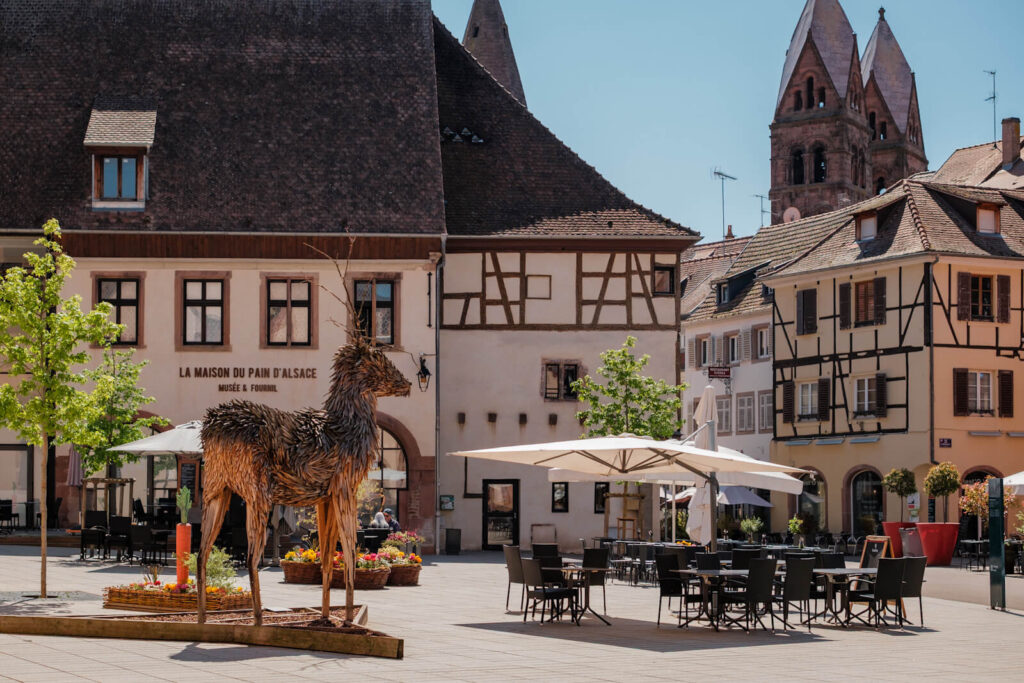
Between Strasbourg and Colmar, in the heart of Alsace, lies the historic town of Sélestat. It may be less well known than the popular wine villages nearby, but it is certainly worth exploring. Its old town is filled with colourful half-timbered houses, decorative façades, inviting squares and two remarkable churches. Much of Sélestat’s long history is still visible as you wander through its streets. We visit the town on our way to Europa-Park, which is only a short drive away. This makes Sélestat an easy place to combine with a few days at the theme park, along with many other interesting towns and villages in Alsace.
Read this article in DutchSélestat, a historic town in Alsace
Sélestat, also known by its German name Schlettstadt, has a history stretching back to the early Middle Ages. From the 13th century onwards, it developed into an important trading town within the Holy Roman Empire. During the Renaissance, Sélestat became a centre of humanist learning, with education, scholarship and classical literature playing an important role in the town’s development. Traces of this prosperous past can still be seen throughout Sélestat, from elaborately decorated merchants’ houses to centuries-old churches and remains of its medieval fortifications.
Walking through the historic centre of Sélestat
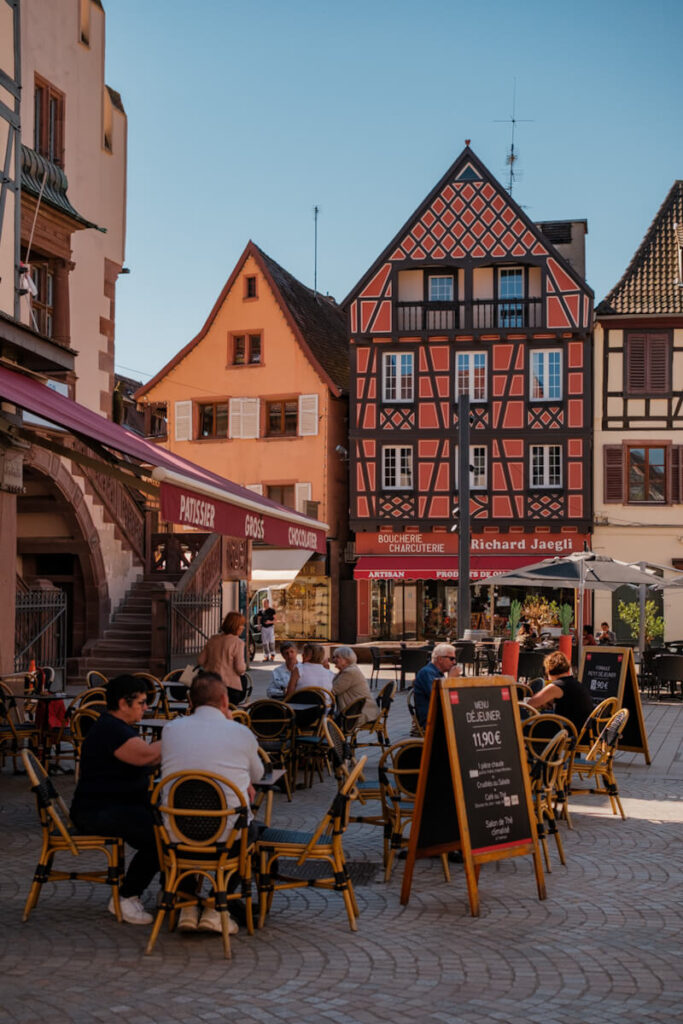
Sélestat’s historic centre is relatively small, making it a lovely place to explore on foot. One of the things I like about the town is that you don’t really need a planned route. Most of the main sights are within easy walking distance of each other and along the way you keep coming across interesting buildings, small squares and architectural details. The colourful half-timbered houses, ornate façades and impressive churches give every part of the walk something different to look at.
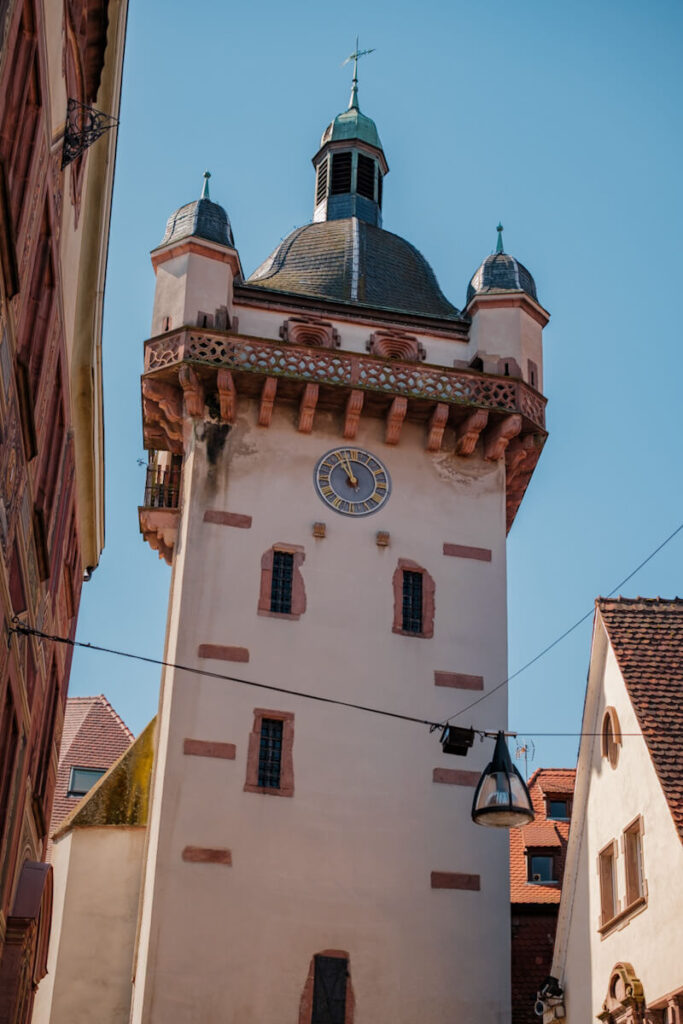
Tour Neuve, Sélestat’s historic clock tower
A good place to begin exploring Sélestat is the Tour Neuve, also known as the Tour de l’Horloge. Built in 1280, this distinctive tower was originally part of the medieval town walls. It served as one of the entrances to the fortified trading town and has undergone several changes over the centuries. The four small corner turrets immediately catch your attention, along with the clock and the historic painting decorating the façade.
The remarkable half-timbered houses of Rue des Chevaliers
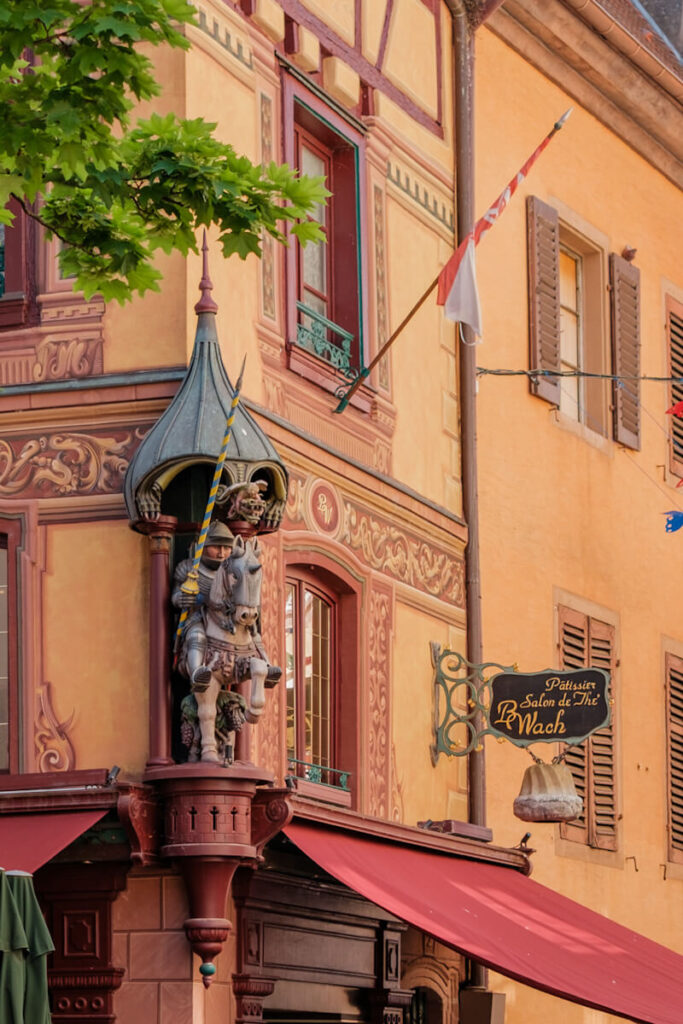
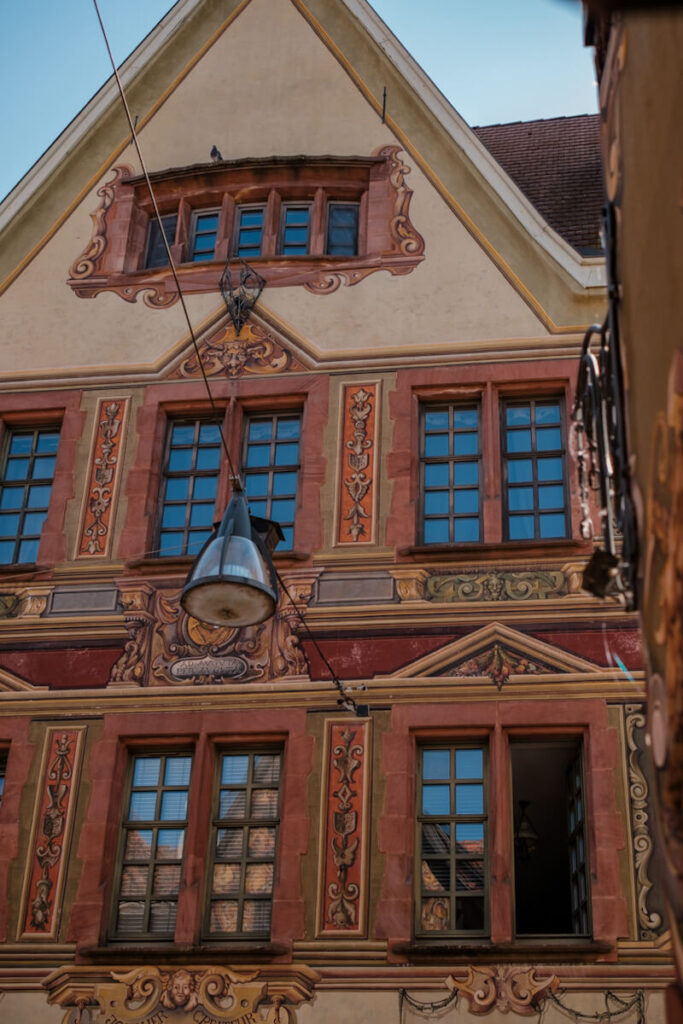
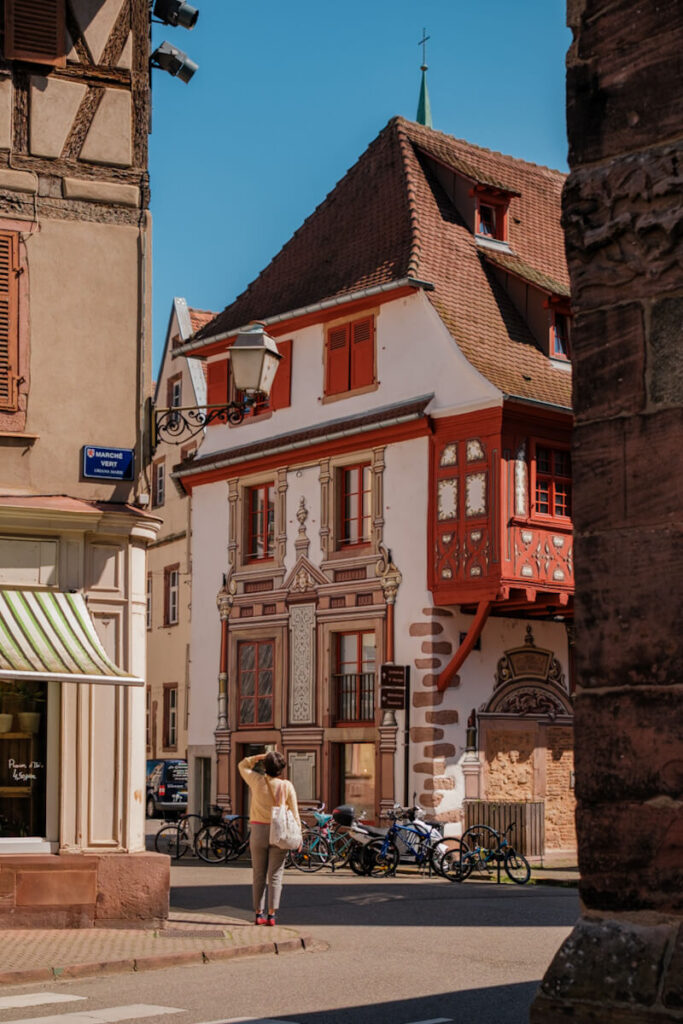
From the Tour Neuve, you can walk straight into Rue des Chevaliers, one of the most attractive streets in Sélestat. It is lined with historic houses featuring exposed wooden beams, colourful façades, small bay windows and an abundance of decorative details. Some buildings have painted patterns and figures while others feature intricate woodwork or wooden shutters that have been there for centuries. This is definitely a street where it pays to look up, as there is so much to discover above the shopfronts and doorways.
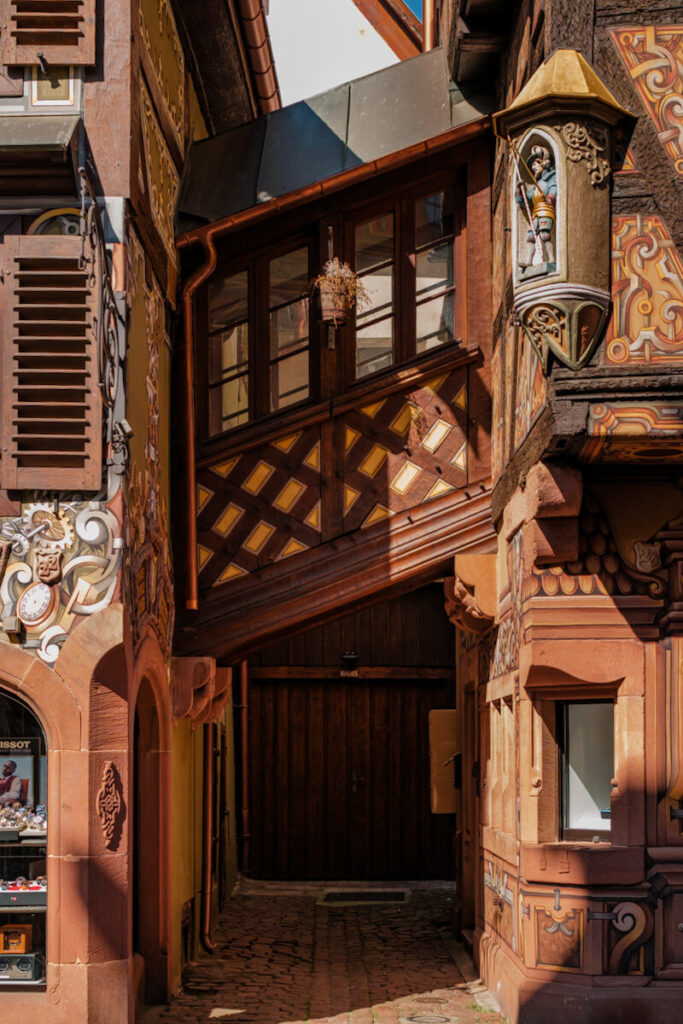
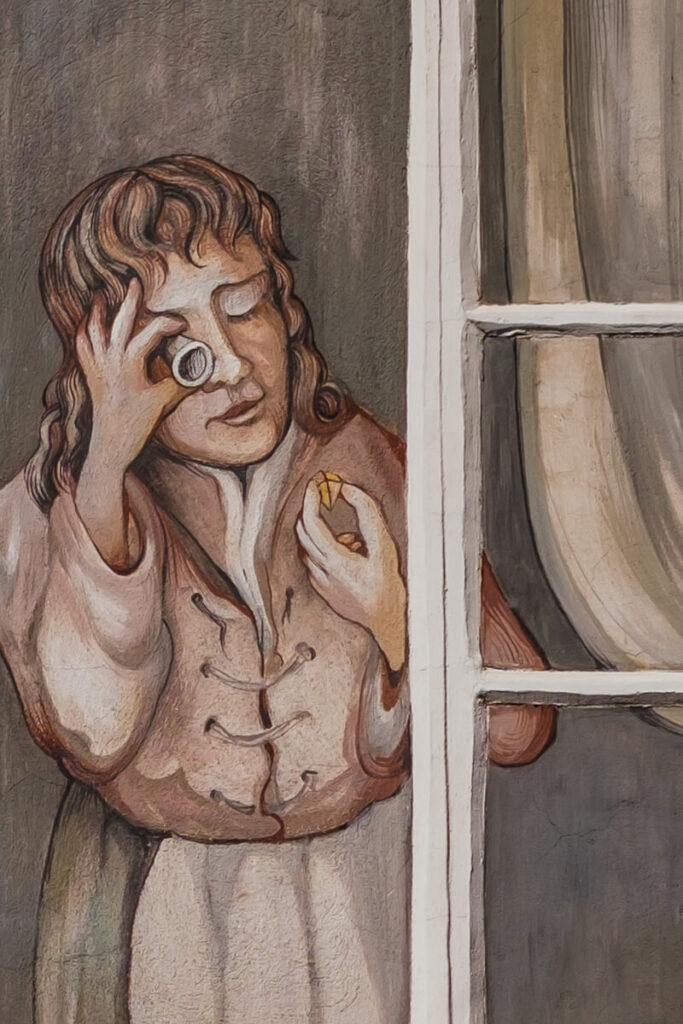
Particularly eye-catching are several neighbouring buildings that house the watch shop La Maison du Temps. Their dark timber, warm-coloured paintings, a small niche containing a figurine and a covered passage connecting two houses make them difficult to walk past without stopping. There are so many interesting details that you will probably find yourself spending a little longer here, taking everything in.
Following the footsteps of the lion through Sélestat
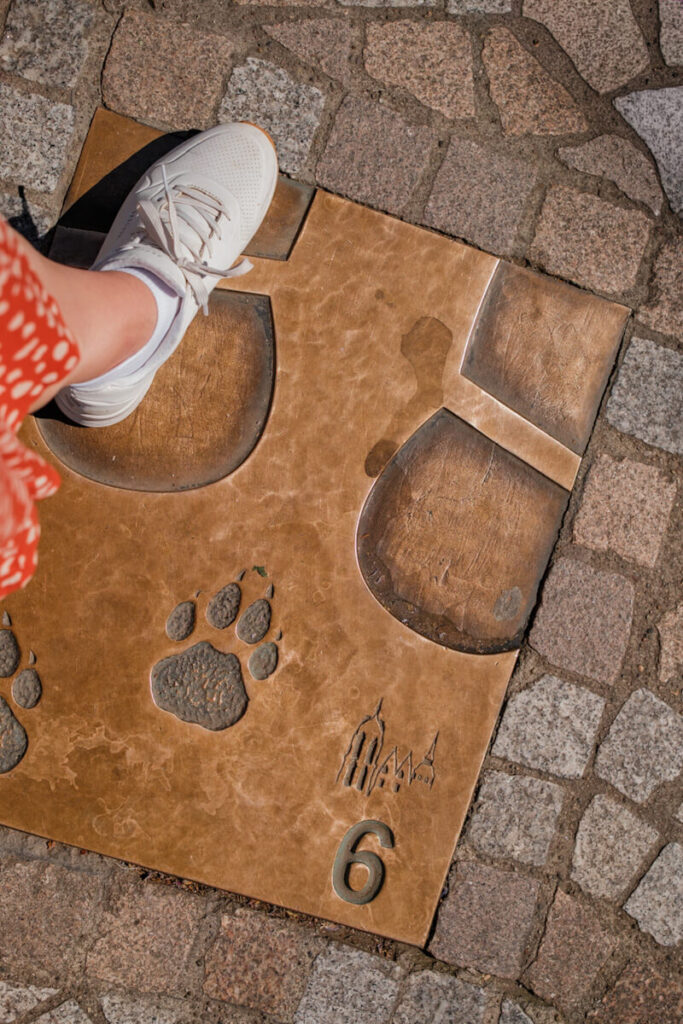
As you continue through the centre, you may notice small bronze plaques embedded in the pavement, decorated with animal paws and footprints. These markings belong to a walking trail called Dans les pas du lion et du géant Sletto, meaning ‘In the footsteps of the lion and the giant Sletto’. According to an old legend, the giant Sletto founded the town while the lion became the symbol of Sélestat.
The 2.8-kilometre walking trail takes you past 24 historic sites in the town centre, including the best-known landmarks as well as buildings and details you might otherwise overlook. Allow around two hours to complete the route. A free brochure explaining the different monuments is available from the tourist office.
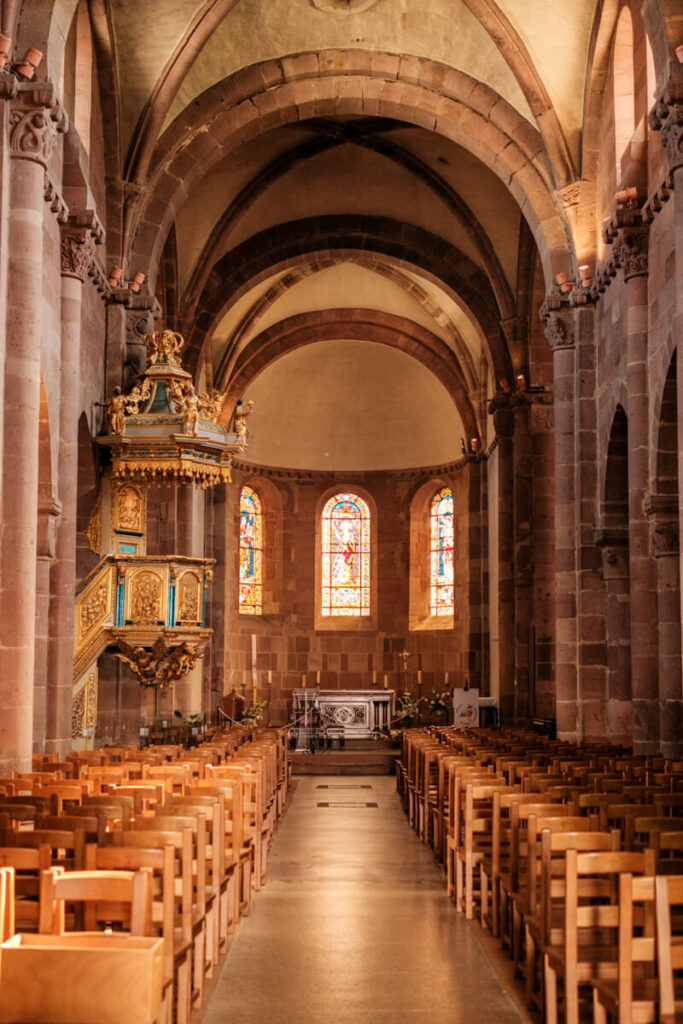
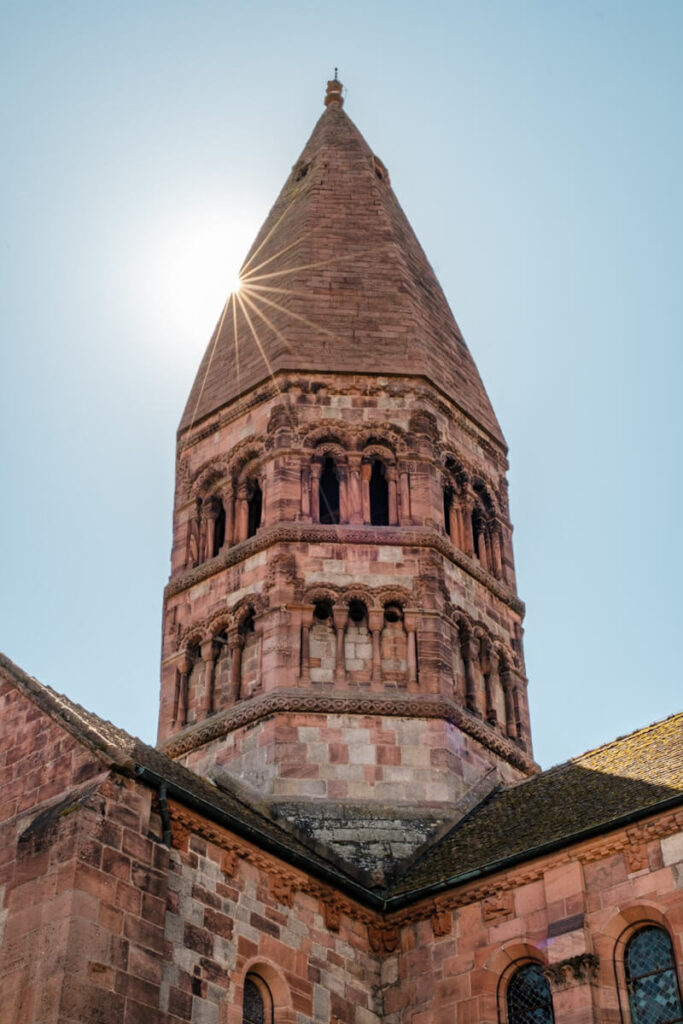
Église Sainte-Foy, a beautiful Romanesque church
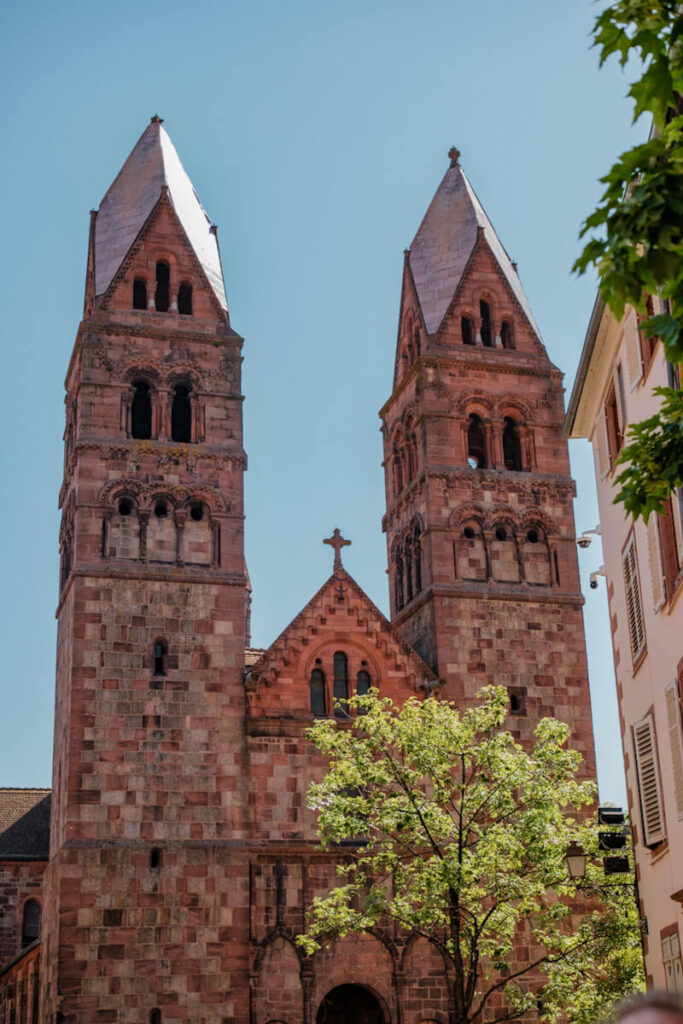
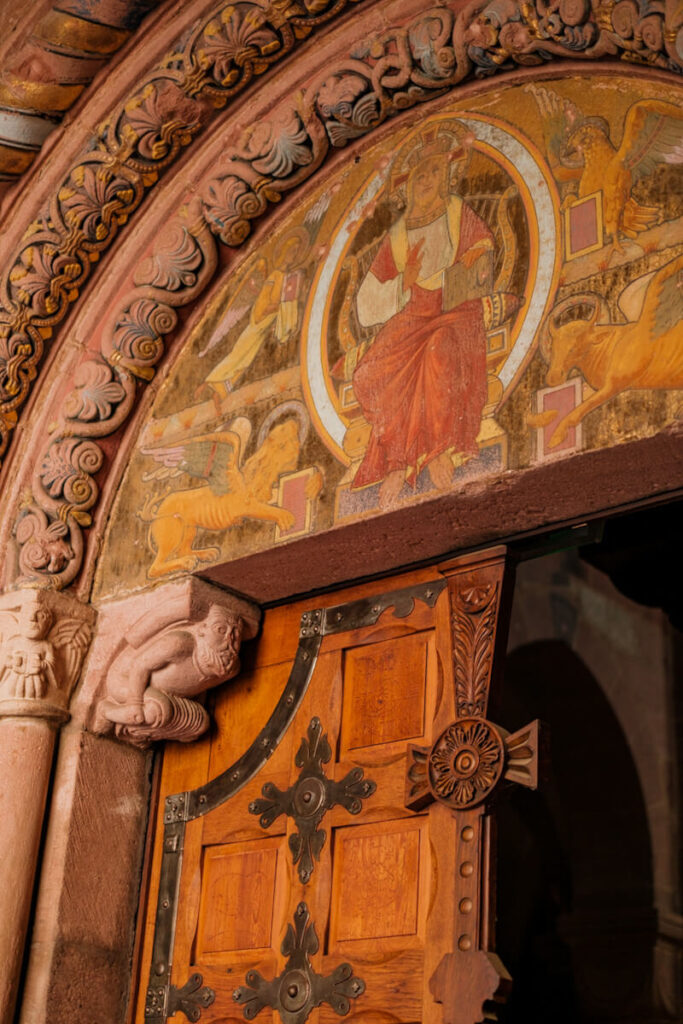
In the heart of Sélestat’s historic centre stands Église Sainte-Foy. The church is immediately recognisable by its two tall towers with pointed roofs. Its thick stone walls, rounded arches and small windows give it a very different appearance from the Gothic churches found throughout Alsace. The entrance is particularly impressive, with an elaborately carved portal featuring sculptures and intricate details. Inside, there is plenty to admire too, including substantial stone columns, rounded vaults and a richly decorated pulpit.
Église Saint-Georges, Sélestat’s impressive Gothic church
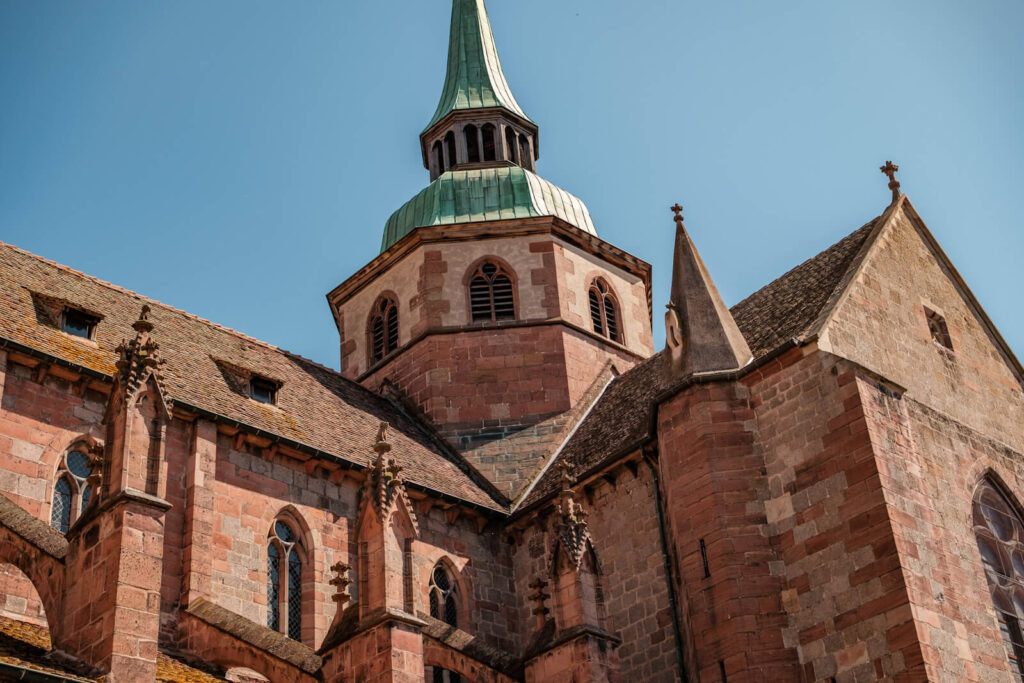
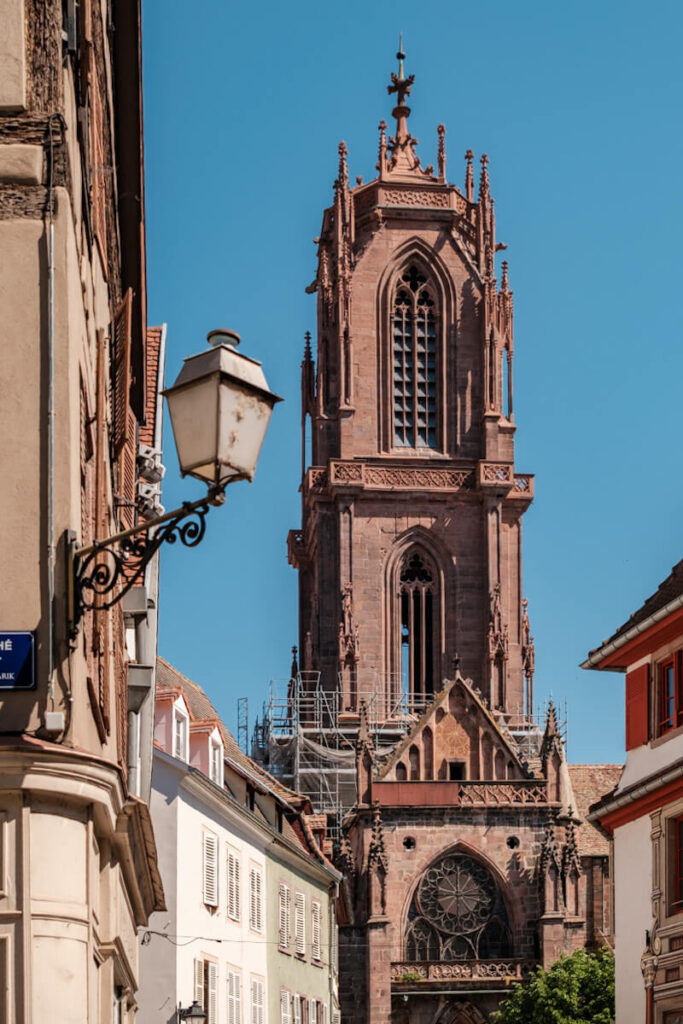
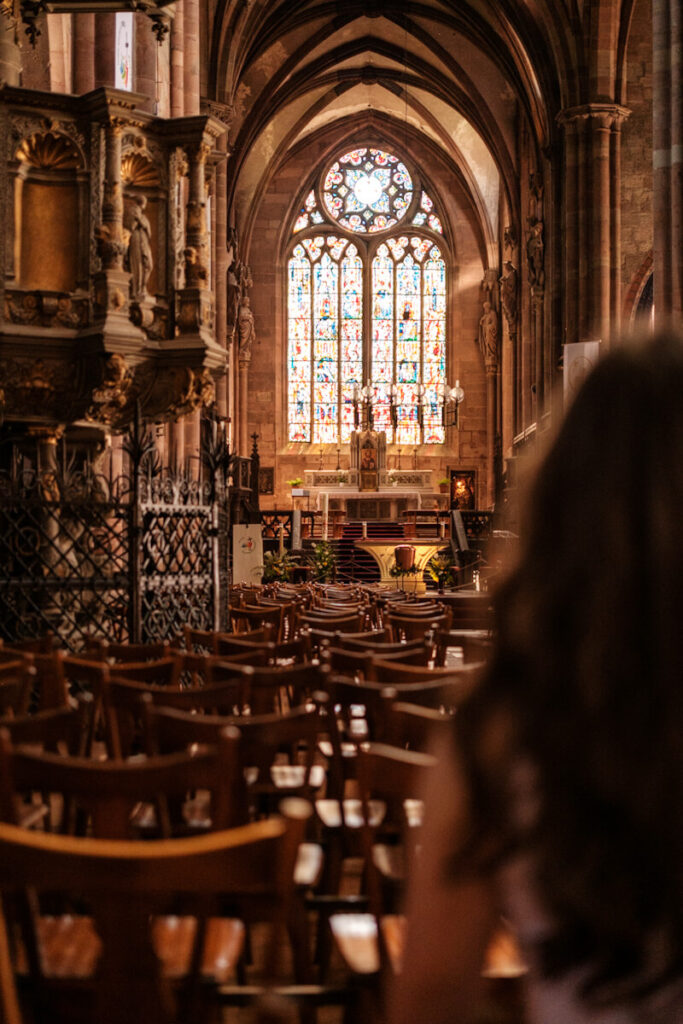
Église Saint-Georges is just a few minutes’ walk from Église Sainte-Foy. Although the two churches stand close together, their architecture could hardly be more different. While Sainte-Foy has a solid, relatively simple appearance, Saint-Georges is characterised by its tall tower, pointed arches and elaborate Gothic details. Construction began around 1220 on the site of an earlier chapel dating back to the time of Charlemagne. The church was not completed until towards the end of the 15th century. With its 60-metre tower and impressive proportions, it almost resembles a cathedral, although it is officially a parish church.
The contrast with Sainte-Foy is just as noticeable inside. High vaulted ceilings, slender columns and large stained-glass windows create a completely different atmosphere. Some of the stained-glass windows in the choir date back to the 15th century. Together, these two churches offer a fascinating look at the differences between Romanesque and Gothic architecture. For many visitors, they alone are reason enough to spend some time in Sélestat.
Colourful squares and the Bibliothèque Humaniste
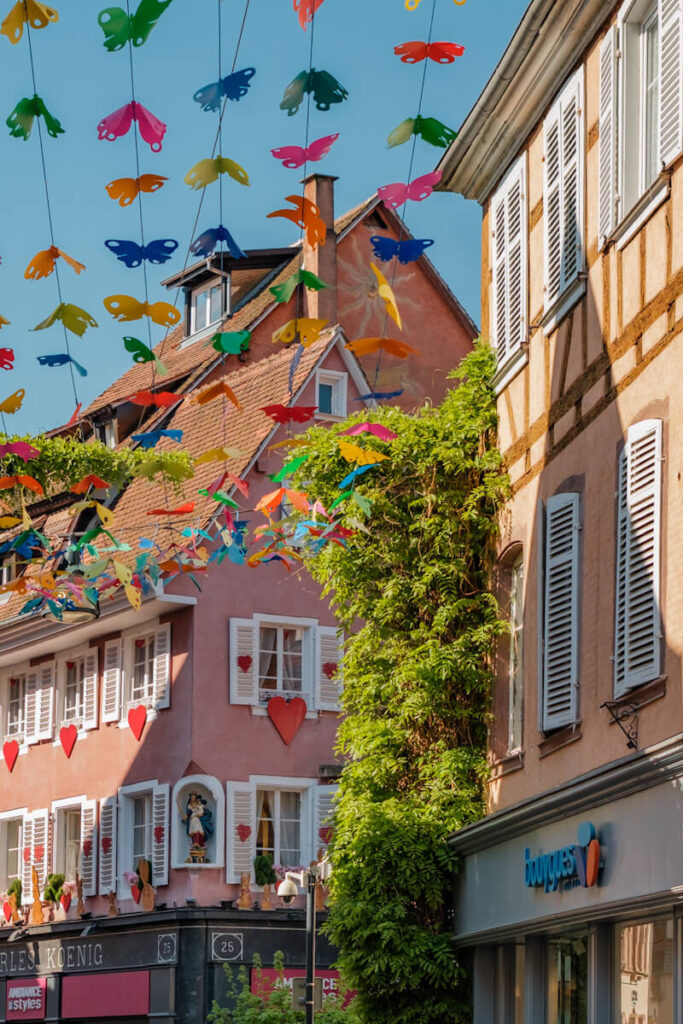
Around the churches, you will find several pleasant squares and narrow streets lined with historic façades and colourful half-timbered houses. Some buildings have beautifully decorated windows while others stand out for their wooden shutters, steep roofs or unusual architectural details.
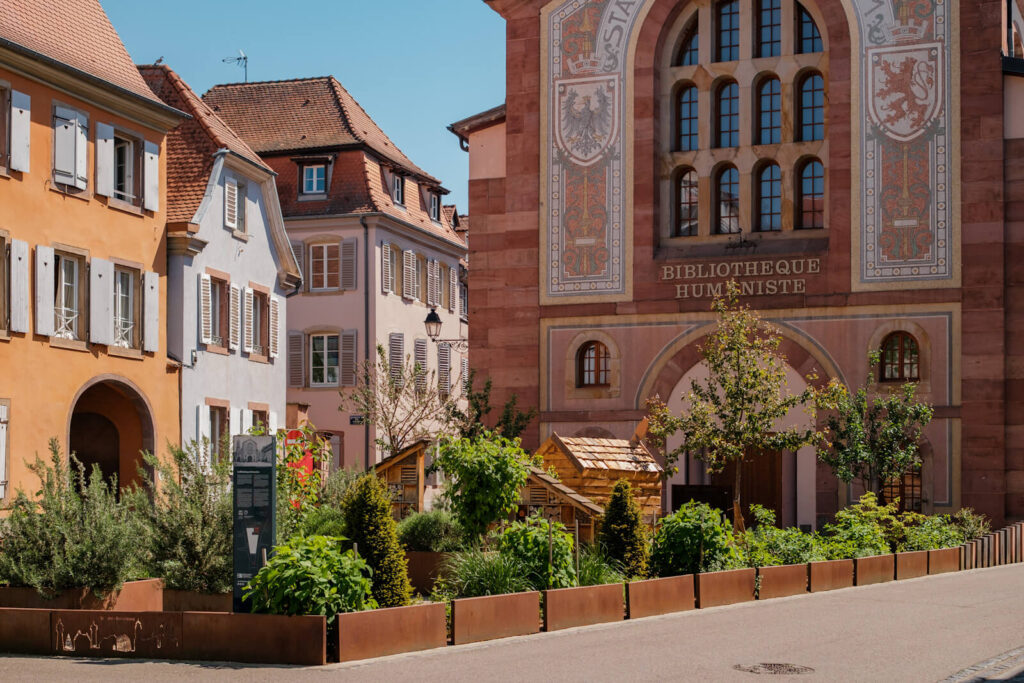
One of the best-known buildings in this part of Sélestat is the Bibliothèque Humaniste, housed in a former grain warehouse on Place du Docteur Maurice Kubler. This remarkable library contains an extensive collection of centuries-old books and manuscripts. An important part of the collection once belonged to Beatus Rhenanus, a humanist scholar born in Sélestat in 1485. His personal library has been included in UNESCO’s Memory of the World Register since 2011. The Bibliothèque Humaniste also serves as a museum, where you can learn more about the town’s history and the books that have been preserved here over the centuries.
An interesting detail is Sélestat’s special connection with the Christmas tree. The town archives contain a document from 1521 describing how forest guards were instructed to protect trees in the period leading up to Christmas. It is considered the oldest known written reference to the Christmas tree tradition. This history is celebrated throughout Sélestat in December, when the town organises various Christmas activities.
Old town walls and narrow streets
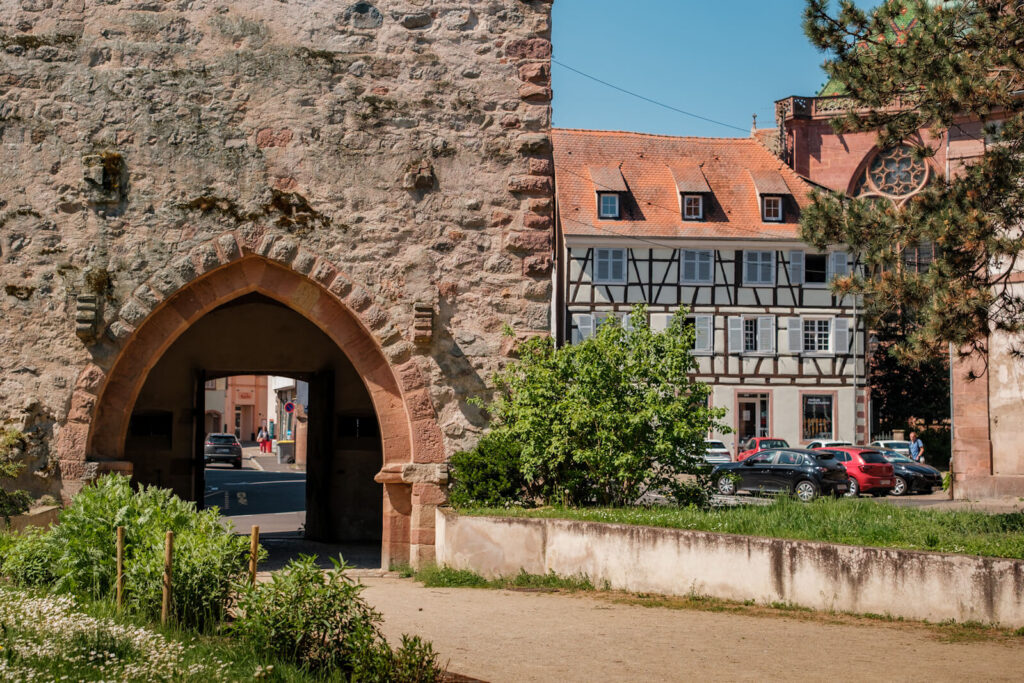
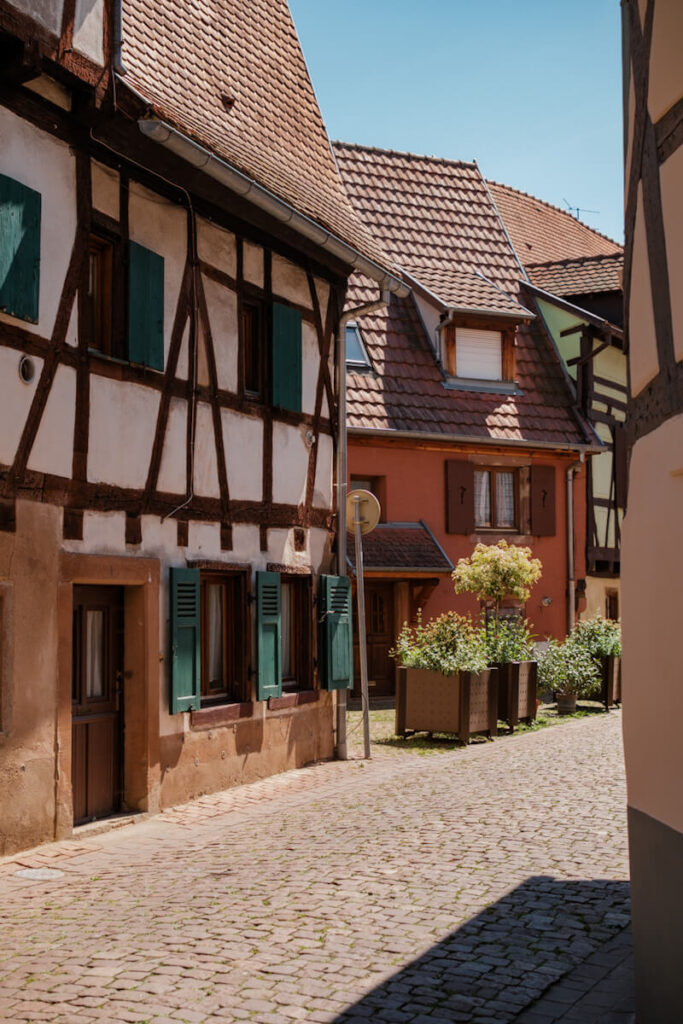
There are plenty of reminders of Sélestat’s past beyond the area surrounding its churches. The town was once protected by defensive walls and towers, parts of which can still be seen today. One example is the Tour des Sorcières, or Witches’ Tower, a former town gate dating from the 13th century. The tower was later used to imprison women accused of witchcraft. As you wander further through the historic centre, you will come across narrow lanes, small courtyards and colourful half-timbered houses. The quieter streets are particularly enjoyable to explore without a fixed route. Look out for old wooden doors, decorated façades and unexpected views between the buildings.
What else is there to do in Sélestat?
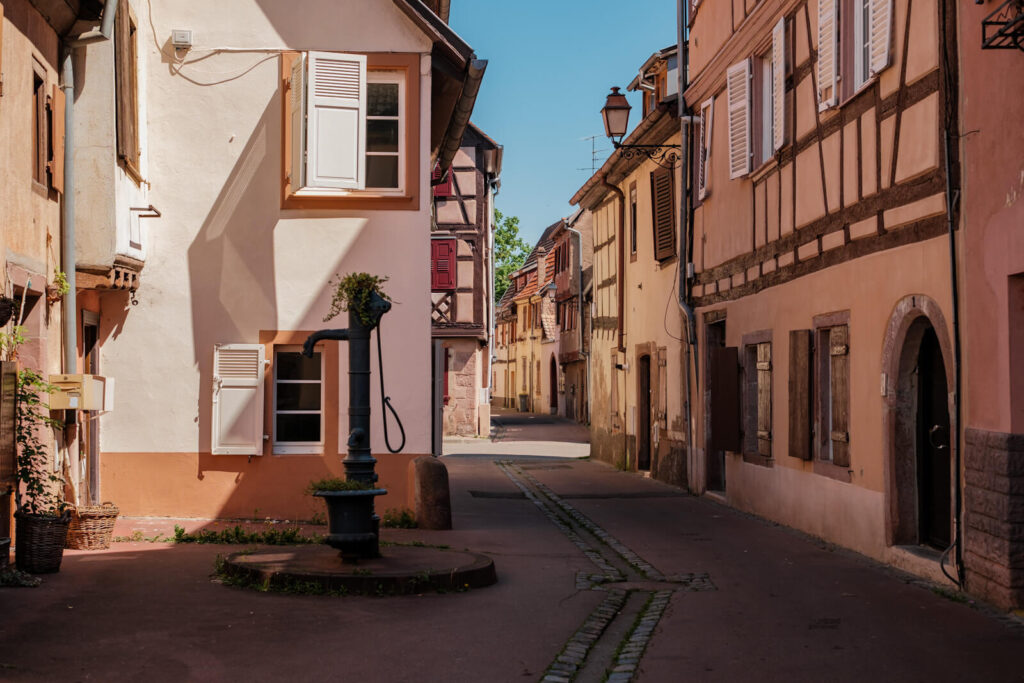
If you have a little more time in Sélestat, there are several other places worth visiting. In the town centre, you will find the Maison du Pain d’Alsace, a museum and bakery dedicated to the traditional bread-making culture of Alsace. Another interesting area is Quai des Tanneurs, the former tanners’ quarter, where old houses recall the trades that once played an important role in the town’s economy. While exploring this quieter neighbourhood, make sure to find Rue des Oies, where a small square is home to a traditional water pump.
Beautiful places to visit near Sélestat
Sélestat is well positioned for exploring more of Alsace. The town lies close to the famous Route des Vins d’Alsace, the Alsace Wine Route, which passes through vineyards, picturesque villages and historic towns. Around 15 minutes away by car is Château du Haut-Kœnigsbourg, an imposing medieval castle overlooking the surrounding countryside. The colourful wine villages of Ribeauvillé, Riquewihr and Kaysersberg are also within easy reach.
If you would like to discover more places in the region, take a look at my article about the most beautiful villages in Alsace, where I share some of the area’s most atmospheric villages and historic towns. Colmar is another easy place to visit from Sélestat, with its colourful half-timbered houses and picturesque La Petite Venise neighbourhood.
Where to stay in Sélestat
If you would like to explore Sélestat and the surrounding area at a more relaxed pace, it is worth staying for one or more nights. Thanks to its central location between Strasbourg and Colmar, Sélestat makes a convenient base for discovering Alsace. There are several hotels and smaller places to stay in and around the historic centre, along with plenty of accommodation options in the surrounding wine villages. The three properties below are all fairly centrally located within the region and have good guest reviews.

Les Prés D'ondine

Les Escales de Sélestat

A Chatenois le Repère d'Anna
Everything you need to know about visiting Sélestat
Below you will find answers to some frequently asked questions about Sélestat, including what to see, how much time to allow and when to visit.
Is Sélestat worth visiting?
Yes, Sélestat is definitely worth visiting. The town has an attractive historic centre filled with colourful half-timbered houses, impressive churches and inviting squares. It is also often quieter than some of the better-known tourist destinations in Alsace.
What are the best things to see in Sélestat?
The main attractions in Sélestat include the Tour Neuve, Église Sainte-Foy, Église Saint-Georges, the Bibliothèque Humaniste and the historic streets around Rue des Chevaliers. The remains of the old town walls and several Renaissance buildings are also worth exploring.
How much time do you need to visit Sélestat?
Allow around two to three hours for a leisurely walk through the historic centre. If you also want to explore the churches in more detail, visit the Bibliothèque Humaniste and stop somewhere for lunch, you can easily spend half a day in Sélestat.
Where is Sélestat located in Alsace?
Sélestat is located in northeastern France, roughly halfway between Strasbourg and Colmar. The town is close to the Alsace Wine Route, making it a convenient base for exploring the wider region.
Can you explore Sélestat on foot?
Yes, Sélestat’s historic centre is compact and easy to explore on foot. The main attractions are all within walking distance of one another. You can also follow the marked walking trail Dans les pas du lion, which takes you past 24 historic sites throughout the town.
When is the best time to visit Sélestat?
Sélestat is an enjoyable place to visit throughout the year. In spring and summer, the colourful façades and outdoor terraces are particularly inviting. In December, the town celebrates its centuries-old Christmas tree tradition with a range of seasonal activities.