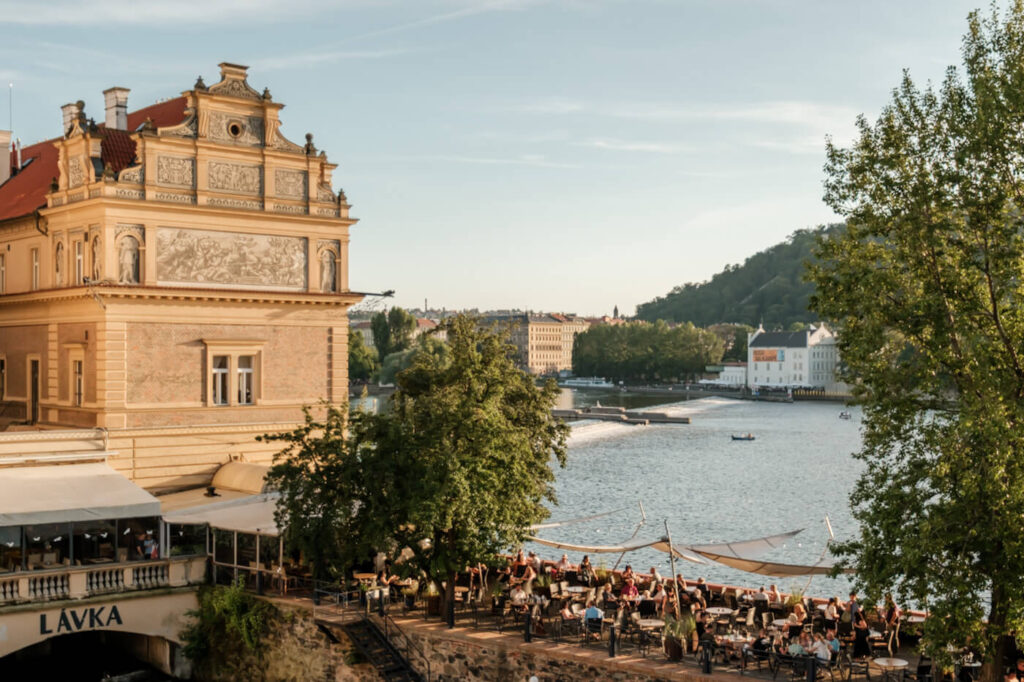
Prague is known for its colourful facades, old churches, historic squares and charming streets. The Vltava River runs through the heart of the city, with plenty of places along its banks offering lovely views of historic bridges, towers and buildings. It sounds like the kind of city where you could easily spend several days. Yet we visit Prague for just one day during our stay in the Pilsen region of western Czechia. And it turns out to be surprisingly manageable. Of course, there is no way to see everything, but we are surprised by just how much we can discover in such a short time.
Read this article in DutchVisiting Prague from the Pilsen region
Western Czechia is a varied region with historic towns, vast forests, castles and small villages. During our stay in the Plzeň Region (Plzeňský kraj), we visit Pilsen (Plzeň), known for its brewing history and colourful historic centre, as well as the towns of Klatovy and Sušice. We also explore the impressive castles of Hrad Velhartice and Hrad Rabí, both with a long history. Not far from here lies Šumava National Park, an extensive natural area of dense forests, lakes and rolling hills. From Pilsen, it takes us around an hour and a half to drive to Prague, which we find perfectly manageable for a day trip.
Exploring Prague by bike
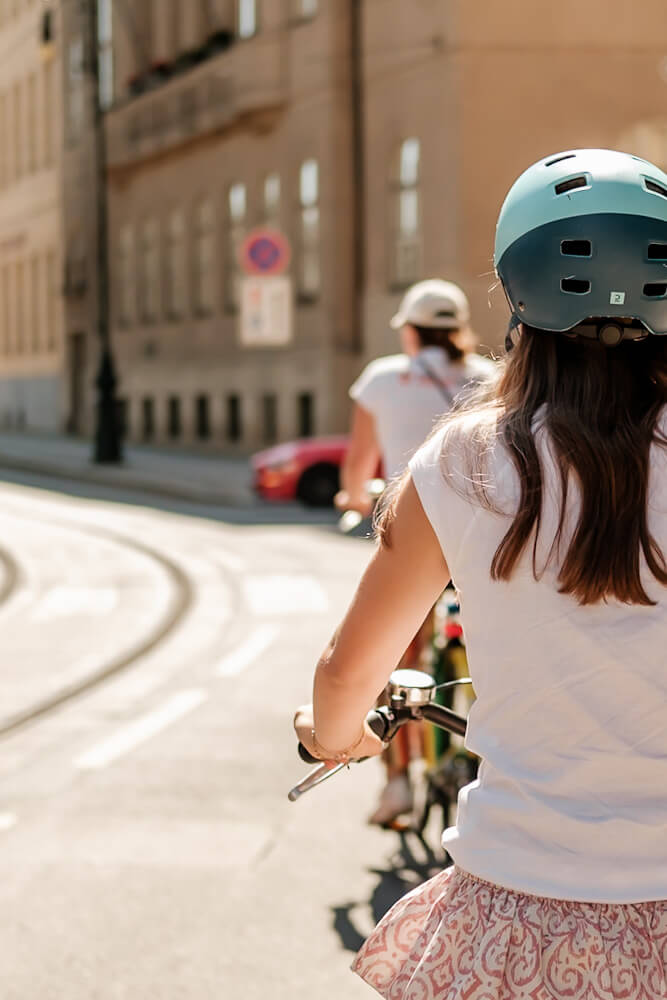
When you only have one day in Prague, you naturally want to see as much of the city as possible. At the same time, it is nice not to spend the entire day rushing from one attraction to another. A cycling tour is a great way to explore different parts of Prague in a relatively short time. With a local guide, you can discover the city’s main sights while learning more about its history and the stories behind its buildings.
Cycling past Prague’s main sights
Several guided cycling tours take you through Prague’s historic centre and surrounding neighbourhoods. Depending on the route, you may pass places such as Old Town Square, the Astronomical Clock, Wenceslas Square and Charles Bridge. Neighbourhoods such as Josefov, the historic Jewish Quarter, and Malá Strana are also often included. What I particularly like about exploring a city with a guide is that you learn much more than you would by simply walking between the best known sights. You cycle through different neighbourhoods, pass historic buildings and discover details you might otherwise overlook.
A guided cycling tour is a nice activity to plan at the beginning of your visit. It gives you a good introduction to Prague and helps you get a feel for the different parts of the city. Afterwards, you can return to the places that caught your attention and explore them at your own pace.
Old Town Square: the historic heart of Prague
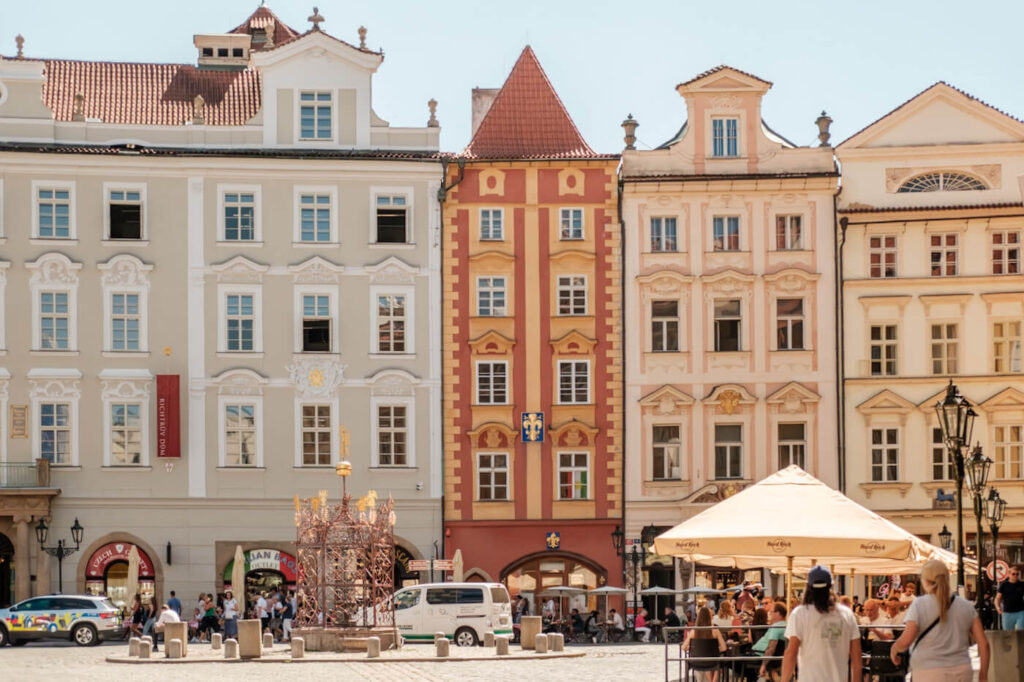
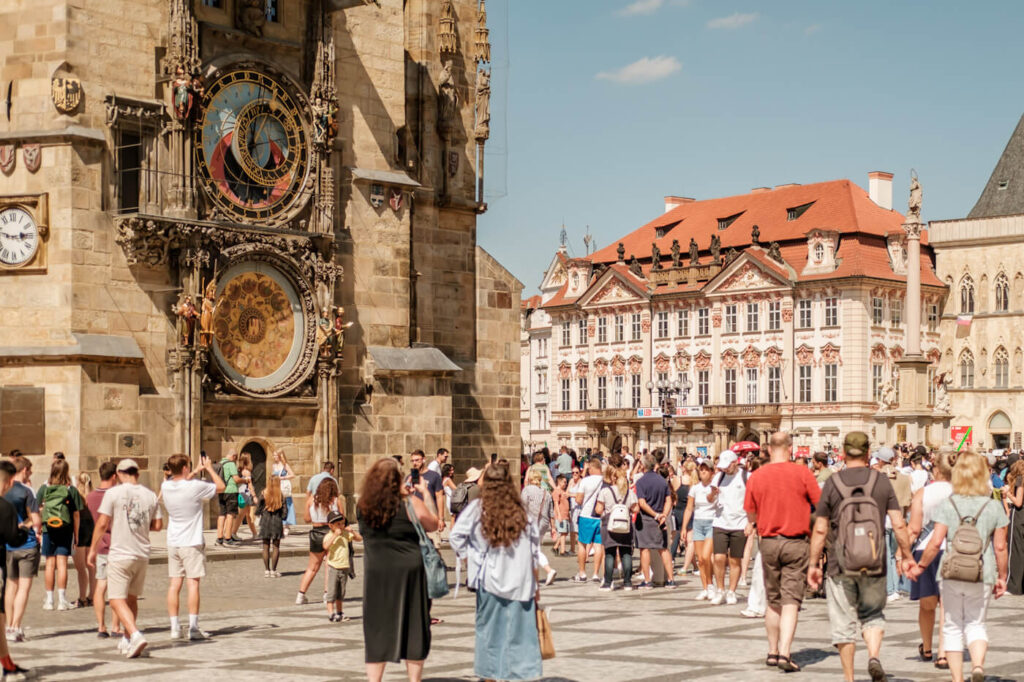
Old Town Square (Staroměstské náměstí) is one of the busiest places in Prague, along with Charles Bridge. But as soon as you step onto the square, it is easy to understand why. The square is surrounded by historic buildings with richly detailed facades in soft pastel colours, alongside impressive churches and towers.
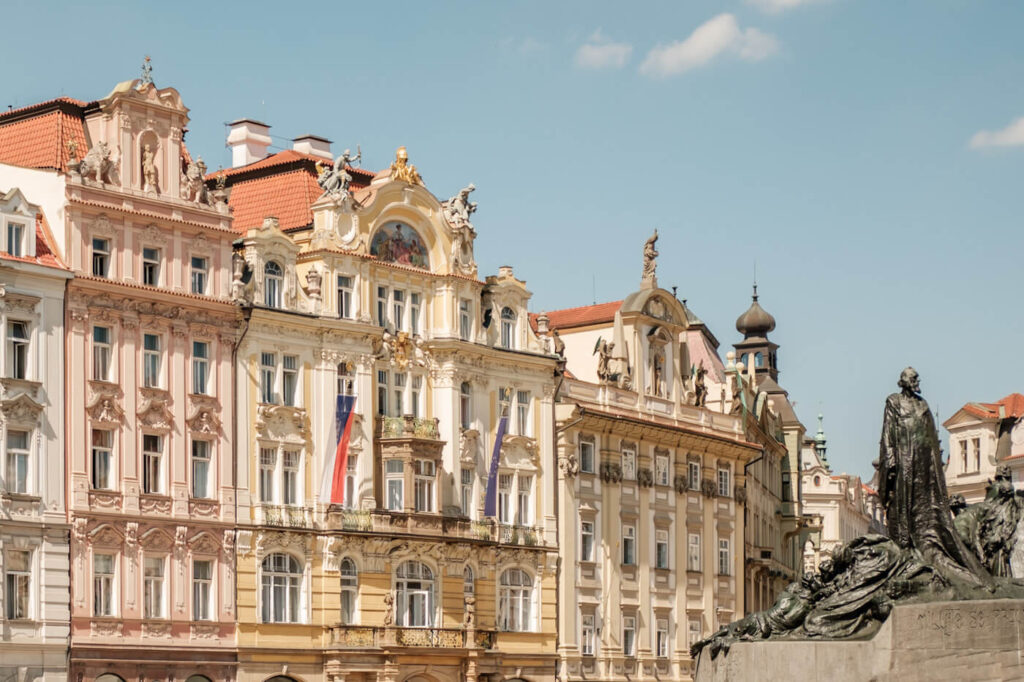
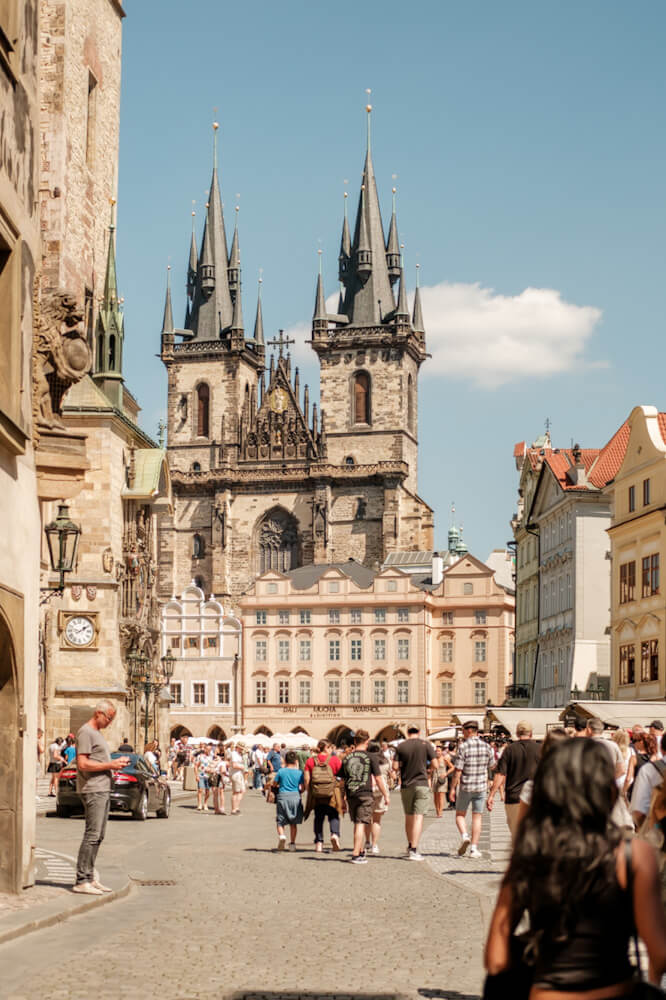
The Church of Our Lady before Týn and the Astronomical Clock
The two dark towers of the Church of Our Lady before Týn immediately catch your attention when you approach Old Town Square. This Gothic church, often simply called Týn Church, is one of Prague’s most recognisable buildings. I particularly like the contrast between its pointed towers and the colourful facades of the buildings in front of it.
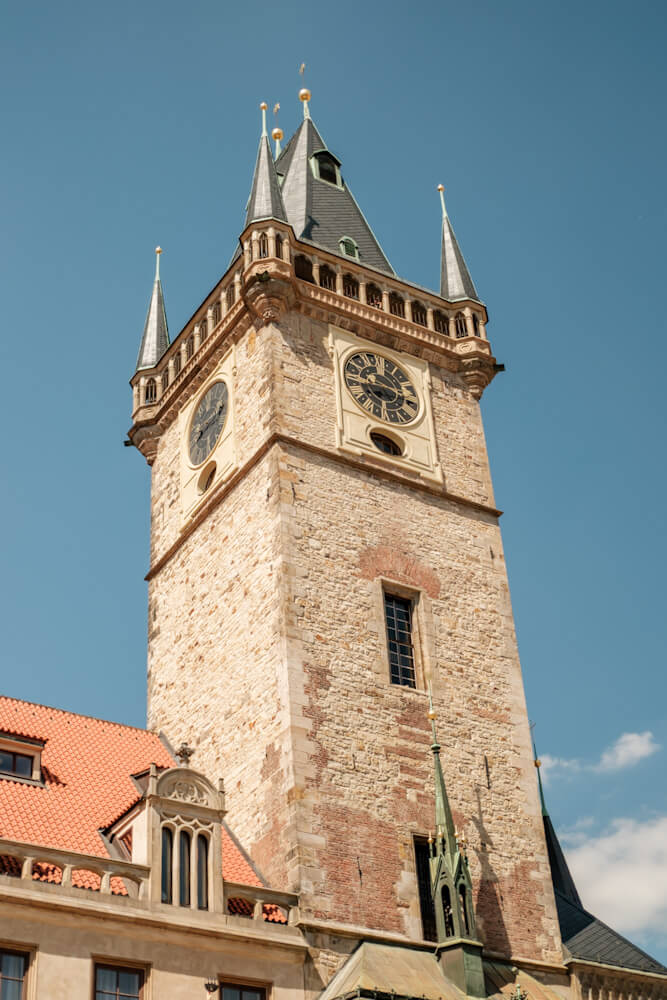
On the opposite side of the square stands the historic Old Town Hall with its famous Astronomical Clock, also known as the Orloj. Dating back to 1410, it is one of the oldest astronomical clocks in the world still in operation. Besides telling the time, it also shows the positions of the sun and moon. Every hour, people gather in front of the clock to watch a short display of moving figures. It is one of the busiest spots on the square, but even without the hourly display, the clock is fascinating to see up close. The craftsmanship is remarkable, especially when you consider that it was created centuries ago.
Wandering through Prague’s charming streets
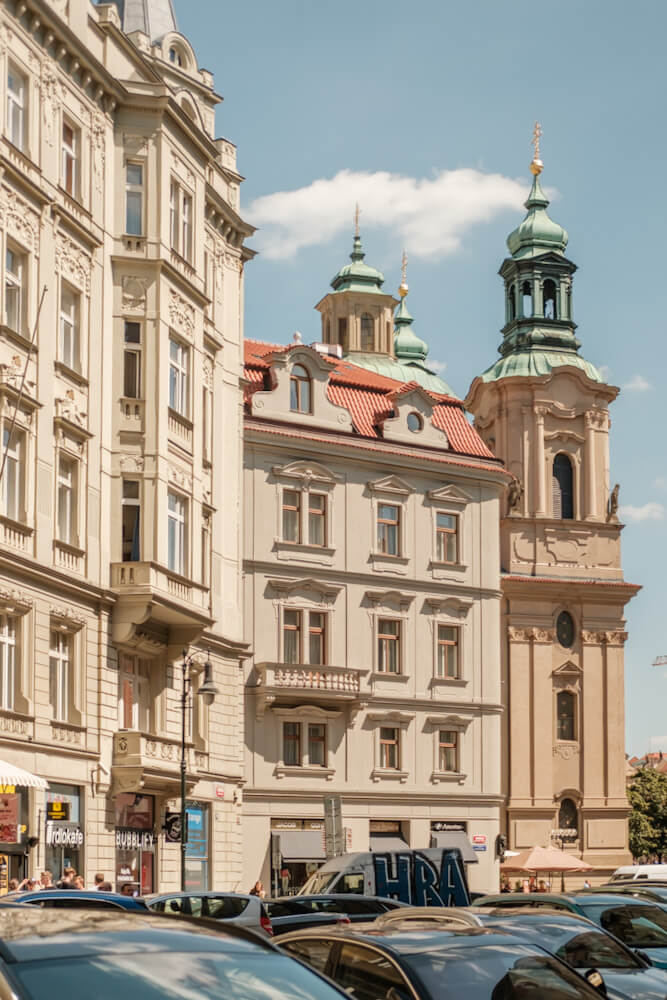
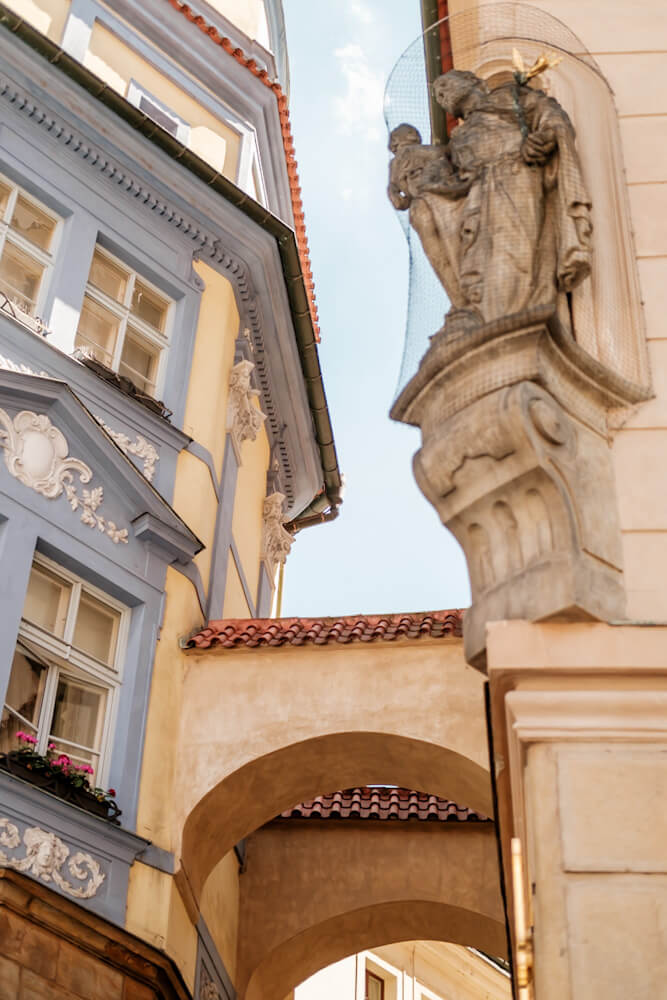
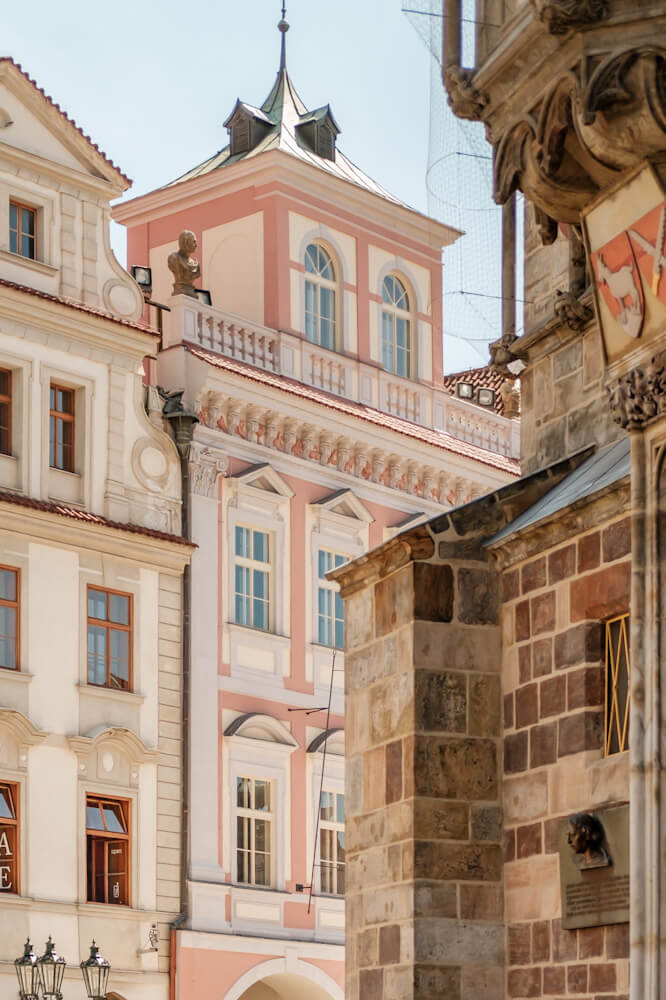
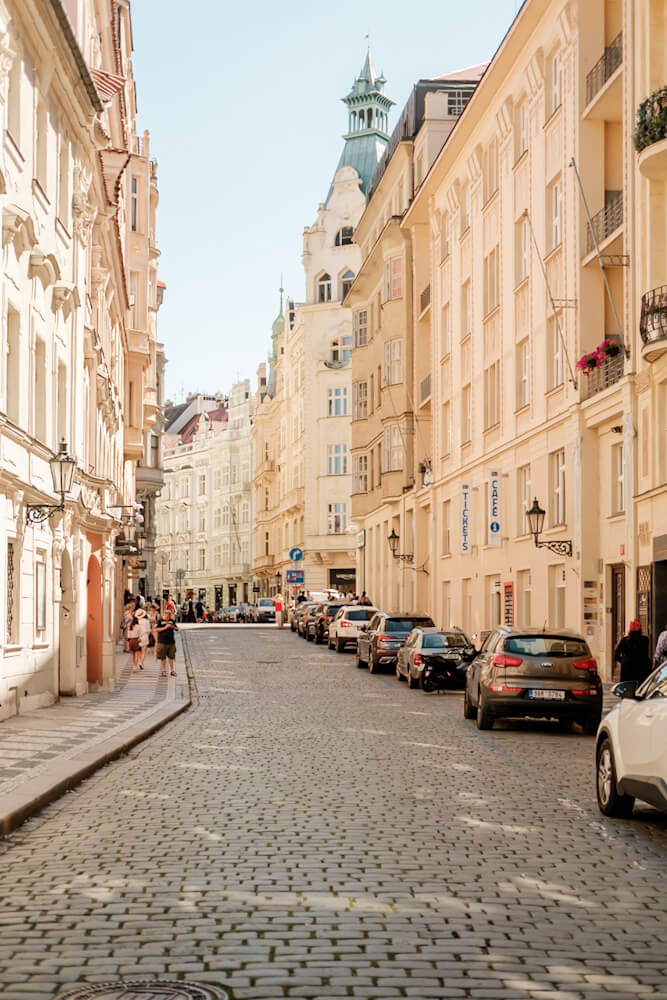
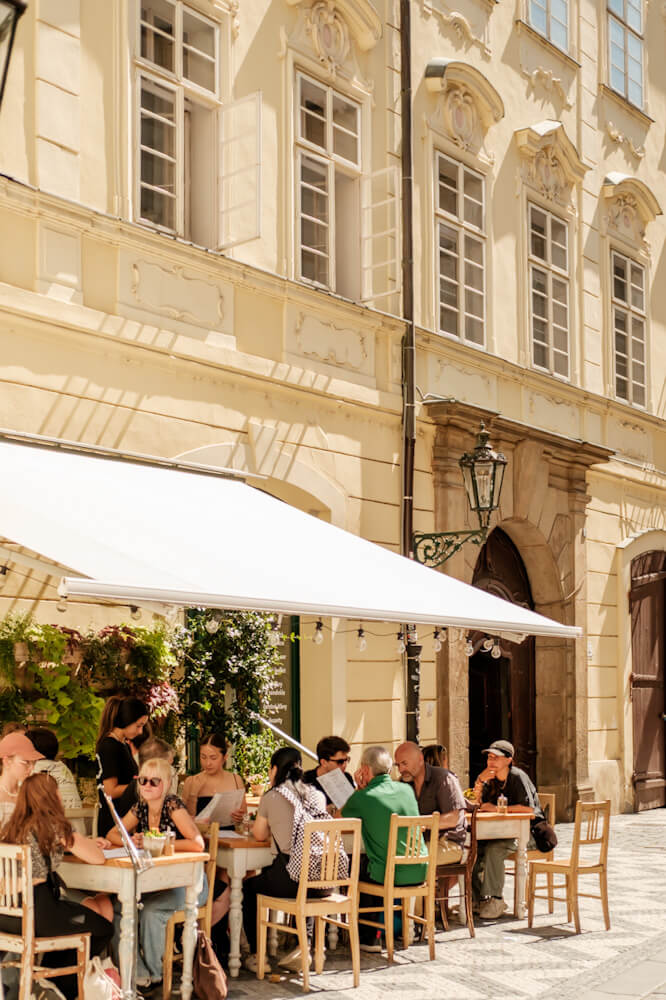
As impressive as Old Town Square is, I find Prague just as beautiful when you leave the larger squares behind and wander into the smaller streets. Throughout the historic centre, narrow lanes alternate with wide shopping streets and little squares. Sometimes you catch a glimpse of a church tower between the buildings, while just around the corner you suddenly find yourself standing in front of an elaborately decorated facade. The streets away from the busiest parts of the centre are particularly interesting if you enjoy photography, with unexpected views appearing around almost every corner. They are also noticeably quieter than the city’s most famous sights.
The architecture here is wonderfully varied. Baroque churches, Gothic towers and buildings with elegant decorative details often stand right next to one another. Many facades are painted in warm shades, ranging from pale yellow and soft pink to ochre and terracotta. These colours look particularly beautiful when the sun is lower in the sky. Prague’s characteristic red trams are another familiar part of the streetscape. They travel between the historic buildings, creating an interesting contrast with the older architecture.
Art and interesting places along the Vltava River
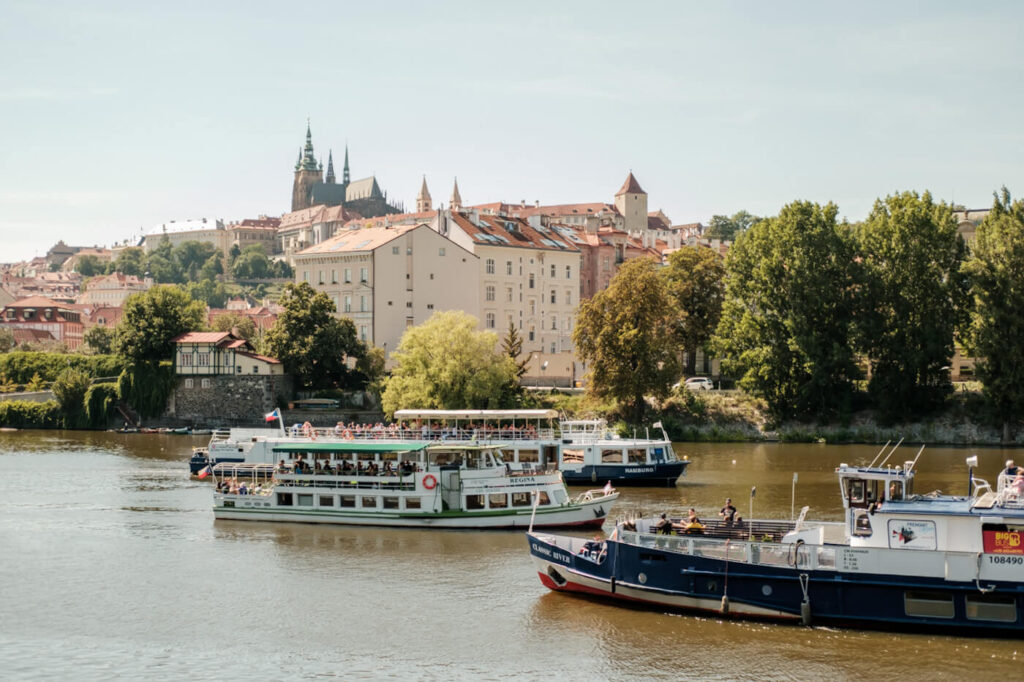
The Vltava River flows through Prague and, together with its many historic bridges, is an important part of the city’s character. Charles Bridge is undoubtedly the most famous of them all. Another interesting place to explore is Kampa, an island on the Malá Strana side of the river, close to Charles Bridge. The atmosphere here feels quite different from the busy squares of the Old Town. There is a park, historic buildings and several works of art to discover.
Art on Kampa Island
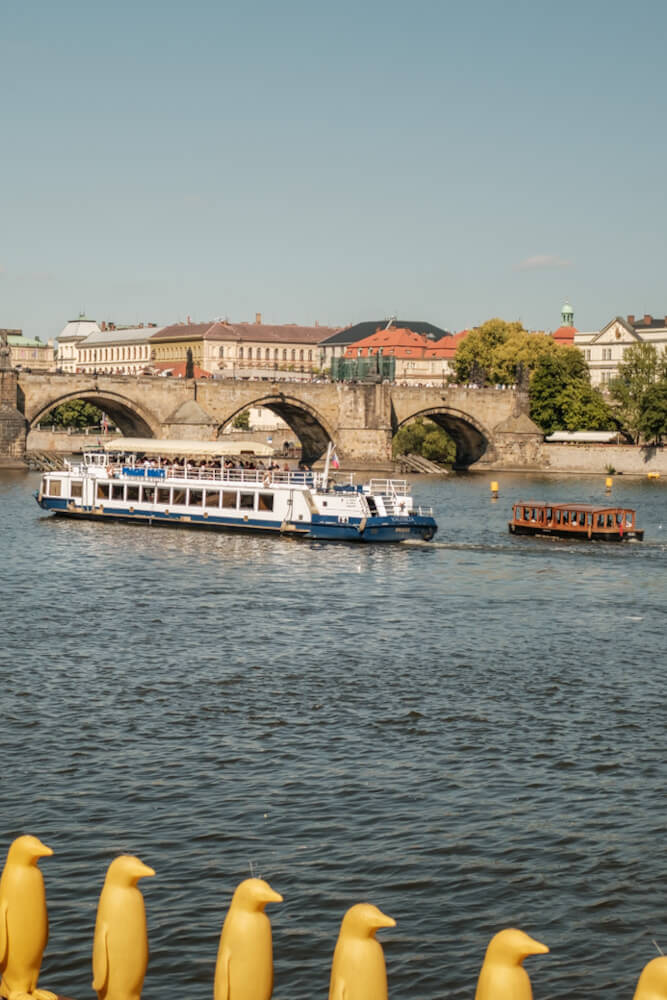
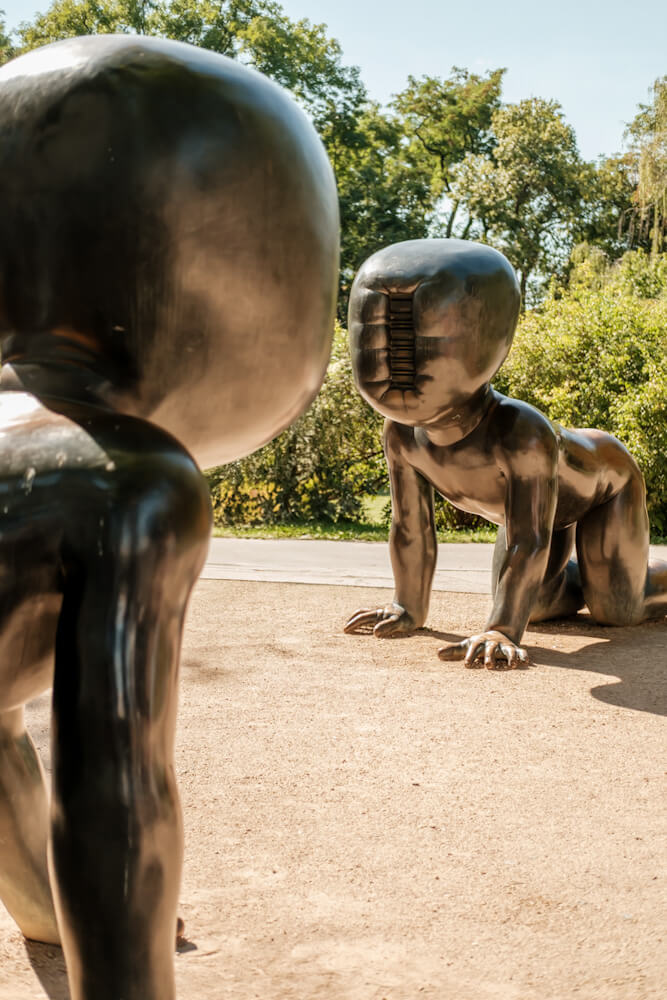
Near Museum Kampa, you will find three bronze sculptures of crawling babies created by Czech artist David Černý. One look at their strange, flattened faces is enough to realise that the artist is not afraid of being a little provocative. A short walk away, a row of bright yellow penguins stands beside the river, another art installation that attracts plenty of attention. The colourful figures stand out against the historic buildings and the river behind them. From here, you can continue walking along the Vltava or make your way back towards Charles Bridge through the streets of Malá Strana.
Charles Bridge: one of Prague’s most beautiful sights
Charles Bridge (Karlův most), stretching for more than 500 metres across the Vltava, is one of Prague’s most important landmarks. Construction of the stone bridge began in 1357 under the orders of King Charles IV. It connects the Old Town, known as Staré Město, with the Malá Strana neighbourhood on the opposite bank of the river. Along both sides of the bridge stand thirty statues and sculptural groups, most of them created in the Baroque style. Nearly all depict saints and religious figures. Monumental towers mark both ends of the bridge, giving it an almost fairytale appearance, especially in misty weather or around sunset.
During the day, the bridge is usually very busy. Visitors walk between the statues, street musicians perform and people stop everywhere to take photographs. Even so, it is worth taking your time as you cross rather than focusing only on the buildings in the distance. The statues themselves, the details in the stonework and the views between the towers are all beautiful.
From the bridge, you have views across the Vltava in both directions. You can see other historic bridges, the characteristic red rooftops and the many towers rising above the city. On the Malá Strana side, Prague Castle stands high above the surrounding buildings, with the impressive St. Vitus Cathedral among its most recognisable landmarks.
Charles Bridge is also beautiful to photograph from the banks of the Vltava. From different spots along the water, you can capture its stone arches, bridge towers and the historic buildings in the background. As you walk further along the river, the perspective changes, allowing you to photograph the bridge from a different angle each time.
Charles Bridge at sunset: Prague at its most beautiful
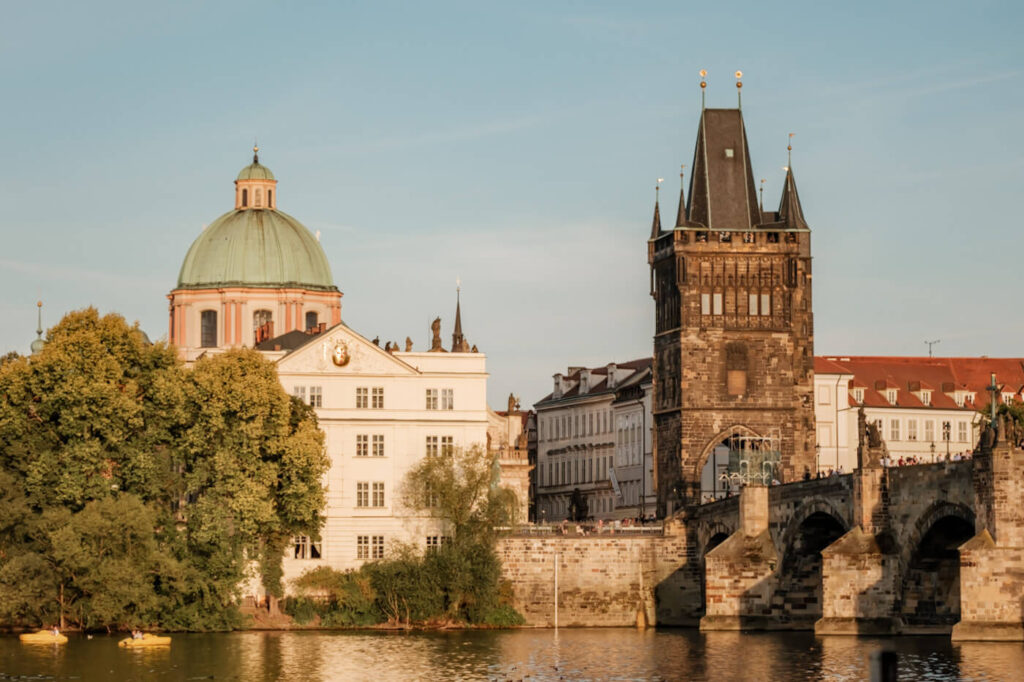
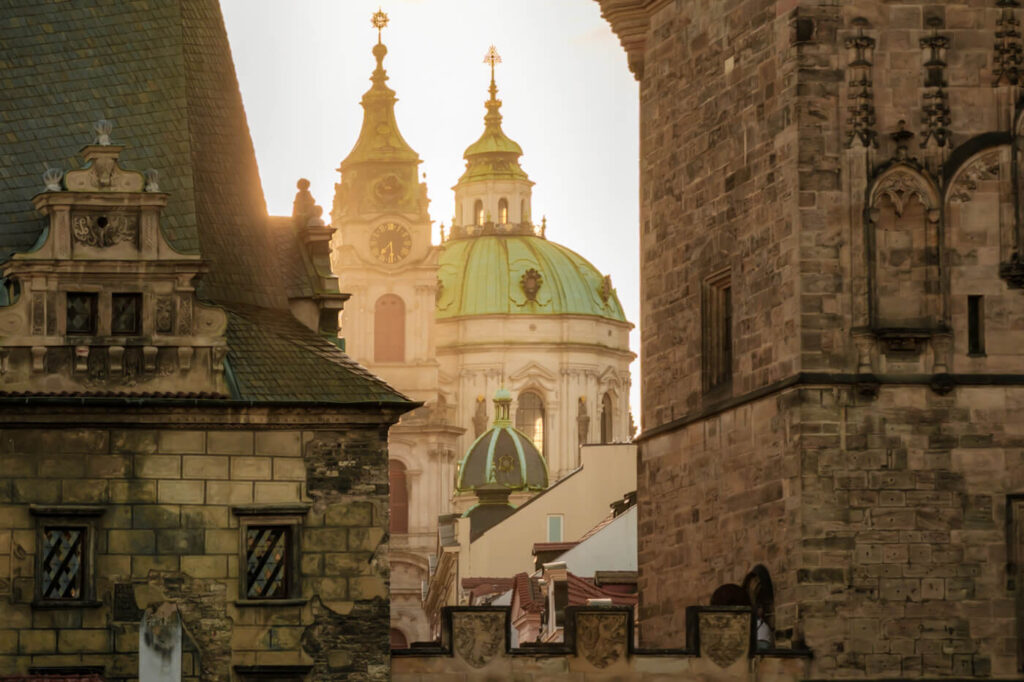
Prague is already a beautiful city during the day, but I think the area around Charles Bridge is perhaps even more attractive towards the evening. As the sun gradually sinks lower, the light changes and the historic buildings take on a warm glow. Facades turn golden, shadows grow longer and reflections begin to appear on the water. It is a lovely time to wander along the Vltava, especially if you have a camera with you. From the riverbanks, you have open views across the water towards the bridges and buildings on the opposite side. In some places, you can look towards Prague Castle, while from other viewpoints you see the towers and domes of the Old Town. If you enjoy photography, this may well be the best time of day to explore the area.
Where to stay in Prague
Although we visit Prague for just one day from the Pilsen region, it is certainly a city where you could easily spend several days. There is plenty to see and do, and staying overnight also gives you the opportunity to explore in the early morning or evening, when many parts of the city are quieter. If you would like to stay close to the main sights, the Old Town (Staré Město) is a good choice. Malá Strana, on the opposite side of Charles Bridge, is another attractive area to stay. The following three hotels in Prague offer good value for money.

Plaza Prague Hotel - Czech Leading Hotels
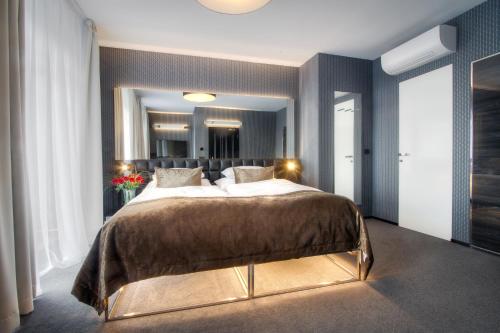

Don Giovanni Hotel Prague - Great Hotels Of The World
Good to know before visiting Prague
Planning a visit to Prague is fairly straightforward, but there are a few practical things worth knowing beforehand. Below, I answer some common questions about exploring the city.
Is Prague easy to explore on foot?
Yes, most of the main sights in Prague’s historic centre are within walking distance of one another. Keep in mind that many streets are cobbled and some areas are quite hilly, particularly around Prague Castle. For longer distances, you can use the city’s trams or metro.
Can you pay with euros in Prague?
The official currency of Czechia is the Czech koruna (CZK). Some tourist areas accept euros, but paying in the local currency is usually better value. Card payments are widely accepted throughout the city.
What is the best time to visit Prague?
Spring and autumn are lovely times to visit Prague, with generally pleasant temperatures for exploring the city on foot. Summer tends to be busier, while December is particularly popular for its Christmas markets.