As you drive from Cuenca into the mountains of the Serranía de Cuenca, you pass a remarkable place along the way: Ventano del Diablo. This natural viewpoint sits high above the gorge of the Júcar River and is worth stopping for the scenery alone. But there is another good reason to pull over here: griffon vultures live around the steep cliffs of the gorge and there is a very good chance of seeing these impressive birds.
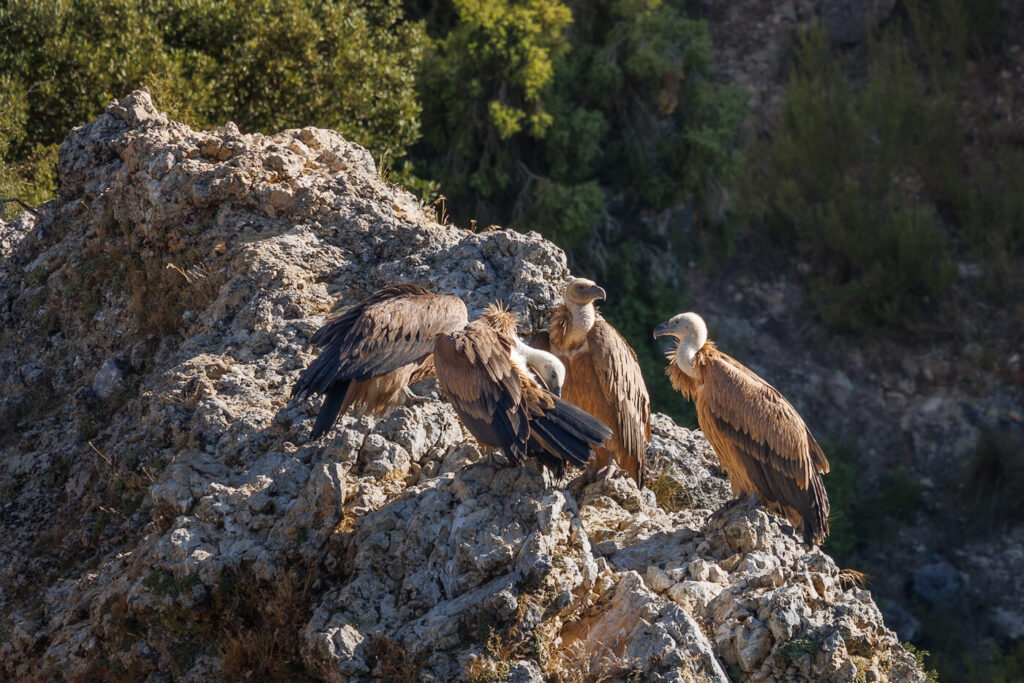
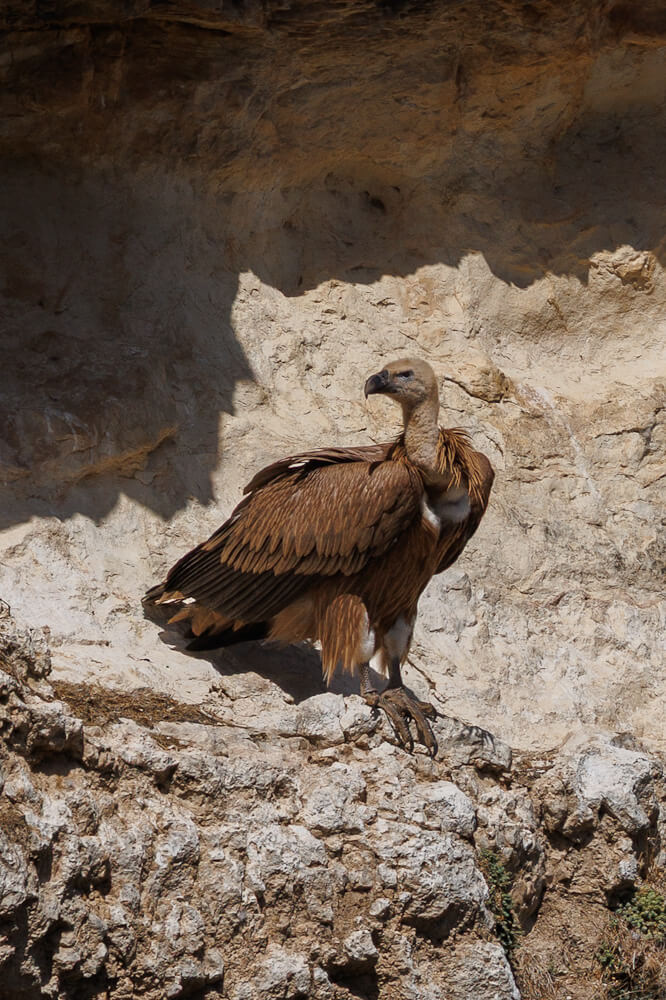
We visit Ventano del Diablo on our way to Ciudad Encantada and arrive at around 9 am. Across the gorge, we spot a group of griffon vultures resting on a rocky ledge. They are enjoying the morning sun and seem in no hurry to take off. When we return later that day, the scene is completely different. The vultures are flying throughout the gorge, taking off, circling along the cliffs and landing again. At one point, there are at least fifteen of them above our heads. For someone with a camera in hand, it is hard to imagine a better sight.
Read this article in DutchWhat is Ventano del Diablo?
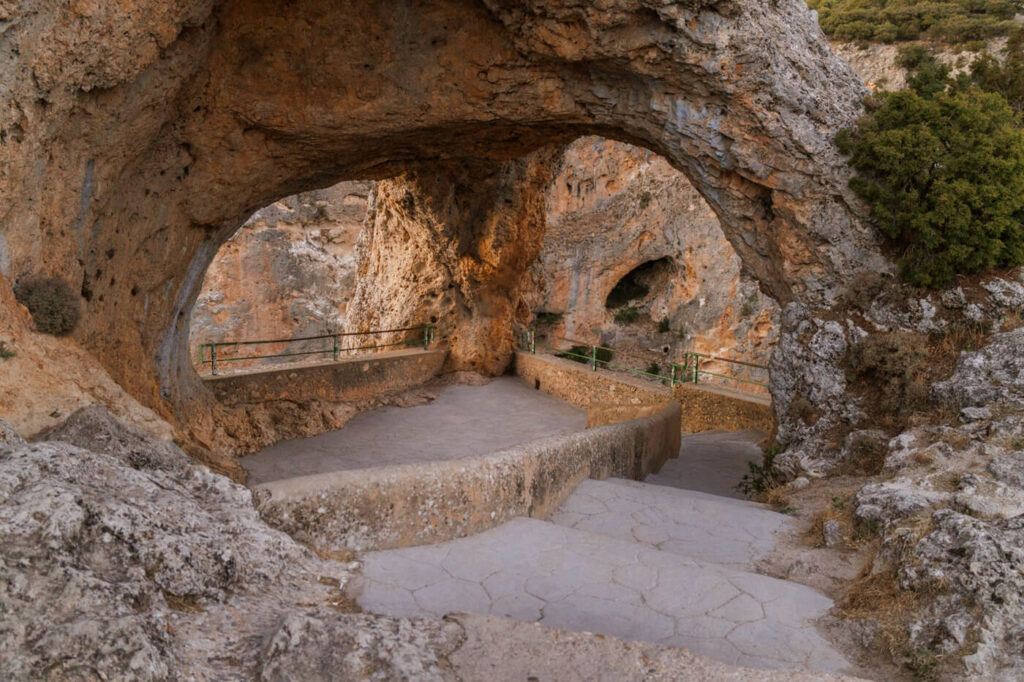
Ventano del Diablo is located in the province of Cuenca, in the Spanish region of Castilla-La Mancha. Its name literally means ‘the Devil’s Window’. Once you reach the viewpoint, it is easy to see where the first part of the name comes from. Natural openings in the limestone rock form window-like frames overlooking the deep gorge of the Júcar. Through them, you can see the river, steep cliffs and vast forests of the Serranía de Cuenca.
The viewpoint lies along the CM-2105, a short drive from Villalba de la Sierra. From the car park, it is only a short walk to the viewpoint. This makes Ventano del Diablo an easy and interesting stop on a journey through the Serranía de Cuenca.
Spotting griffon vultures at Ventano del Diablo
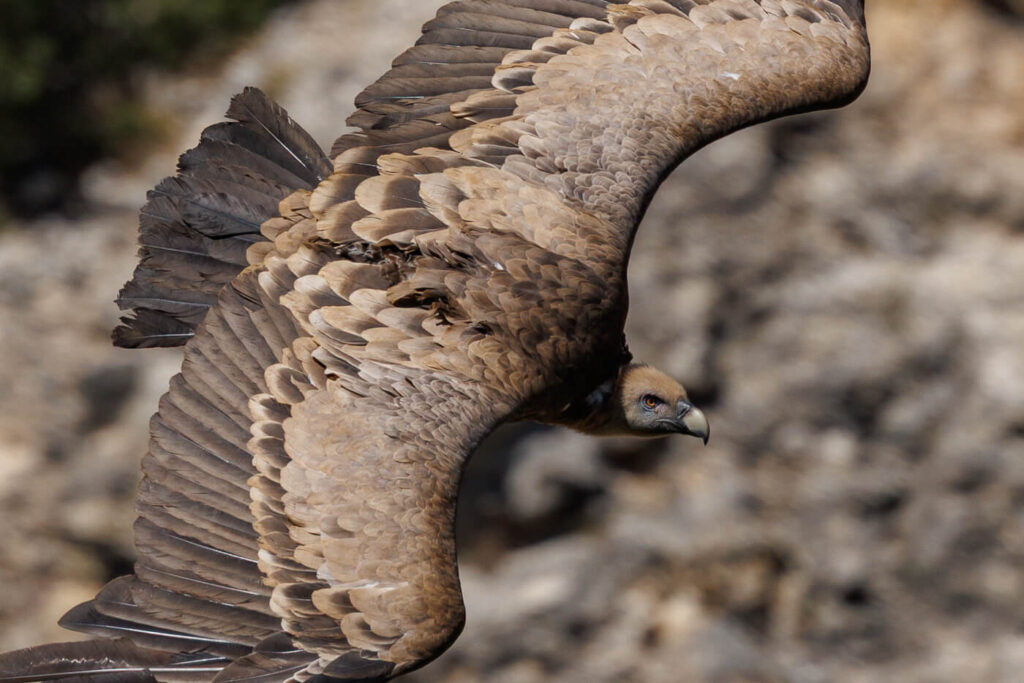
Ventano del Diablo is one of the best places around Cuenca to see griffon vultures. These enormous birds, with a wingspan of up to around 2.5 metres, rest and breed on the steep cliffs of the gorge and use rising currents of warm air to soar above it.
When we arrive at Ventano del Diablo at around 9 am, the sky is still quiet. In fact, everything is quiet. There is nobody else here, which I had not expected at all. After scanning the cliffs with my telephoto lens, I spot a group of griffon vultures sitting on the rocks across the gorge. This alone is a good reason to bring binoculars or a telephoto lens. With the naked eye, the birds blend surprisingly well into the colours of the rock.
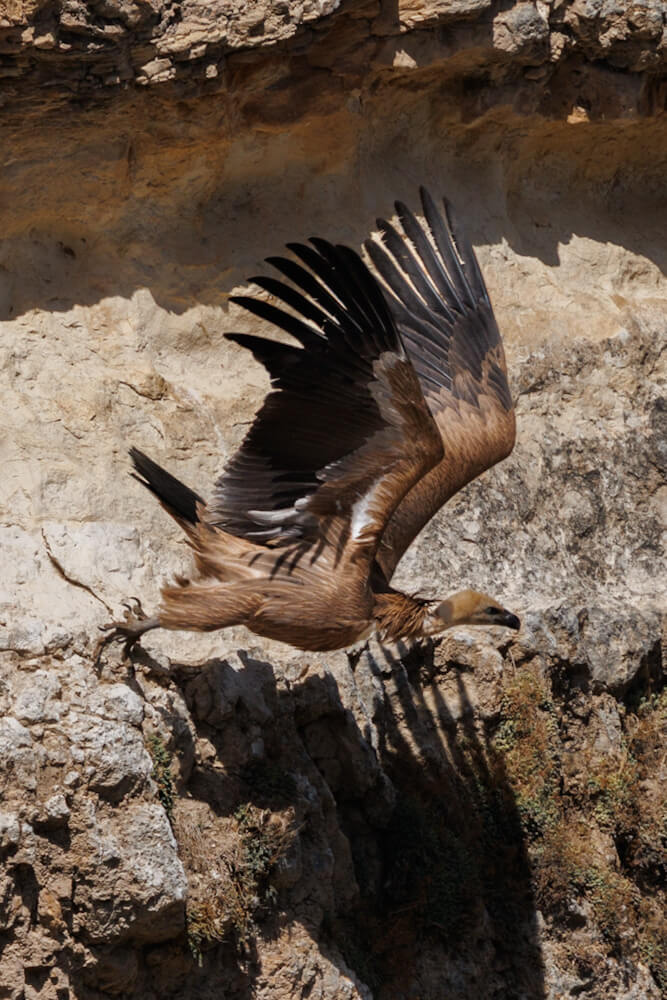
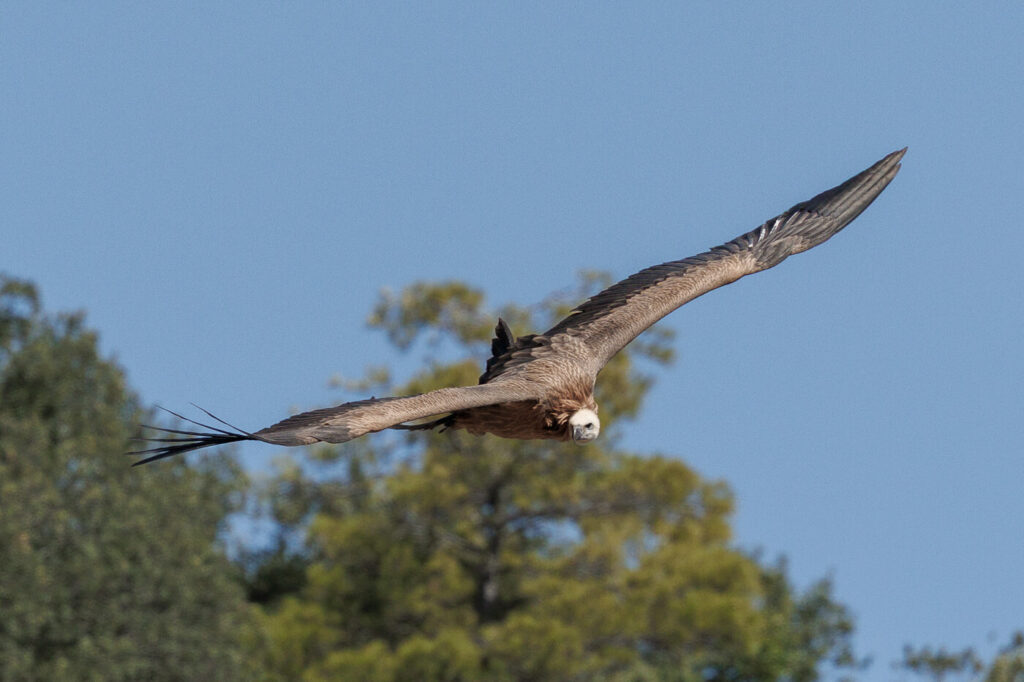
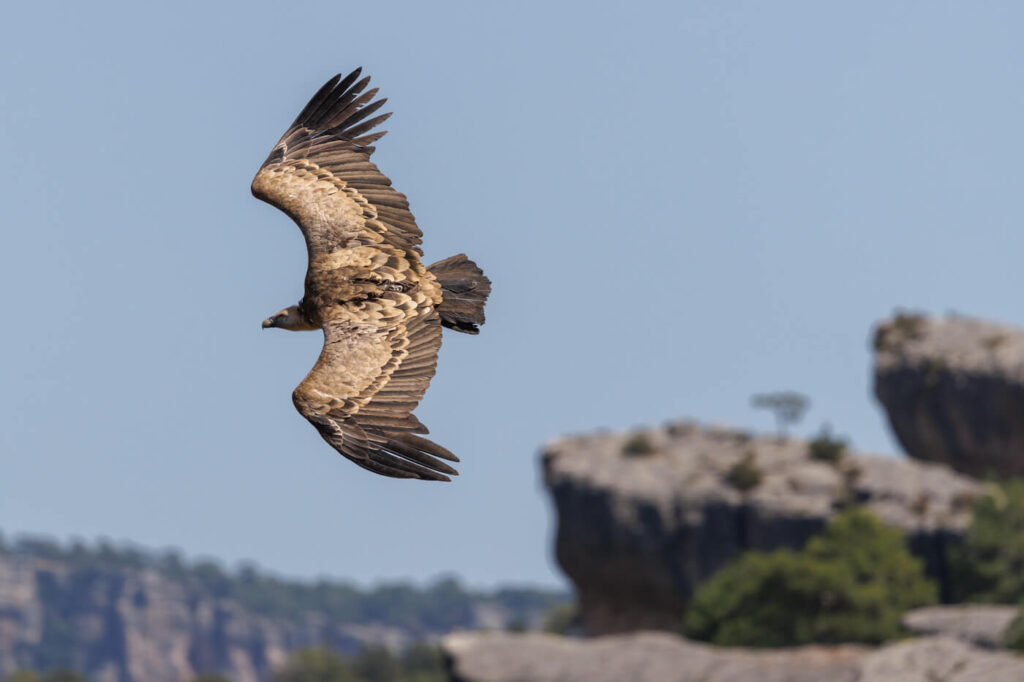
We decide to continue to Ciudad Encantada first and go for a walk there before returning later, hoping the vultures might be more active by then. It turns out to be a good decision. There is still nobody else around and the vultures are now much more active. Birds repeatedly take off, gain height, circle high above the gorge and then glide past the viewpoint at eye level. Some land again while others take off, almost as if they are taking turns. At one point, there are at least fifteen griffon vultures in the air at the same time.
Because you are standing high above the Júcar yourself, you are not always looking up at the birds either. They regularly pass at eye level and sometimes you can even look down on them as they glide through the gorge. That is exactly what makes Ventano del Diablo such an interesting place for photography.
Why are there so many griffon vultures here?
The Serranía de Cuenca provides excellent habitat for griffon vultures. The landscape is made up of extensive forests, limestone formations, deep river gorges and high cliffs. Those cliffs are particularly important. Griffon vultures rest and breed on inaccessible ledges and hollows in steep rock faces and the Júcar Gorge provides plenty of suitable places.
Later in the day, thermals also play an important role. As the sun warms the landscape, rising currents of warm air develop. Large birds of prey such as griffon vultures use these currents to gain height, allowing them to cover long distances with barely a flap of their wings. Our two visits on the same day illustrate this perfectly. At around 9 am, the birds are still gathered on the rocks. A few hours later, the sky above the gorge is suddenly filled with circling vultures. Of course, that does not mean you will find resting vultures here every morning and fifteen birds in the air every afternoon. These are wild animals and there are never any guarantees. But if you do not see much during your first visit, it can certainly be worth returning later in the day.
More bird species
While I am photographing the vultures, I suddenly notice more and more tiny black dots appearing in the sky. At first, I do not pay much attention to them, but then I hear them. European bee-eaters. An enormous flock of them. With their striking colours, European bee-eaters are among the most beautiful birds you can encounter in Spain. From a distance, however, there is little to reveal those colours and they initially look like small dark birds. Their distinctive calls soon give away what is flying overhead. Unfortunately, these colourful birds remain too far away to photograph properly, so I soon turn my attention back to the vultures.
Besides griffon vultures, you can encounter many other bird species around Ventano del Diablo and throughout the Serranía de Cuenca. Keep an eye out for birds of prey such as Egyptian vultures, golden eagles, short-toed snake eagles and peregrine falcons. Species such as the common rock thrush and Alpine chough also occur in this rocky landscape. What you actually see will vary with the season and, as always with wildlife, there is a certain amount of luck involved.
Views over the Júcar Gorge
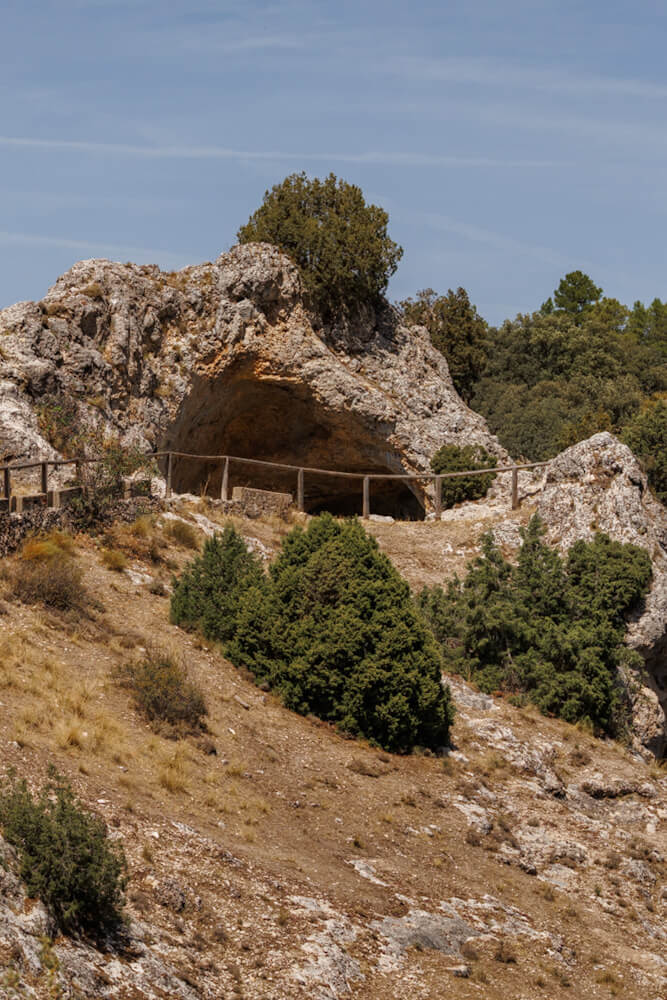
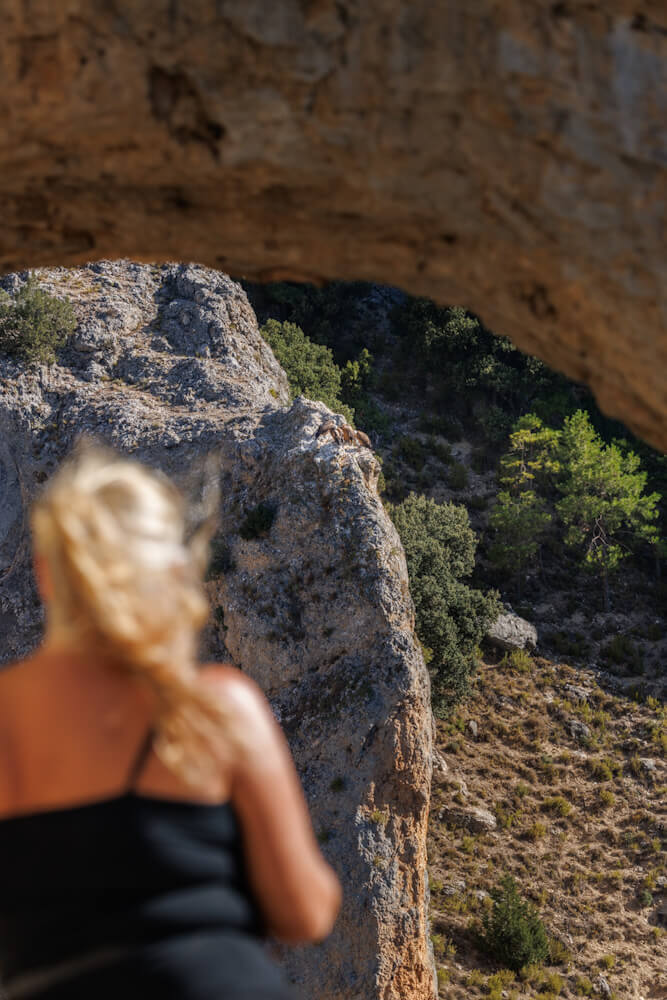
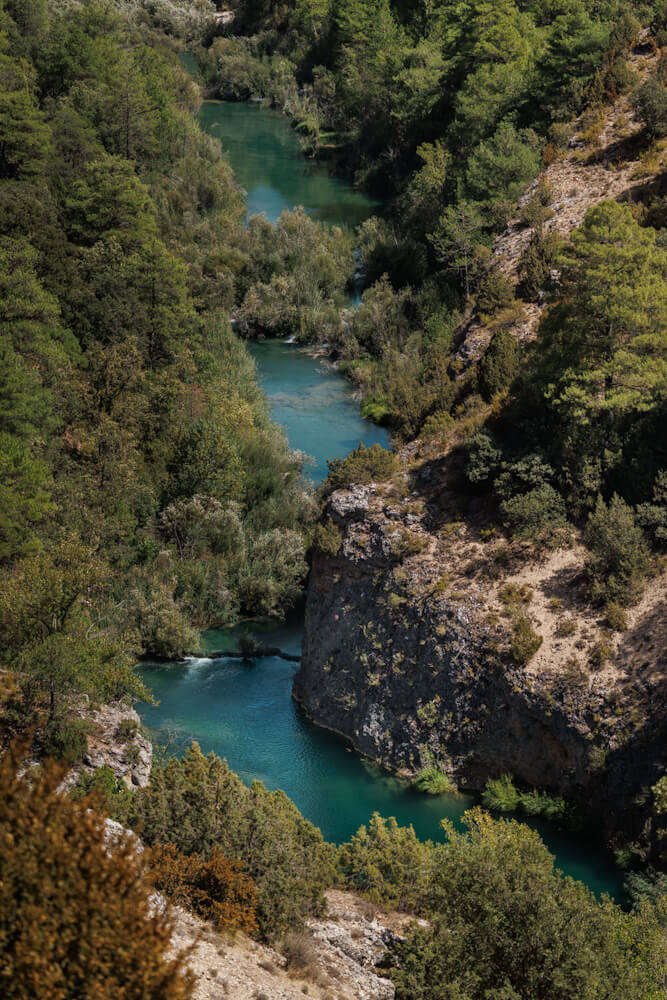
Even without the vultures, Ventano del Diablo is a beautiful place to stop. From the natural balcony, you look deep into the Hoz del Júcar, the gorge carved out by the river. Far below, the Júcar flows between the cliffs. The contrast between the blue-green water, pale limestone and green forests makes the scenery particularly attractive. There are several openings and places from which you can look into the gorge. Take some time to walk around rather than stopping only at the first viewpoint. And look carefully at the cliffs on the opposite side. Griffon vultures may be sitting there without you noticing them at first.
Photographing griffon vultures at Ventano del Diablo
For photographers, Ventano del Diablo is a fantastic place. The landscape is impressive, but for me the main attraction is the opportunity to photograph griffon vultures in flight at eye level. I am glad I brought my Canon RF 100-500mm lens. The distance to the birds changes constantly. Vultures resting on the cliffs across the gorge require plenty of reach while birds in flight can suddenly come surprisingly close.
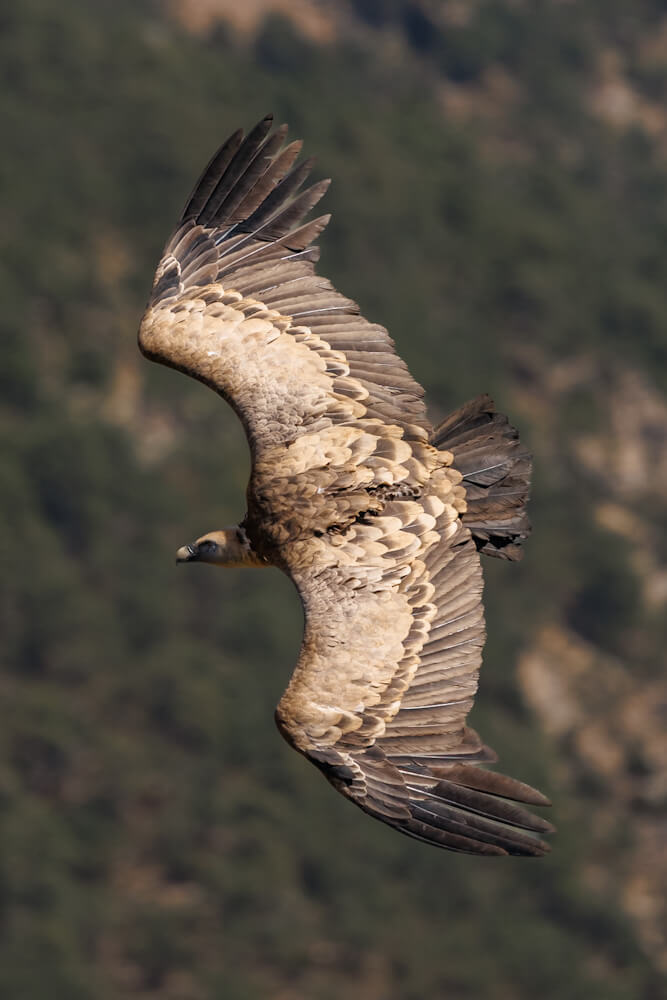
Standing high above the gorge also gives you photographic opportunities that are much harder to find from ground level. The vultures sometimes fly at roughly the same height as the viewpoint, allowing you to photograph them from the side with cliffs and forests in the background instead of just blue sky. When they fly lower through the gorge, you can even photograph them slightly from above.
For birds in flight, I use a fast shutter speed of 1/1600s and continuous autofocus. After that, it is mainly a matter of watching carefully and keeping your camera ready. A vulture that appears to be heading away can make a few wide circles and suddenly glide close past the viewpoint again.
Where is Ventano del Diablo?
Ventano del Diablo is located in Parque Natural Serranía de Cuenca, north of the city of Cuenca. The viewpoint lies along the CM-2105 between Villalba de la Sierra and Uña. From Cuenca, the drive takes around half an hour. The road takes you steadily deeper into the Serranía and becomes particularly scenic beyond Villalba de la Sierra. This makes the viewpoint easy to include in a day trip from Cuenca. If you are also planning to visit Ciudad Encantada, stopping at Ventano del Diablo makes perfect sense.
Parking at Ventano del Diablo
There is a car park directly beside the CM-2105 at Ventano del Diablo and from here you can walk straight to the viewpoint. The car park is not particularly large and can fill up on busy days. If you are only coming for the view, you do not need much time at Ventano del Diablo. The gorge is only a short walk from the car park. If you are hoping to see and photograph the vultures, I would allow more time. We even stop twice on the same day and it is our second visit that produces the best sightings and photographs. During both of our visits in early September, at around 9 am and again towards the end of the morning at around 11.30 am, it is remarkably quiet. A few people stop to take a look now and then, but most leave again fairly quickly.
Combining Ventano del Diablo with Ciudad Encantada
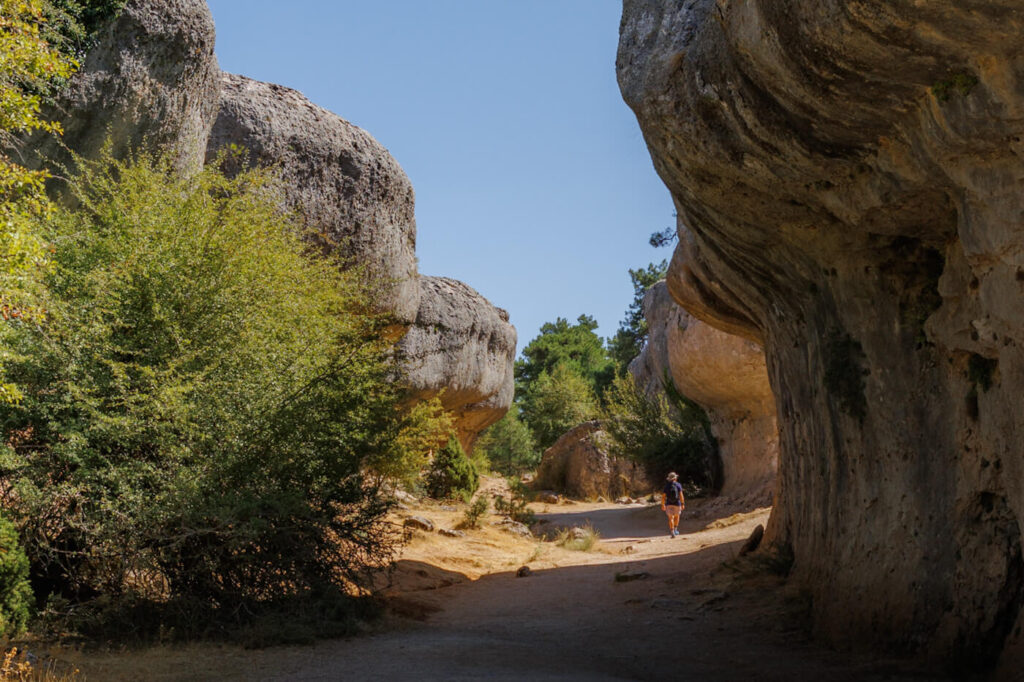
Ventano del Diablo is very easy to combine with Ciudad Encantada. That is exactly what we do. We first stop at Ventano del Diablo in the morning, then continue to Ciudad Encantada for a walk and stop to see the vultures again on the way back. Ciudad Encantada means ‘Enchanted City’ and consists of an unusual landscape of limestone rock formations. Over millions of years, water, wind and other forms of erosion have shaped the limestone into curious forms. With a little imagination, some of the rocks resemble animals, people or everyday objects. A walking route leads through the area past the best-known formations. Allow around one and a half to two hours if you also want to take your time photographing them along the way.
Cuenca as a base
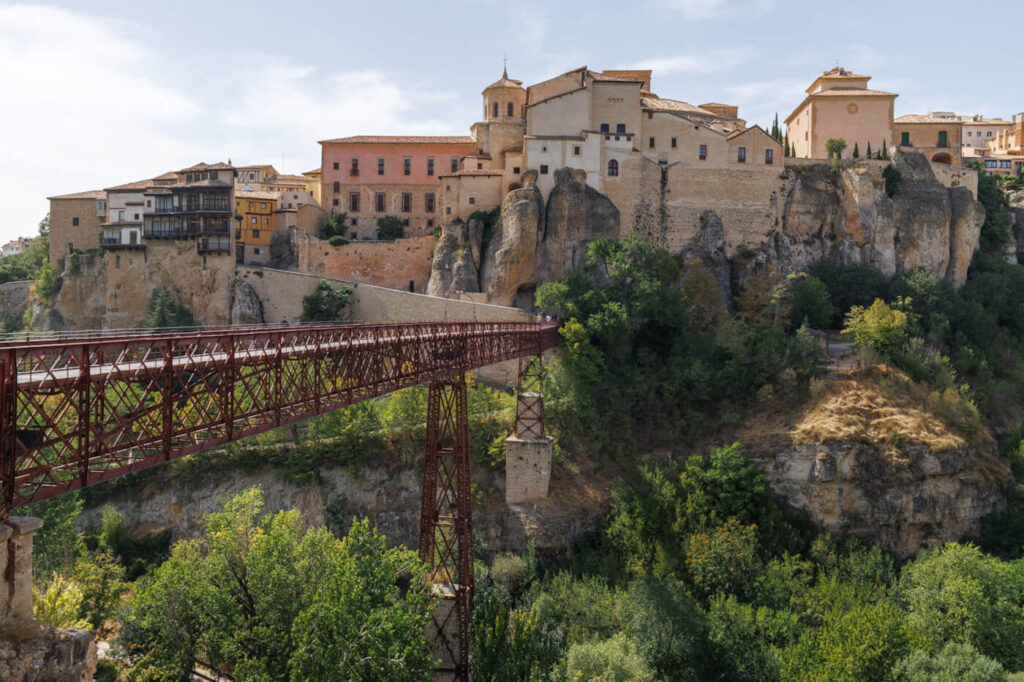
Cuenca itself is well worth visiting too. The historic city occupies a dramatic rocky plateau between the gorges of the Huécar and Júcar rivers and is best known for the Casas Colgadas, the famous Hanging Houses built along the edge of the cliffs. From Puente de San Pablo, you have one of the best-known views of the Hanging Houses and the old town. But there is much more to Cuenca than this single viewpoint. Its historic centre, with narrow streets, squares and cathedral, is part of a UNESCO World Heritage Site. From Cuenca, it is easy to continue into the Serranía de Cuenca, which means Ventano del Diablo and Ciudad Encantada can comfortably be combined in a single day.
Recommended places to stay in Cuenca
These three well-rated places to stay are conveniently located for visiting Ventano del Diablo and make a good base if you want to explore more of the region.

Parador De Cuenca

Nh Ciudad De Cuenca

Hotel Exe Cuenca
Is Ventano del Diablo worth visiting?
Ventano del Diablo is not a place that necessarily requires half a day. The viewpoint is close to the road and if you are mainly coming for the scenery, you can stop here briefly before continuing your journey. If you want to photograph griffon vultures, however, you will probably need a little more time and patience. The birds may be resting or sitting on the other side of the gorge. Sometimes there may not be enough thermal lift for them to take off and at other times they simply remain out of sight.
If you are staying in Cuenca and heading towards Ciudad Encantada, I would definitely include Ventano del Diablo along the way. And if you enjoy bird photography, make sure you bring your telephoto lens. There is a good chance you will end up staying here much longer than you expected.

