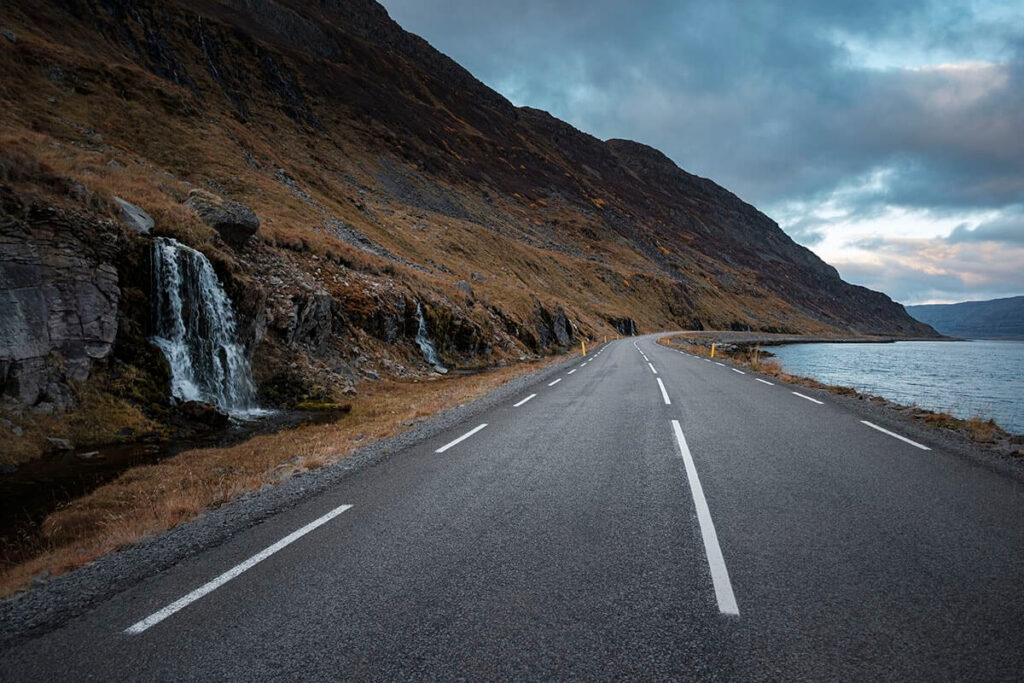
Not many people include the Westfjords in their itinerary when travelling around Iceland. Looking at the map, I can understand why. Exploring this remote part of the country adds quite a few kilometres to a journey around Ring Road 1. Many travellers also wonder what the roads in the Westfjords are actually like. While the route was once known for its long stretches of gravel and mountain passes that could be difficult to navigate outside the summer season, a lot has changed in recent years. Large sections have now been paved, and improvements to the infrastructure have made the region much more accessible.
Read this article in DutchThat said, this is still a wild and remote part of Iceland where the weather can have a major impact on road conditions. Outside the summer months in particular, mountain passes may temporarily close due to snow, ice or strong winds. Always check the latest conditions on Road.is before setting off. In this article, I’ll tell you more about the Westfjords Way, how the route has changed over the years and why I still consider the old road across the Hrafnseyrarheiði mountain pass one of the most beautiful stretches in the Westfjords.
Westfjords Way: the circular route through the Westfjords
The Westfjords Way is a circular route through Iceland’s Westfjords, largely following roads 60 and road 61. It is sometimes also referred to as Ring Road 2, as a counterpart to the well-known Ring Road 1 around Iceland. Along the way, you drive past deep fjords, cross mountain passes and travel through one of the most sparsely populated parts of the country. Towns such as Ísafjörður and Þingeyri lie along the route, as do well-known sights including Dynjandi.
One of the most significant changes to the route has been the opening of the Dýrafjarðargöng tunnel between Dýrafjörður and Arnarfjörður. The 5.7-kilometre tunnel is now part of road 60 and replaces the old route across the Hrafnseyrarheiði mountain pass. Taking the tunnel also shortens the journey by around 26 kilometres. For local residents, this provides a much more reliable connection, but as a visitor, the fastest route is not necessarily always the one you will want to take.
Road 626 across the Hrafnseyrarheiði mountain pass
Since the tunnel opened, the old route across the Hrafnseyrarheiði mountain pass is no longer part of road 60 and has been designated road 626. Road 626 runs between Þingeyri and the junction with road 60 near Dynjandi and is entirely unpaved. In good weather conditions, you can still drive this spectacular mountain route, but there is no regular winter maintenance and the road can remain closed for extended periods during the winter months.
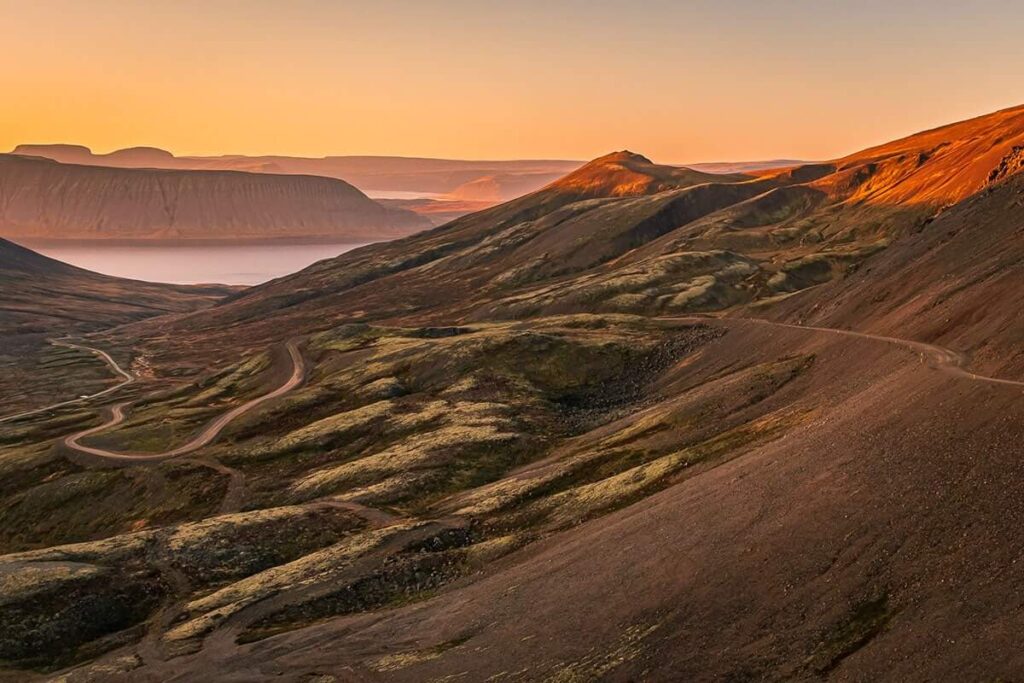
Hrafnseyrarheiði and Arnarfjörður
When we drive this route in mid-October, the weather is clear and calm, with temperatures hovering around freezing. The road is easy to drive and we encounter only a few small patches of ice along the way. Conditions can be very different, however, and the mountain pass is regularly closed outside the summer season. These days, when the pass is inaccessible, you can simply take the Dýrafjarðargöng tunnel instead.
If road 626 is open and the weather conditions are favourable, I would definitely choose the mountain pass and skip the tunnel. For me, Hrafnseyrarheiði and the road along Arnarfjörður are two of the most beautiful stretches of this route through the Westfjords. The drive along Arnarfjörður is particularly scenic, and with a little luck you may even spot whales from the car. It is a wild and wonderfully remote part of Iceland that feels very different from many other parts of the country.
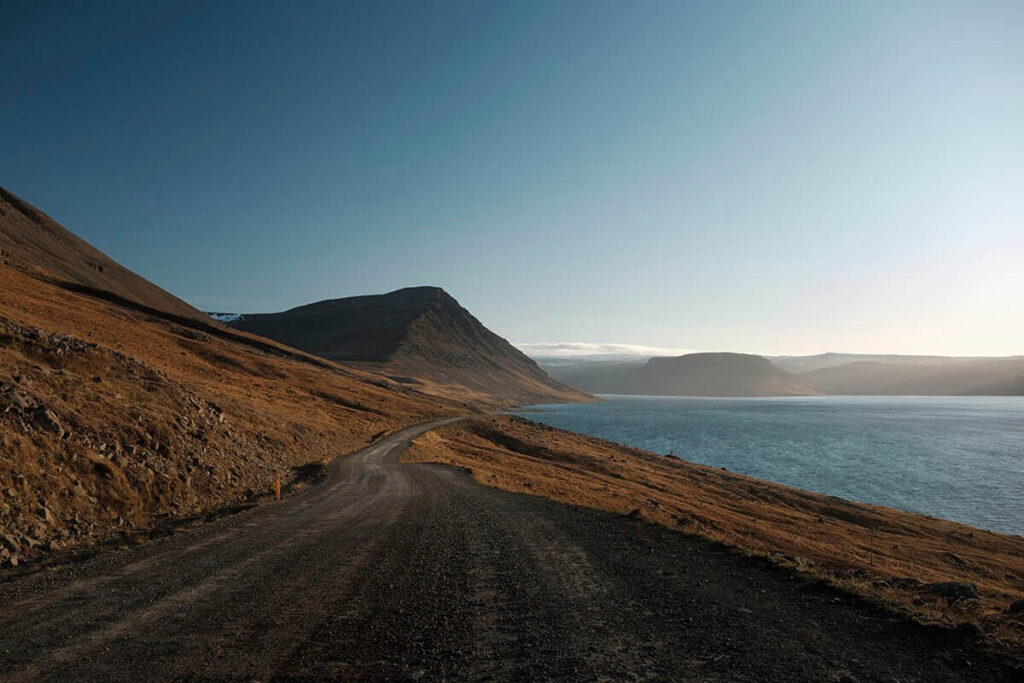
Dynjandisheiði: the last unpaved stretch
Another section where weather conditions play an important role is the Dynjandisheiði mountain pass, south of Dynjandi (Fjallfoss). During the winter months, heavy snowfall can leave the pass closed for extended periods, as there is no regular winter maintenance here. The road across Dynjandisheiði is currently being upgraded and paved, with the final section of road 60 across the pass expected to be paved by the end of 2026.
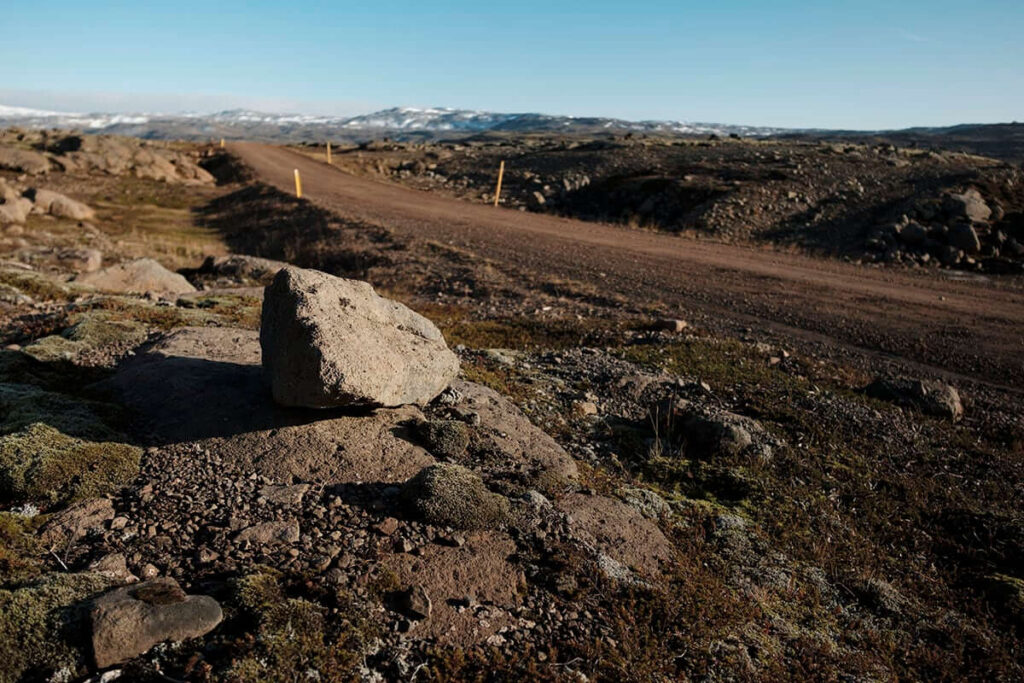
Westfjords Way: almost entirely paved
While the Westfjords Way was once known for its long stretches of gravel, the route is now almost entirely paved. With the ongoing work on Dynjandisheiði, one of the last remaining unpaved sections of road 60 is also disappearing. As a result, a road trip through the Westfjords is much more comfortable than it was just a few years ago. Outside the summer season, however, keep in mind that a paved road is not necessarily always accessible. Snow, ice and strong winds can still lead to temporary closures of mountain passes and other sections of the route.
Westfjords Way: one of Iceland’s most beautiful driving routes
Many travellers limit their trip to Iceland to the Golden Circle, the south coast, Snaefellsnes or Ring Road 1. Add the Westfjords to your itinerary and you will discover a much quieter and wilder part of the country. The route takes you past deep fjords, across mountain passes and through vast landscapes where you can sometimes drive for kilometres without seeing much other traffic.
That is exactly what makes the Westfjords Way one of the most beautiful driving routes in Iceland for me. It is not about getting from A to B as quickly as possible; the journey itself is part of the experience. Take your time, stop at viewpoints and small villages along the way and, if the weather allows, occasionally choose an old mountain route such as road 626. The Westfjords are now easier to reach and explore than when we travelled through this part of Iceland, but fortunately, that wonderful sense of remoteness and adventure is still very much there.