Looking for a destination for a city break, Nancy may not be the first place that comes to mind. Yet the city has much more to offer than you might expect. Alongside the famous Place Stanislas, Nancy is known for its distinctive Art Nouveau architecture, interesting museums and the École de Nancy movement. There are plenty of good places to eat and shop, you can explore the city and surrounding countryside by bike and even spend a few hours relaxing in the thermal waters of Nancy Thermal. I spend three nights in Nancy and discover just how many different sides there are to this city in northeastern France.
Read this article in DutchA look back at Nancy’s history
For centuries, Nancy was the capital of the Duchy of Lorraine. Much of this history can still be seen in the Vieille Ville, the old town, where you will find the former Palace of the Dukes of Lorraine, the Église des Cordeliers and the Porte de la Craffe. Nancy changed considerably in the 18th century under Stanislas Leszczynski, the former King of Poland who became Duke of Lorraine in 1737. He commissioned a grand royal square between the old and new parts of the city as a tribute to his son-in-law, King Louis XV of France. After Stanislas died in 1766, Lorraine became part of France. These different periods in Nancy’s history are still clearly visible as you walk through the city centre today.
What is there to see and do in Nancy?
During my stay in Nancy, I quickly realise there is quite a lot to see and do both in the city and its surroundings. Parts of the old town feel completely different from the elegant 18th-century streets around Place Stanislas and just a few streets further on, Art Nouveau suddenly seems to appear everywhere. There are museums, parks and thermal baths, but also a surprising number of interesting shops and lively streets and squares lined with outdoor terraces. It is easy to combine an afternoon of shopping with sightseeing here, stopping for a drink at a terrace somewhere along the way.
Explore Nancy with an audio guide
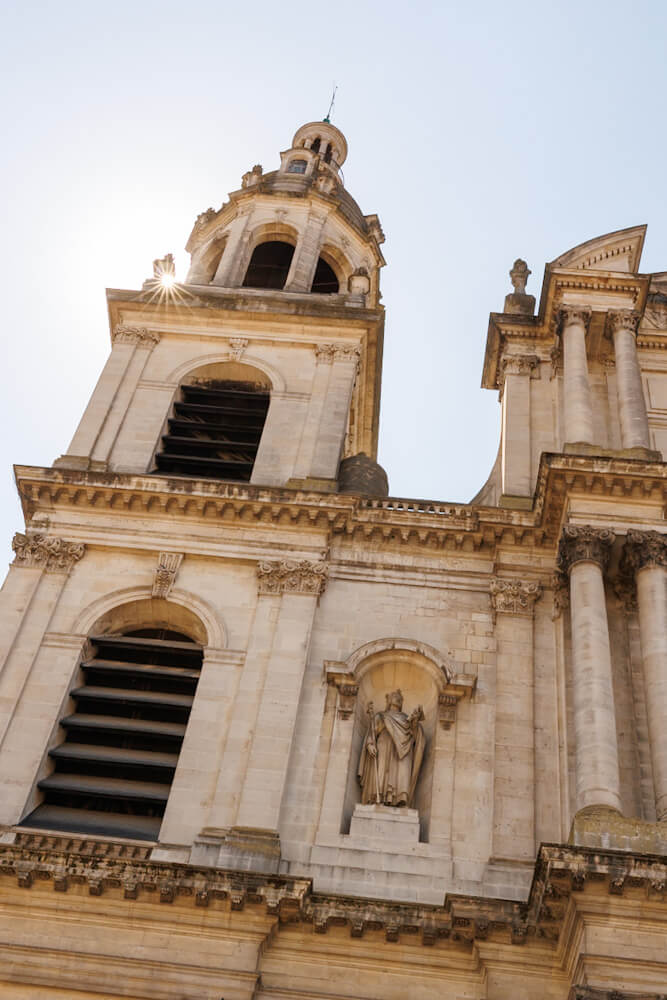
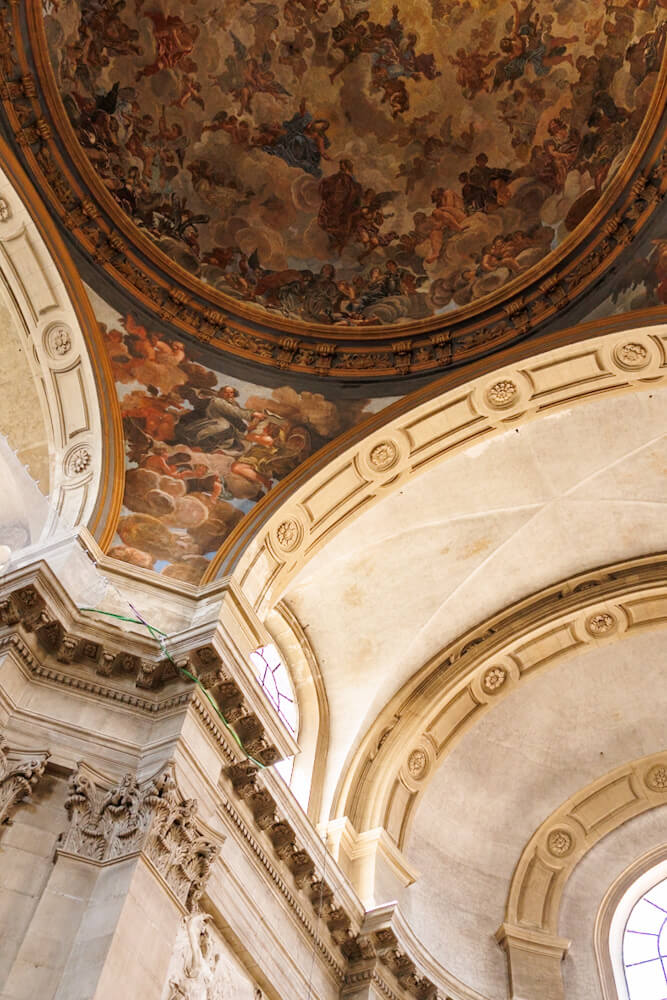
A good way to get to know Nancy while seeing several of its sights is to explore the city with an audio guide. There are many more interesting buildings and monuments than the places I cover in more detail later in this article. These include the Cathédrale Notre-Dame-de-l’Annonciation, the covered Marché Central, several historic city gates, triumphal arches and distinctive façades that are easy to walk past without knowing the stories behind them.
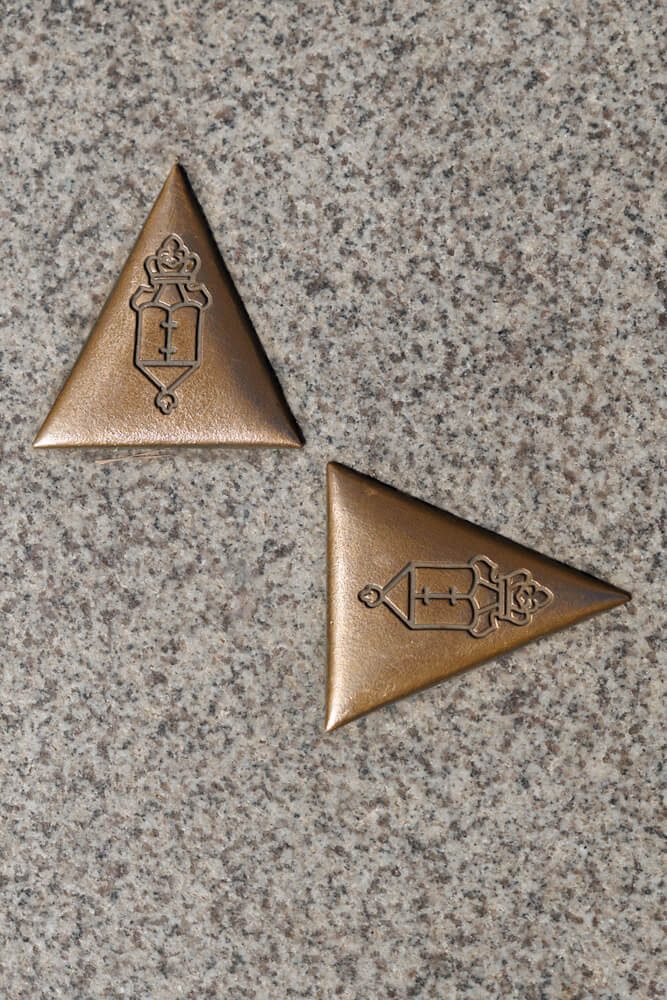
You can rent an audio guide from the Office de Tourisme on Place Stanislas and explore the city at your own pace. Several routes are available in different languages. We follow the historical route and find it a really enjoyable way to discover Nancy. The route takes you past well-known sights, but also provides background information about buildings and places you might otherwise simply walk past. Prefer exploring without an audio guide? Nancy also has three marked walking routes that you can follow using bronze markers set into the pavement: through the historic centre (1.5 hours), along the city’s Art Nouveau architecture (2.5 hours) and along the Rives de Meurthe (2 hours). Along the way, QR codes at information points provide more details about the places you see.

Place Stanislas
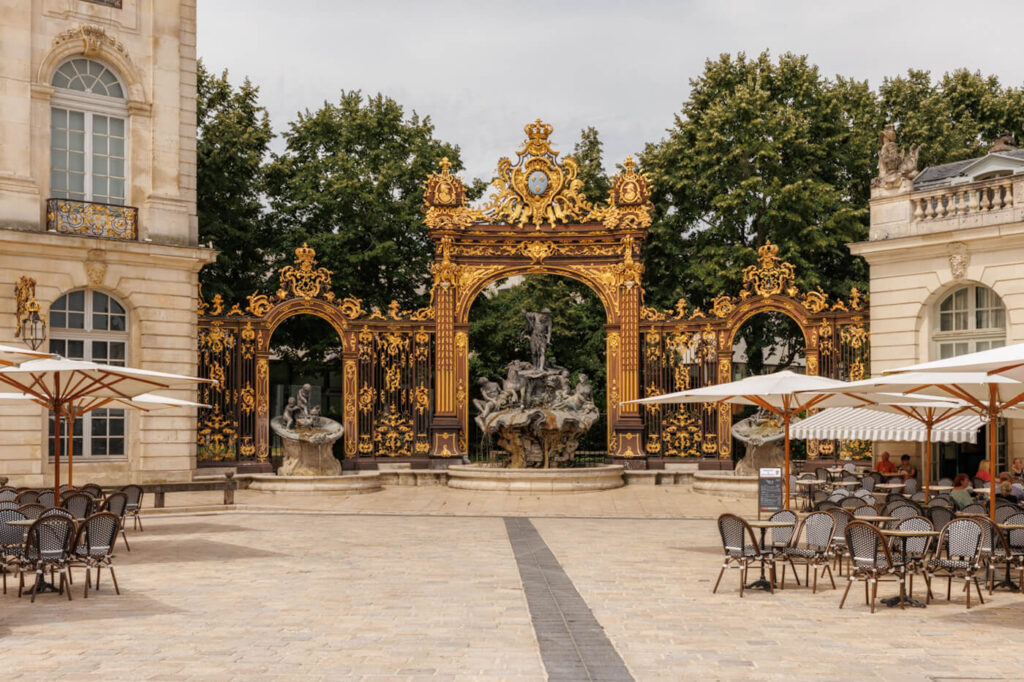
The main landmark in Nancy is undoubtedly Place Stanislas. The square was designed by Emmanuel Héré, court architect to Stanislas and built between 1752 and 1755. It was not until 1831, long after Stanislas had died, that the square was given the name Place Stanislas and the statue of Stanislas that stands at its centre today was installed. I have seen quite a few beautiful squares over the years, but for me Place Stanislas is easily one of the most impressive. It is not just the grand buildings surrounding the square that make it so striking, but especially the sheer amount of detail. The ornate wrought iron gates by Jean Lamour, the gold leaf, the fountains in the corners, the pale paving and of course the statue all come together beautifully.
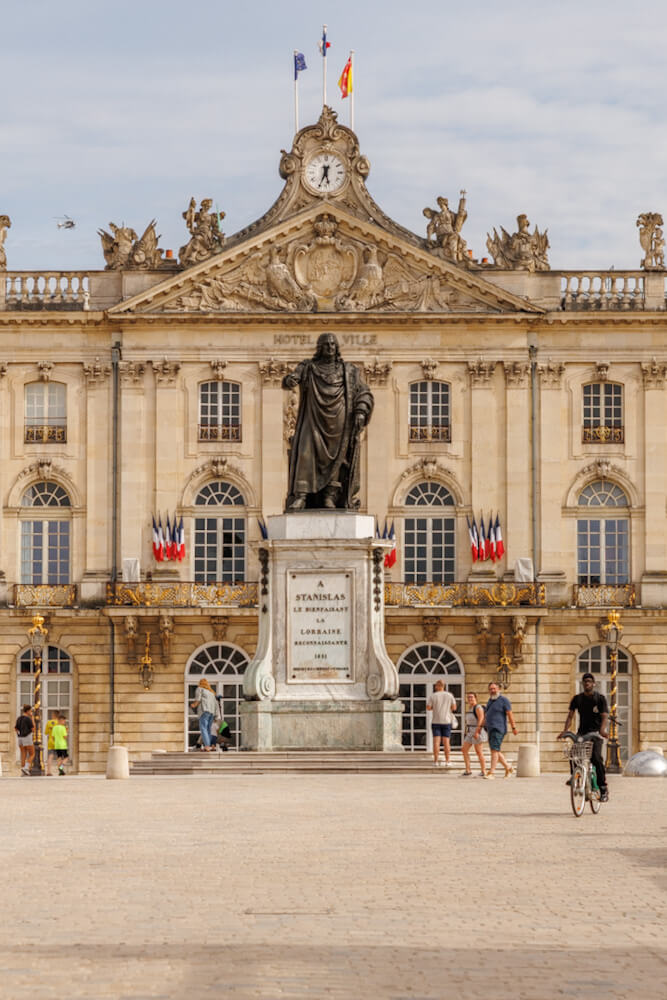
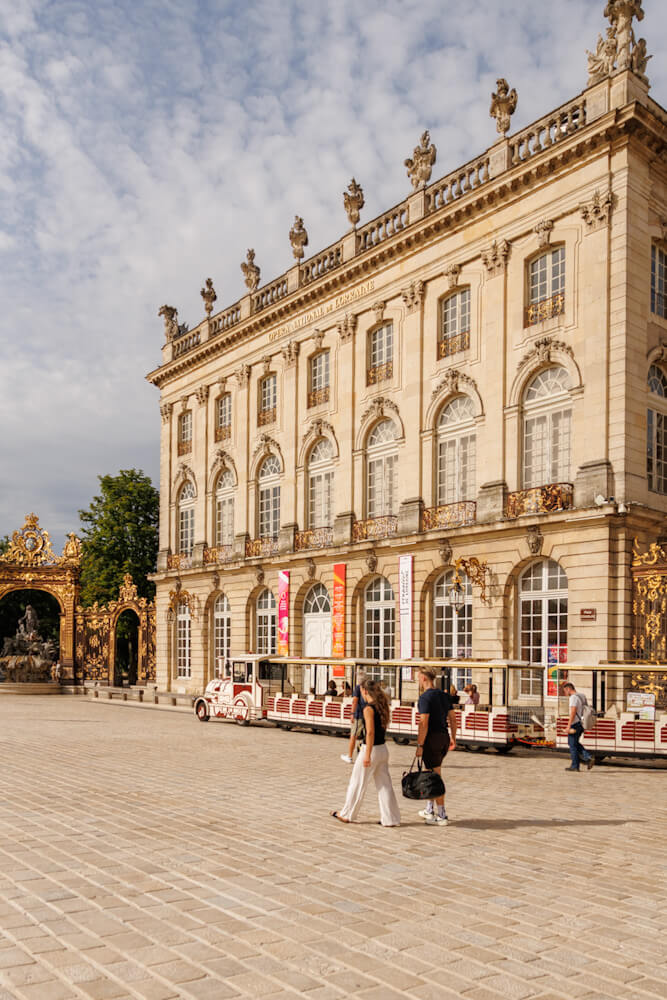
From a car park to one of France’s most beautiful squares
Walking across Place Stanislas today, it is almost impossible to imagine that not so long ago the square was filled with cars. In 1983, Place Stanislas was added to the UNESCO World Heritage List together with Place de la Carrière and Place d’Alliance, even though it was still being used as a car park at the time. Parking was removed that same year, but the square did not immediately become completely traffic-free. Old photographs showing rows of cars between the monumental façades and gilded gates look almost surreal today.
It took more than another twenty years for the square to take on the appearance it has today. During a major renovation in 2005, exactly 250 years after its inauguration, Place Stanislas became completely traffic-free. The surrounding buildings and famous wrought iron gates were restored as well. To mark the renovation, a time capsule was buried beneath one of the stones in the square, containing items including a fragment of a lunar meteorite and mementos of Nancy in 2005. It is a fascinating thought when you are walking across the square. When will that time capsule eventually be discovered and how many generations will have passed by then?
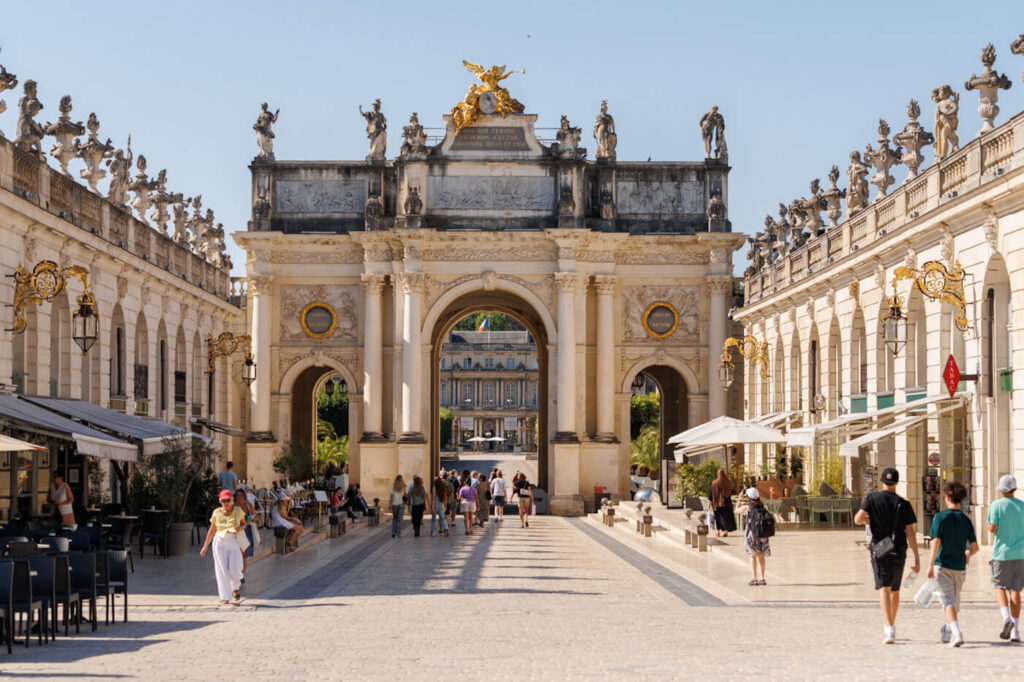
Place Stanislas in the evening
Place Stanislas is beautiful during the day, but it is definitely worth returning in the evening. During the summer months, La Belle Saison takes place here, a large-scale light and sound show with images projected onto the façades surrounding the square. That is one of the things I really like about Place Stanislas. Despite its monumental appearance, it does not feel like a square you simply visit to take a photo and then move on. The terraces are busy, people meet here and all kinds of events take place throughout the year. It really is the heart of the city.
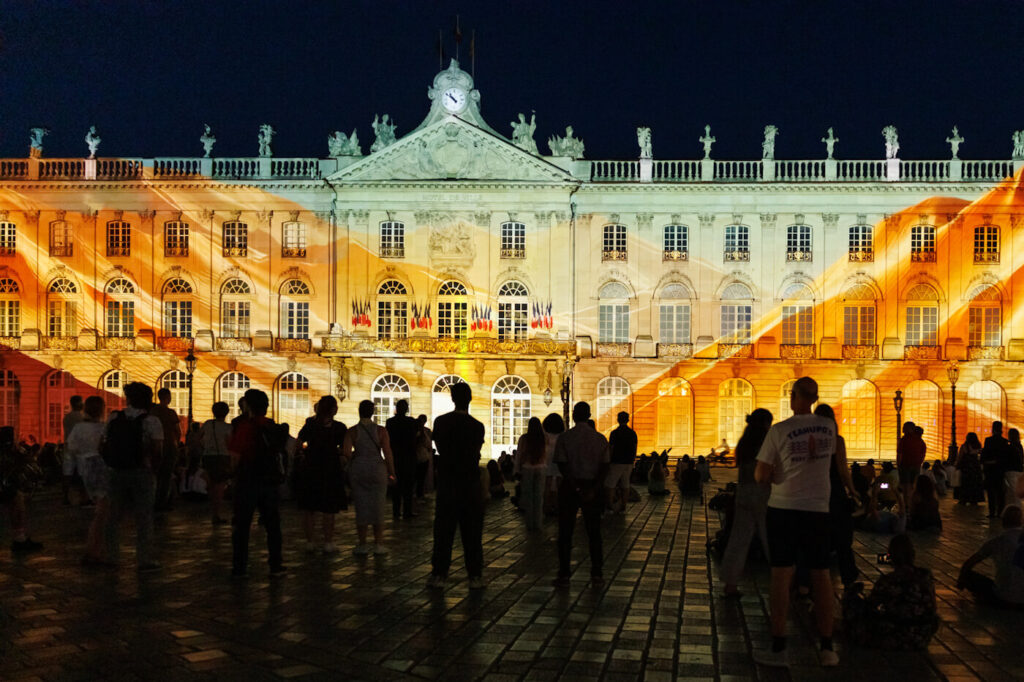
Place de la Carrière and Arc Héré
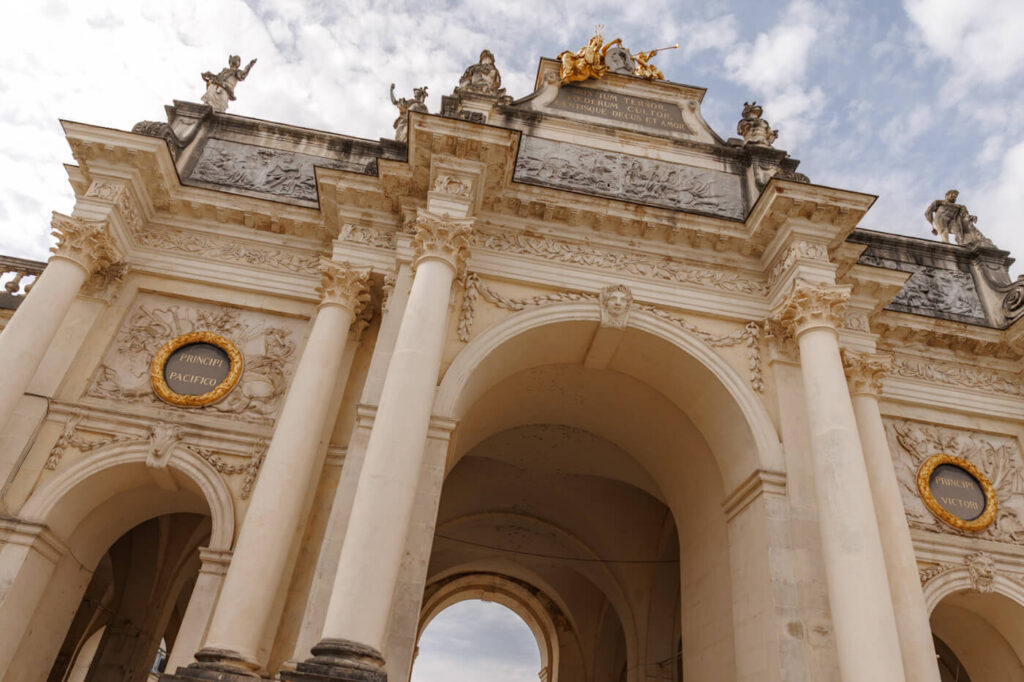
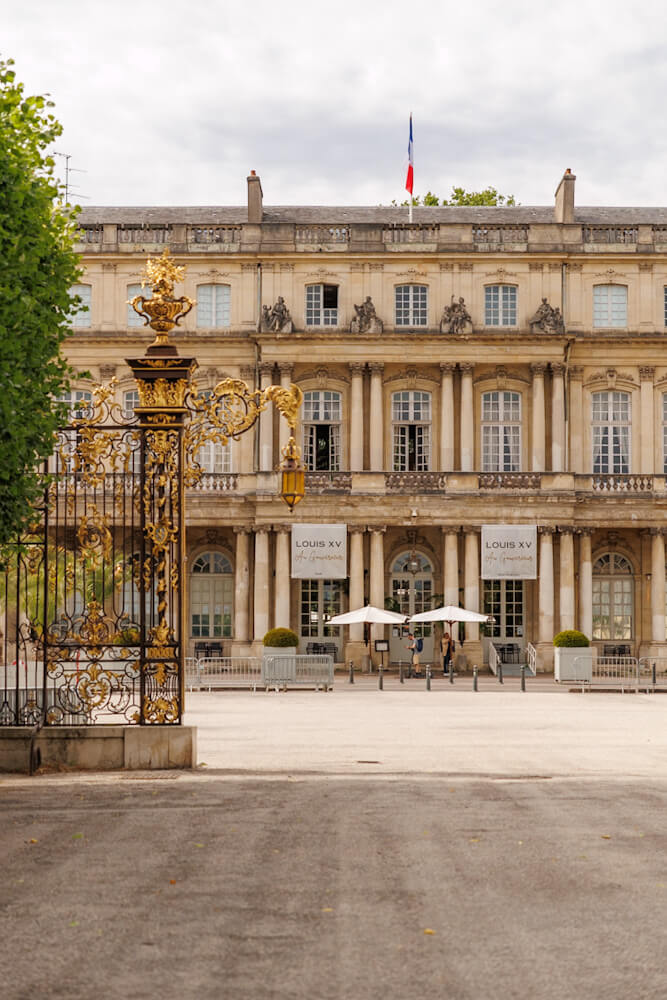
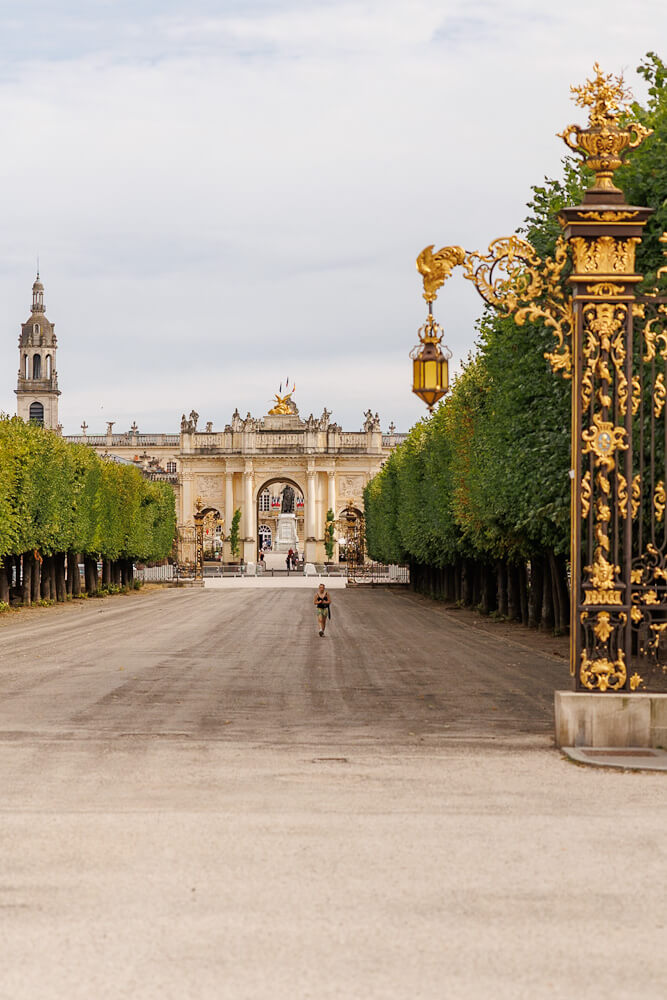
As you walk from Place Stanislas through the Arc Héré towards Place de la Carrière, you immediately get a sense of how carefully the 18th-century city centre was designed. Place Stanislas does not stand on its own. Together with Place de la Carrière and Place d’Alliance, it forms a single architectural ensemble. The Arc Héré forms the monumental gateway between Place Stanislas and Place de la Carrière and was built on the site of an earlier city gate. Place de la Carrière is long and spacious and feels much quieter than Place Stanislas. On either side are elegant buildings with classical façades and rows of trees that draw your eye towards the former government palace at the far end of the square.
Vieille Ville, Nancy’s old town
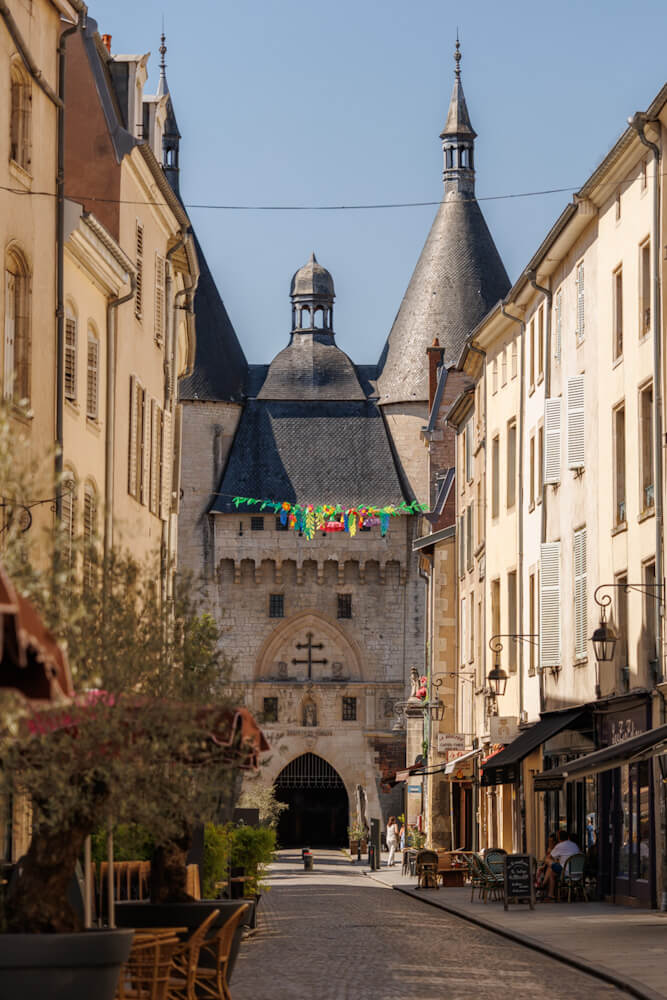
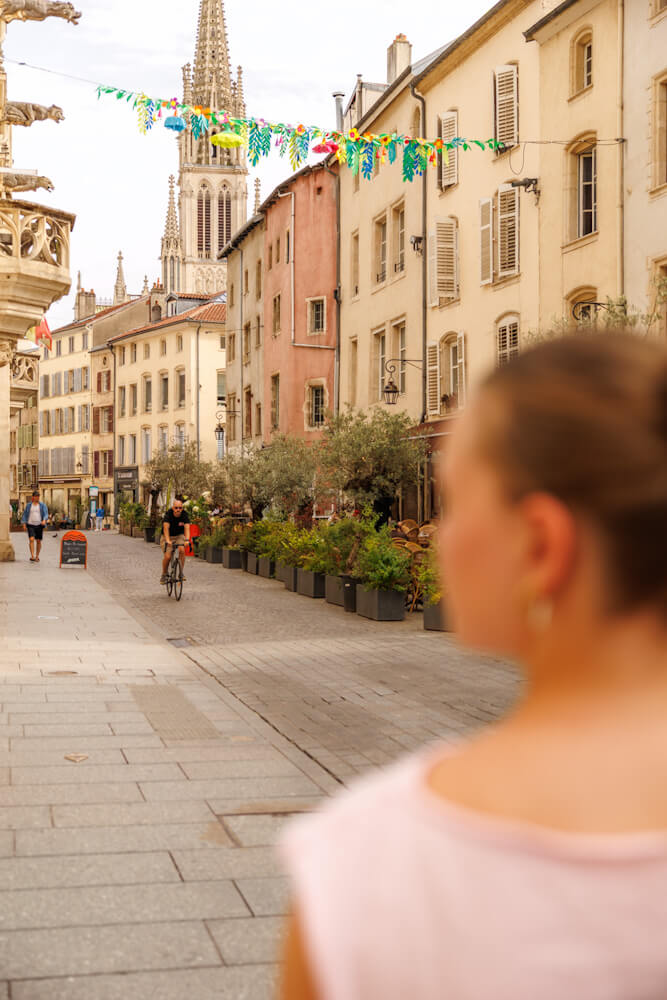
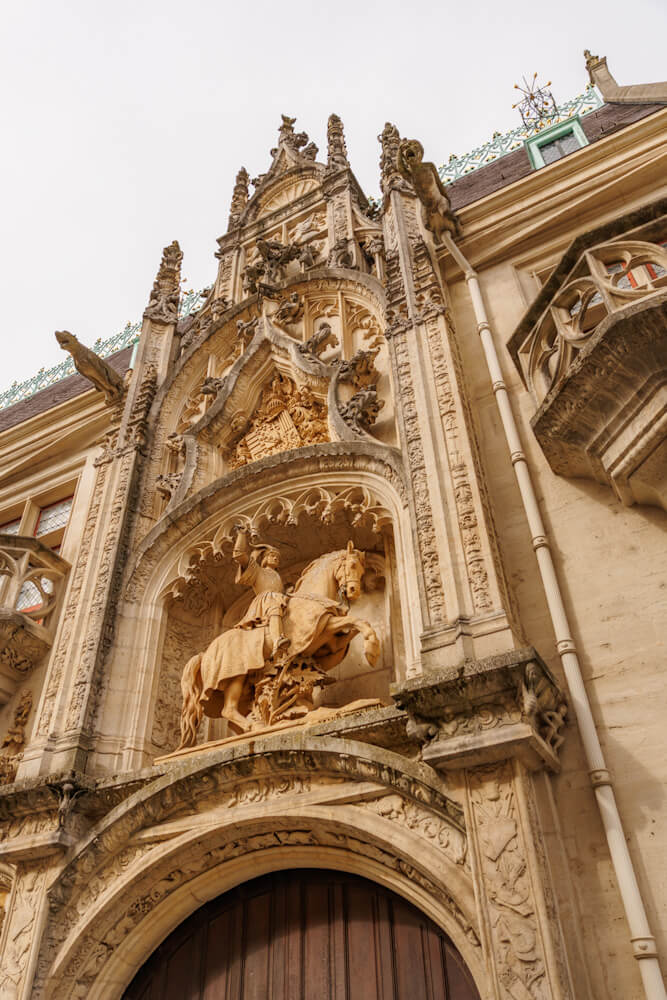
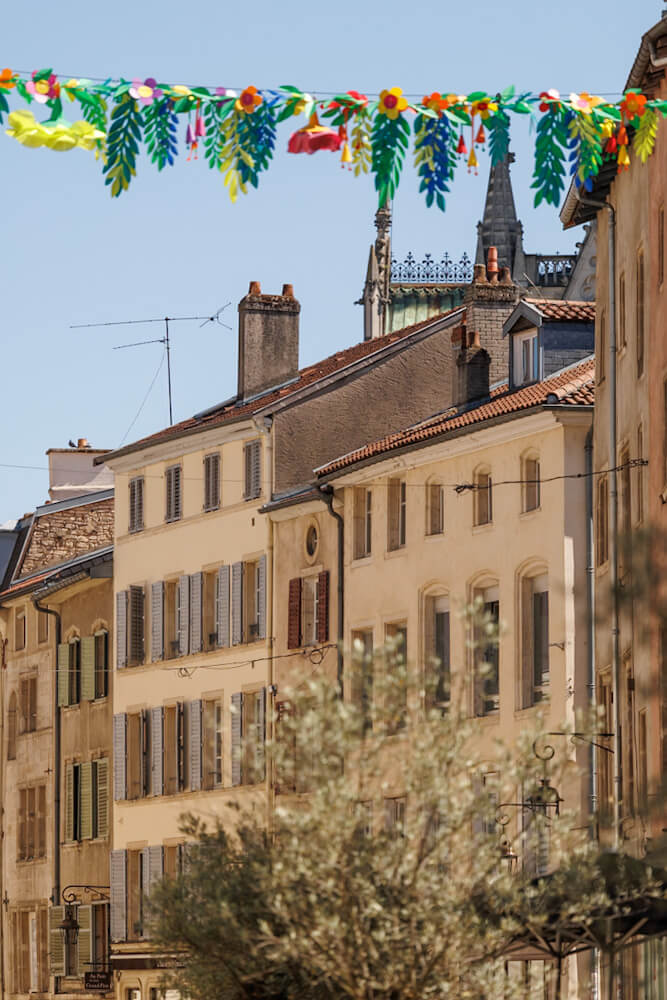
Continue north and you find yourself in a very different part of Nancy: the Vieille Ville, the city’s old town. This is the oldest part of Nancy. The large symmetrical squares give way to narrow streets, tall historic façades and small squares. The Grande Rue runs straight through this part of the city. Along the way, you pass the former Palace of the Dukes of Lorraine before eventually reaching the Porte de la Craffe, the imposing city gate that once formed the northern entrance to medieval Nancy. In the heart of the old town stands the Basilique Saint-Epvre. This Neo-Gothic basilica was built in the 19th century on a site where a church had stood for centuries. Unfortunately, it is closed when we are there. A shame, as I have heard that the interior is well worth seeing. Around Place Saint-Epvre and throughout the streets of the Vieille Ville, there are plenty of inviting terraces and restaurants. For me, this is one of the nicest parts of Nancy to simply wander around without a plan.
Église des Cordeliers
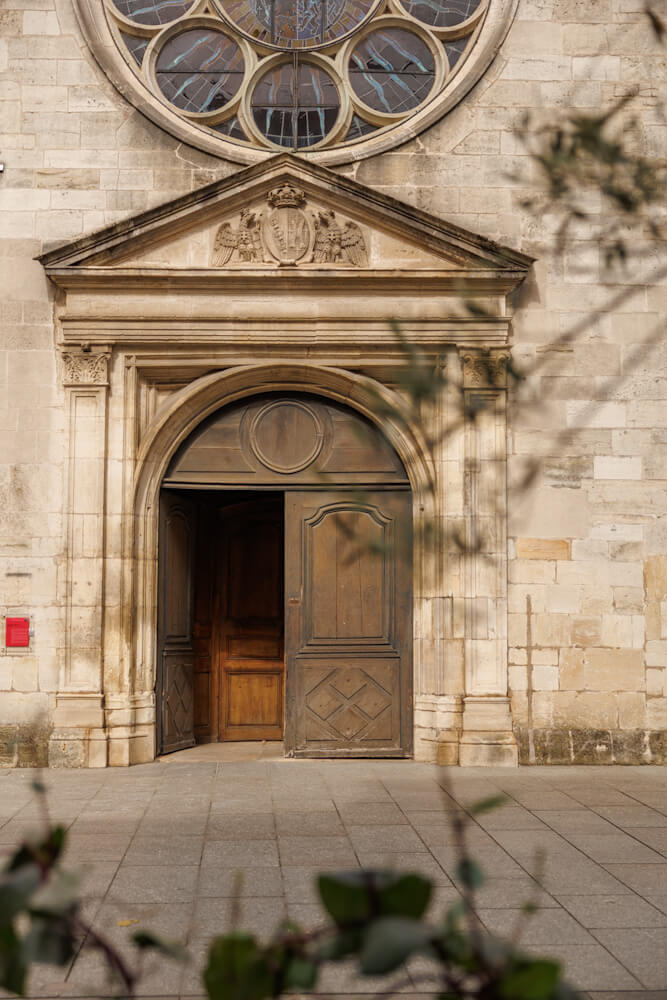
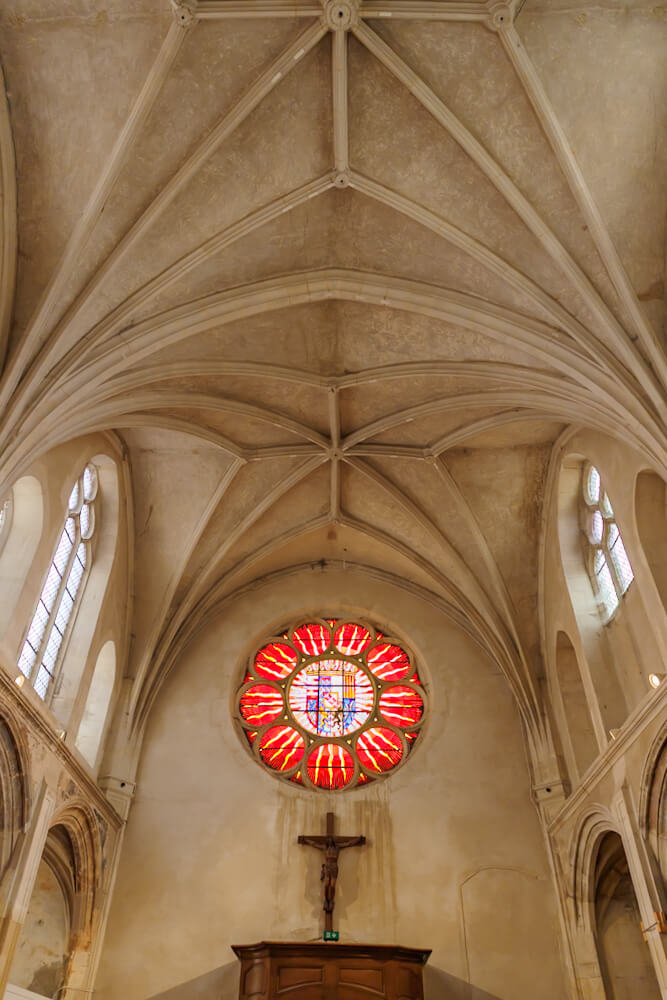
On the Grande Rue, you will find the Église des Cordeliers, a church closely connected to the history of Lorraine. Several Dukes of Lorraine were buried here and behind the church is the burial chapel of the ducal family, with a dome inspired by the famous Medici Chapel in Florence. From the outside, I have to admit that it is not immediately the kind of church I would expect to have so much history behind it. That is exactly why it is worth stepping inside. The tombs are impressive and the light streaming through the tall windows is beautiful.
Parc de la Pépinière
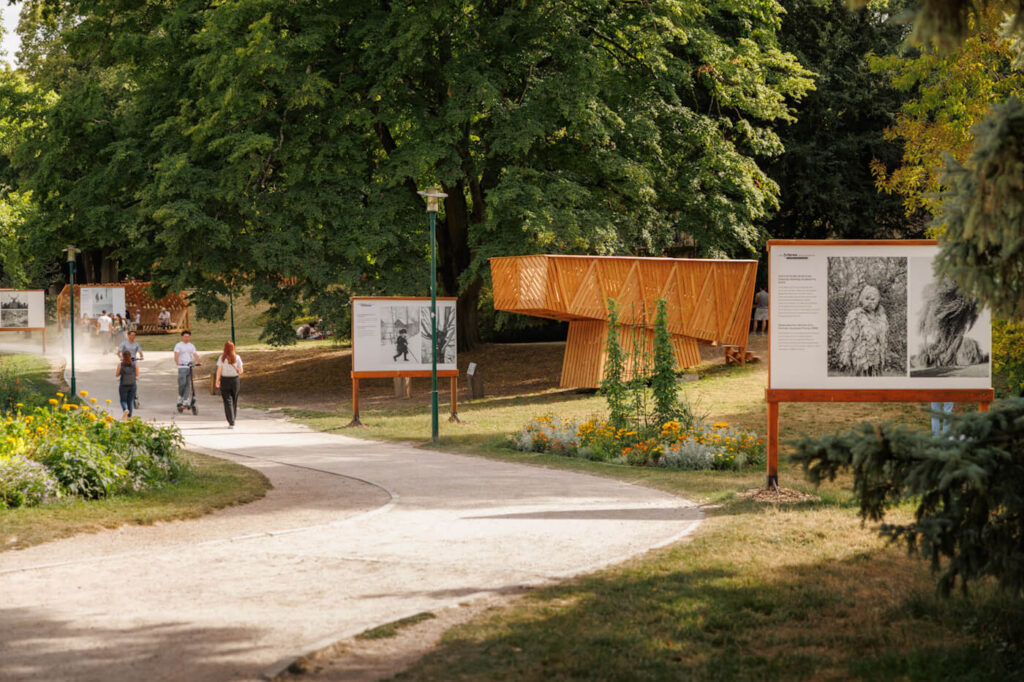
Almost directly behind Place Stanislas lies Parc de la Pépinière, a large 21-hectare city park. Its name gives a clue to the area’s original purpose. In 1765, Stanislas established a royal tree nursery here to grow trees that would later be planted along the roads of Lorraine. In 1835, the site was transformed into a public park, while much of its original layout was preserved.
Today, it is primarily a pleasant green space in the heart of Nancy, with large lawns, wide walking paths, mature trees and a rose garden. There is also a small animal park that is free to visit, with donkeys, goats, sheep and fallow deer. In the middle of the park, fountains shoot water up from the ground. On warm days in particular, this part of the park is lively and busy and it is easy to see that people in Nancy enjoy spending time here.
Nancy and Art Nouveau
One of the things that really sets Nancy apart from other French cities is its Art Nouveau heritage, an artistic movement also known as Jugendstil in parts of Europe. After the Franco-Prussian War of 1870 and 1871, parts of Alsace and Lorraine were annexed by Germany, prompting many French residents from these areas to settle in Nancy. Among them were artists, entrepreneurs, investors and industrialists, giving the city a major economic and creative boost within a relatively short period of time. In Nancy, Art Nouveau was not limited to paintings or objects displayed in museums. Entire houses and shops were designed in this style, along with furniture, glassware and everyday objects. Once you know what to look for, you start noticing traces of Art Nouveau in a surprising number of places around the city.
Villa Majorelle
If you are interested in Art Nouveau, Villa Majorelle is definitely worth visiting. The house was built for furniture designer and industrialist Louis Majorelle and is considered one of the most important examples of Art Nouveau architecture in Nancy. What becomes particularly clear here is how every element seems to be part of the overall design. It is not just the façade, but also the windows, doors, woodwork, furniture and countless smaller details that complement one another. Curved lines and shapes inspired by nature appear throughout the house. Villa Majorelle is not surrounded by dozens of other monumental buildings, but stands in a neighbourhood where you might not necessarily expect to find it. You walk out of the city centre into an ordinary residential area and suddenly this remarkable house appears in front of you.
Musée de l’École de Nancy
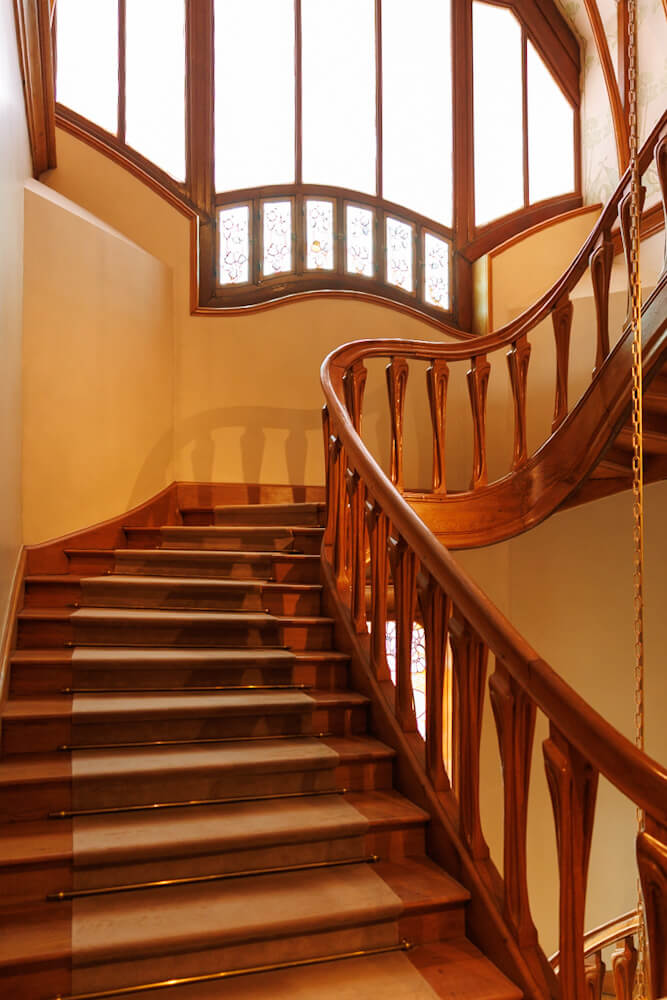
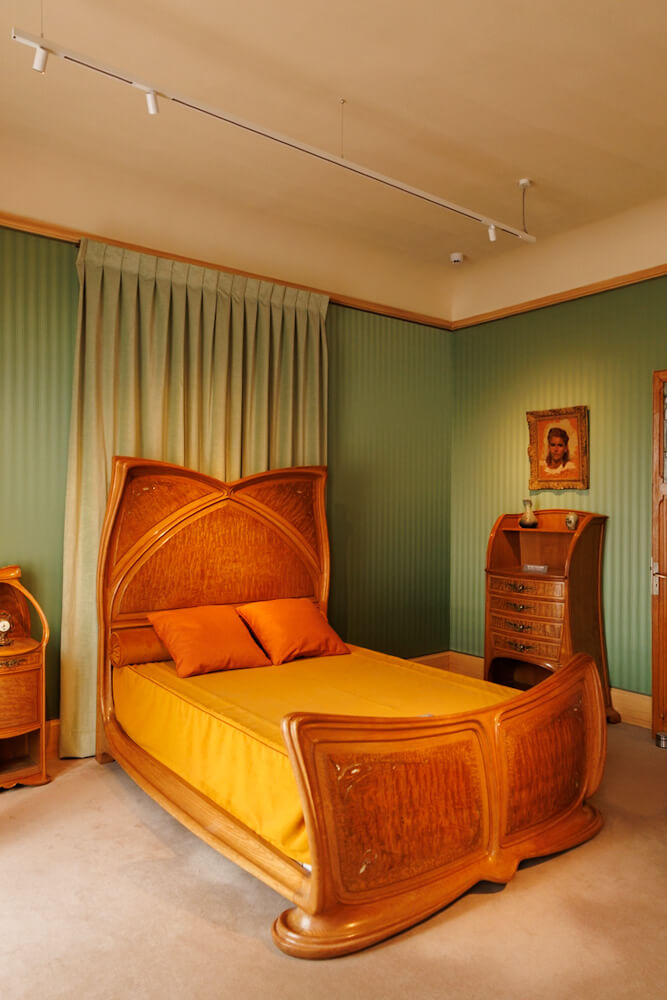
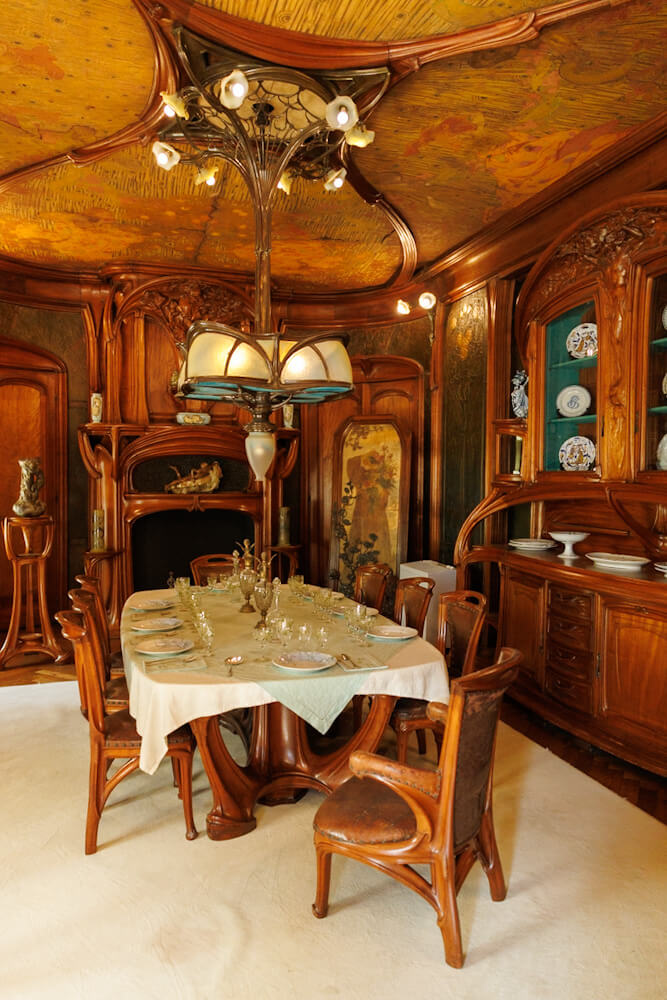
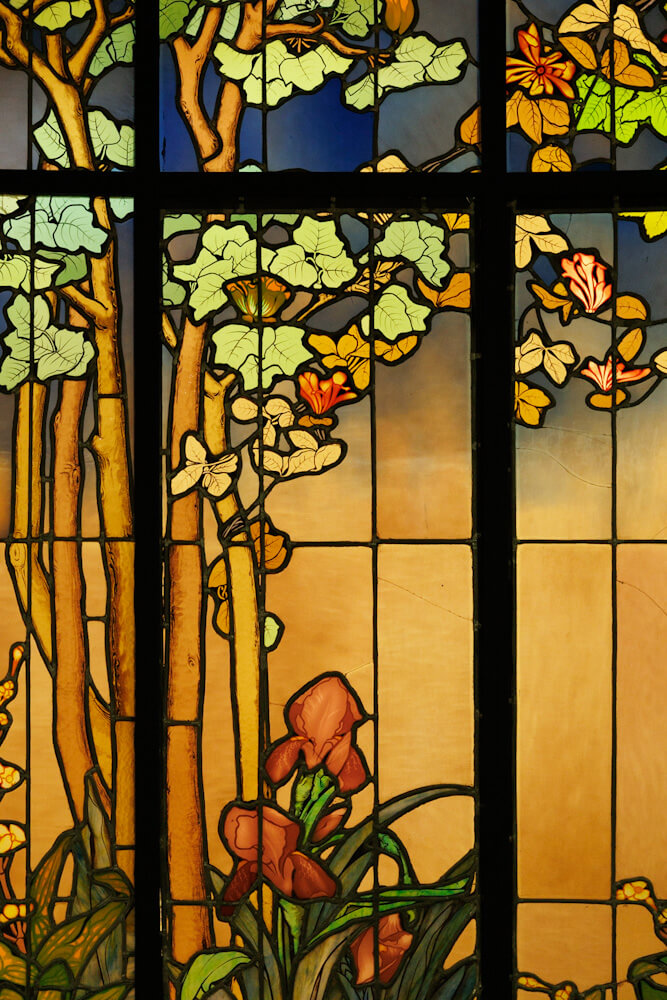
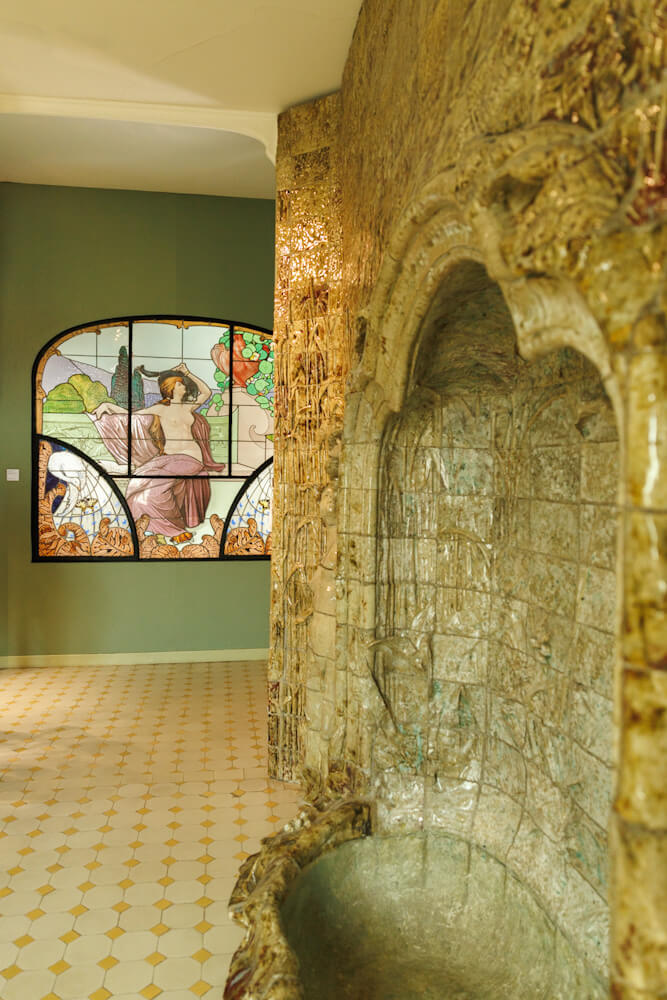
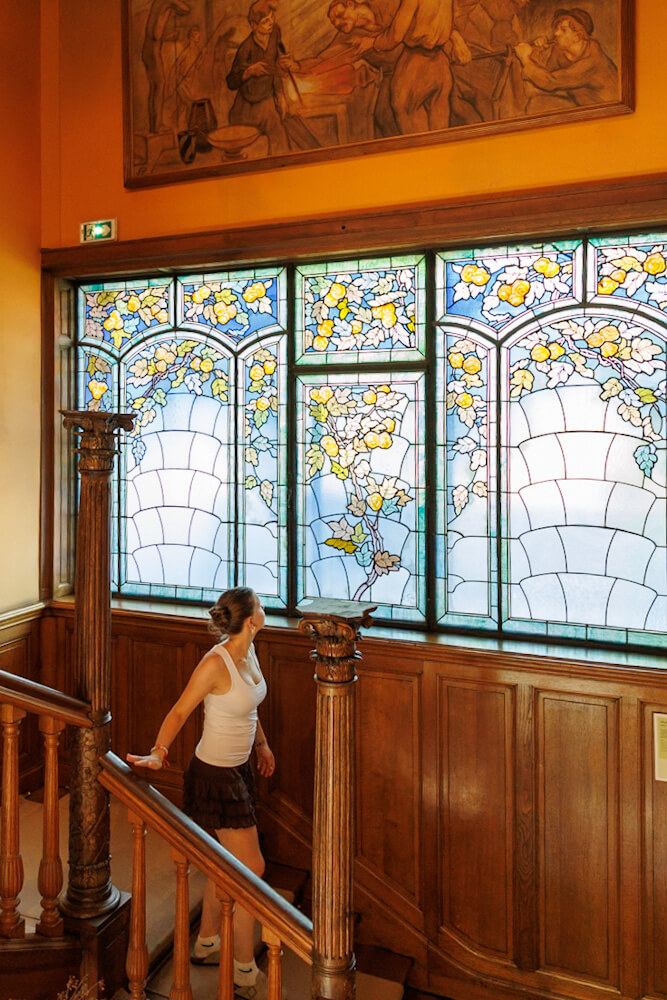
If you want to explore Nancy’s Art Nouveau heritage further after visiting Villa Majorelle, the Musée de l’École de Nancy is well worth a visit. The museum is housed in the former home of Eugène Corbin, an important collector and patron of the École de Nancy. This group of artists and designers was founded in 1901 by glass artist Émile Gallé, together with figures including Louis Majorelle and the Daum brothers. The house and garden are already beautiful from the outside, but inside you get a much better sense of just how broad the movement was. Nature was an important source of inspiration and its organic shapes can be seen throughout the furniture, glassware, ceramics and other objects created by some of the leading artists and designers of the École de Nancy.
Musée des Beaux-Arts and the Daum collection
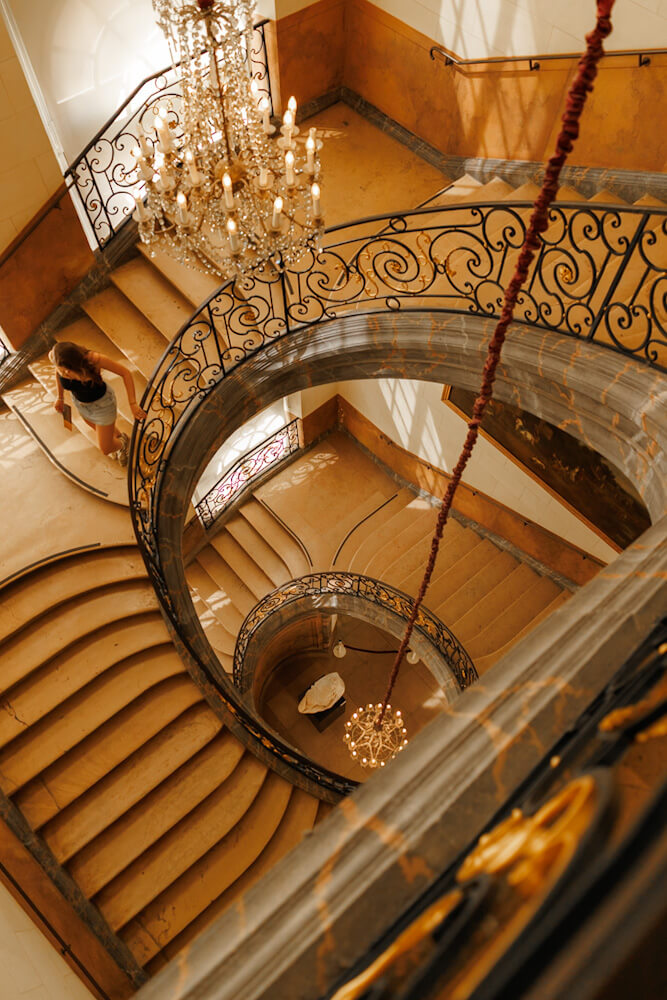
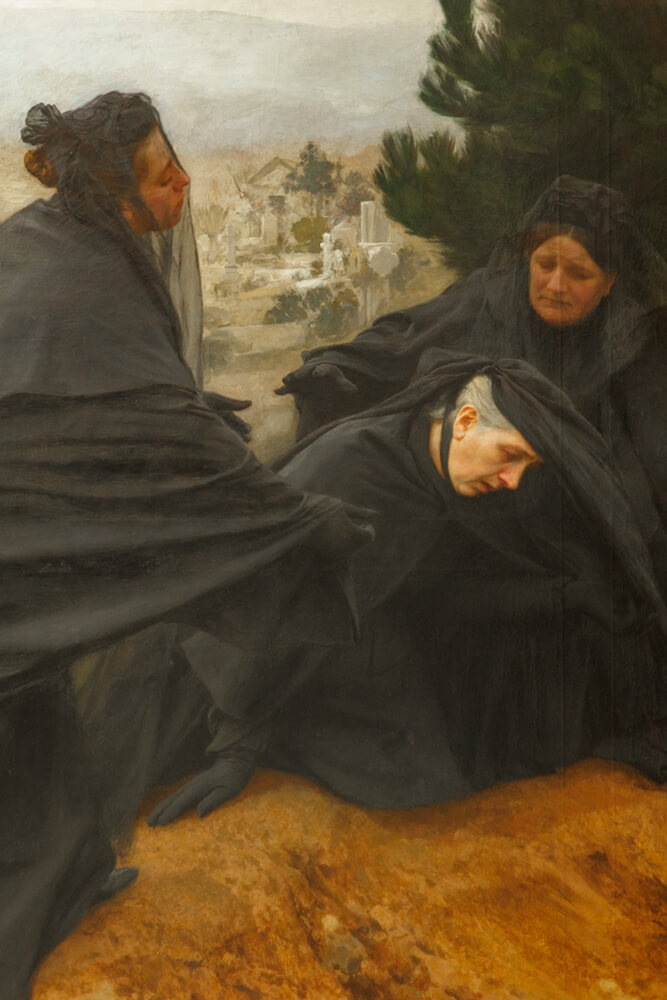
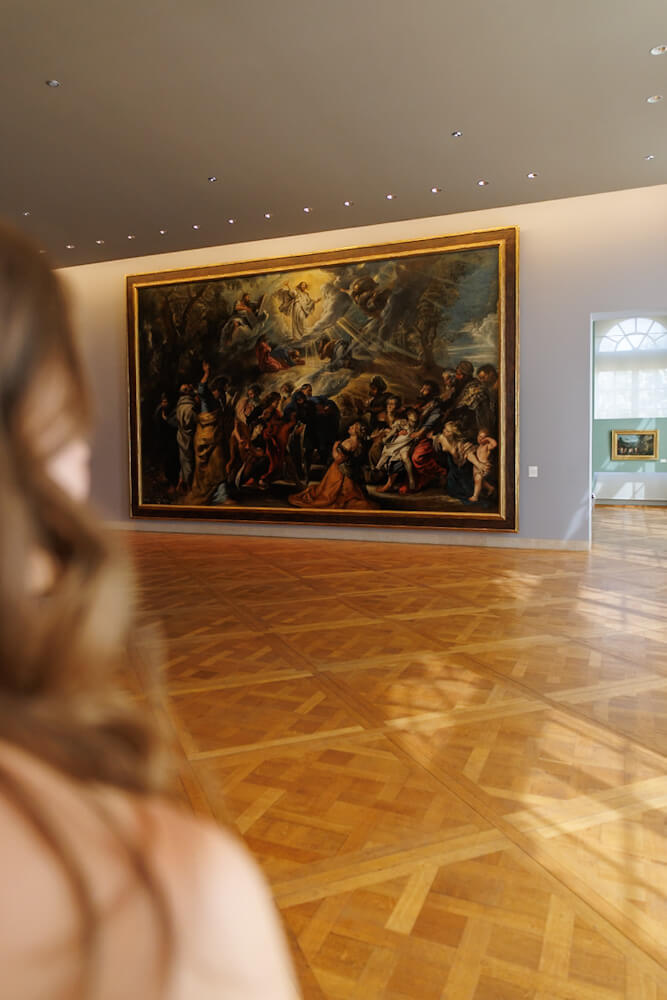
Still not finished with art and museums? On Place Stanislas, you will find the Musée des Beaux-Arts, where you can easily spend a few hours. The first and second floors feature works by major artists such as Caravaggio, Rubens, Delacroix, Manet and Monet, but I am particularly impressed by the paintings of Émile Friant on the ground floor. The museum has the largest collection of works by this Nancy-born artist and his enormous painting La Douleur makes the strongest impression on me. The people gathered around the grave are painted so realistically that the scene almost looks like a photograph.
The ground floor also has some very different art to discover. Among the works here is Yayoi Kusama’s Infinity Mirror Room Fireflies on Water, a dark mirrored room where tiny points of light seem to repeat endlessly.
And then there is the basement. The famous Daum collection is displayed here among the remains of Nancy’s old fortifications. It consists of more than 800 pieces of glass and crystal, ranging from Daum’s earliest years to contemporary designs. After visiting Villa Majorelle and the Musée de l’École de Nancy, it is particularly interesting to see many of the shapes and techniques associated with the Art Nouveau period appearing here again.
Planning to visit all the places mentioned above? It is worth looking into the Nancy CityPass. It includes admission to museums, free public transport and a range of other benefits and discounts.

Exploring Nancy by bike
Nancy is an easy city to explore on foot, but having a bike available is very useful too. We pick up two electric bikes from Maison du Vélo, which we can use throughout our stay. They are convenient for getting from one side of the city to the other more quickly, but especially useful if you want to explore some of the countryside around Nancy as well.
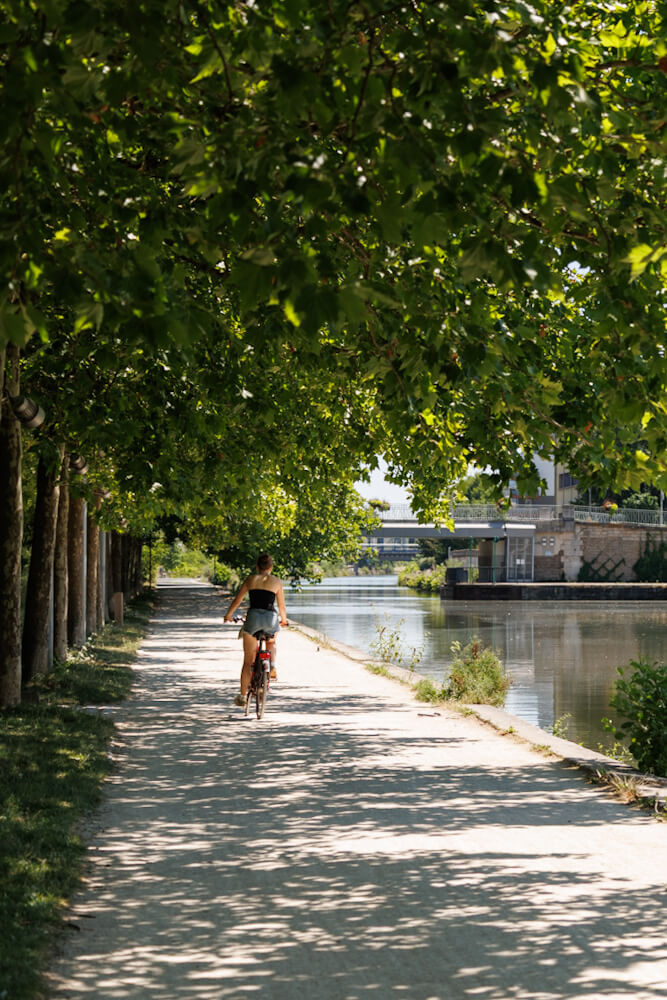
We set out to cycle the Route des Châteaux, although we take quite a few wrong turns along the way. Cycling while constantly checking the route on your phone turns out to be more difficult than expected, so we miss several of the sights along the route. Even so, the ride we eventually end up doing is beautiful. We follow the cycle path along the Promenade de Kanazawa towards the Canal de jonction de Nancy, a canal around 10 kilometres long with no fewer than 18 locks. It was built at the end of the 19th century to connect the Canal des Vosges with the Canal de la Marne au Rhin. It is a particularly peaceful stretch to cycle, taking you alongside the water, through woodland and even along a former railway line.

Relax at Nancy Thermal
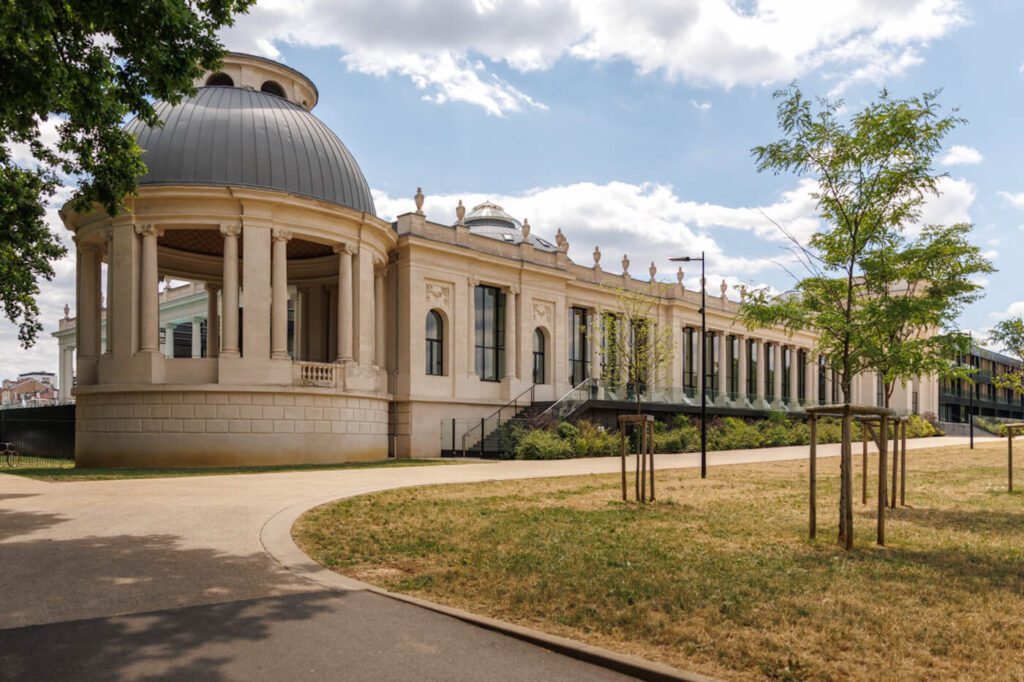
After a day exploring the city, it is lovely to spend a couple of hours relaxing at Nancy Thermal, around a 10-minute bike ride from Place Stanislas. Before my visit, I had no idea that Nancy was a thermal spa city. The warm mineral water was discovered more or less by accident in 1909, during drilling for drinking water at a depth of more than 800 metres. Today, the site is home to a large thermal complex that reopened in 2023 following an extensive renovation.
Our wristbands give us access to the main pools as well as a separate wellness area with facilities including saunas and hot tubs. After a full day in the city, it is wonderful to relax in the warm water while also getting a chance to see the historic thermal baths from the inside. Personally, I would not necessarily spend an entire day at Nancy Thermal, but a couple of hours towards the end of the day is perfect.
Eating out in Nancy
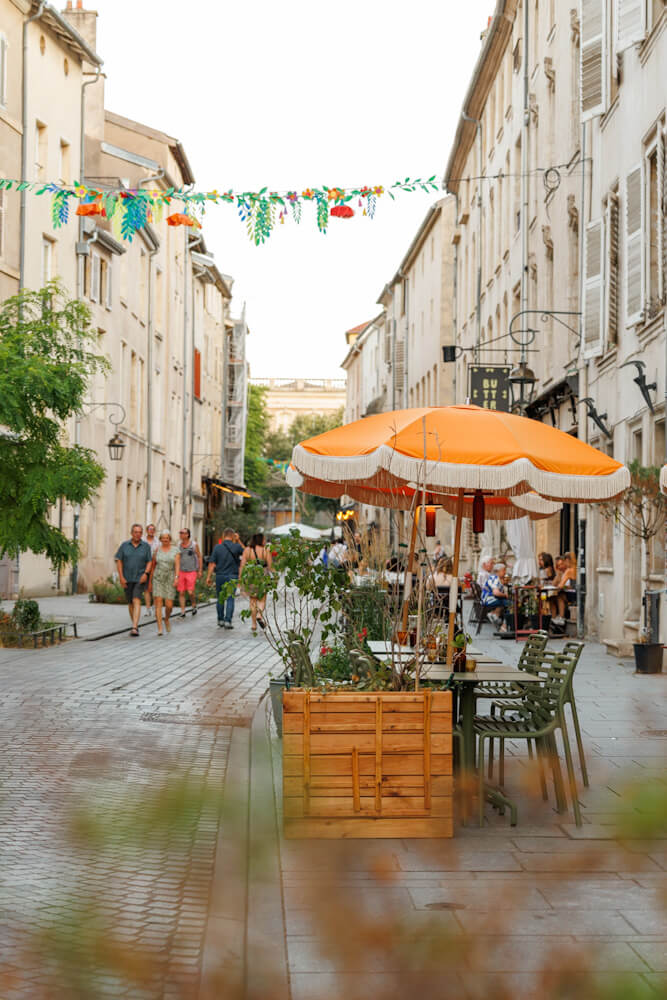
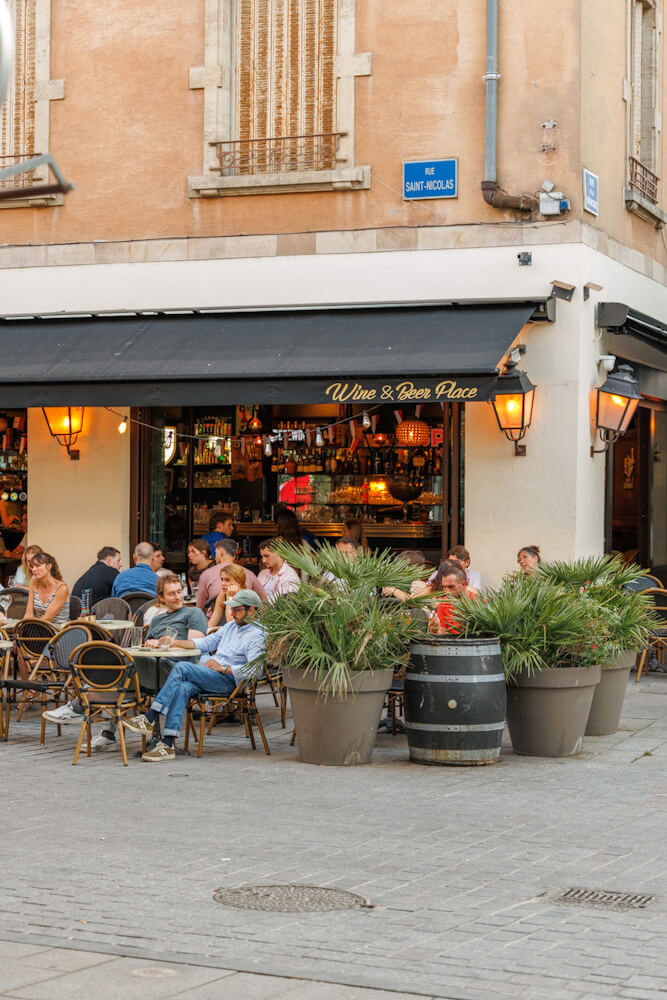
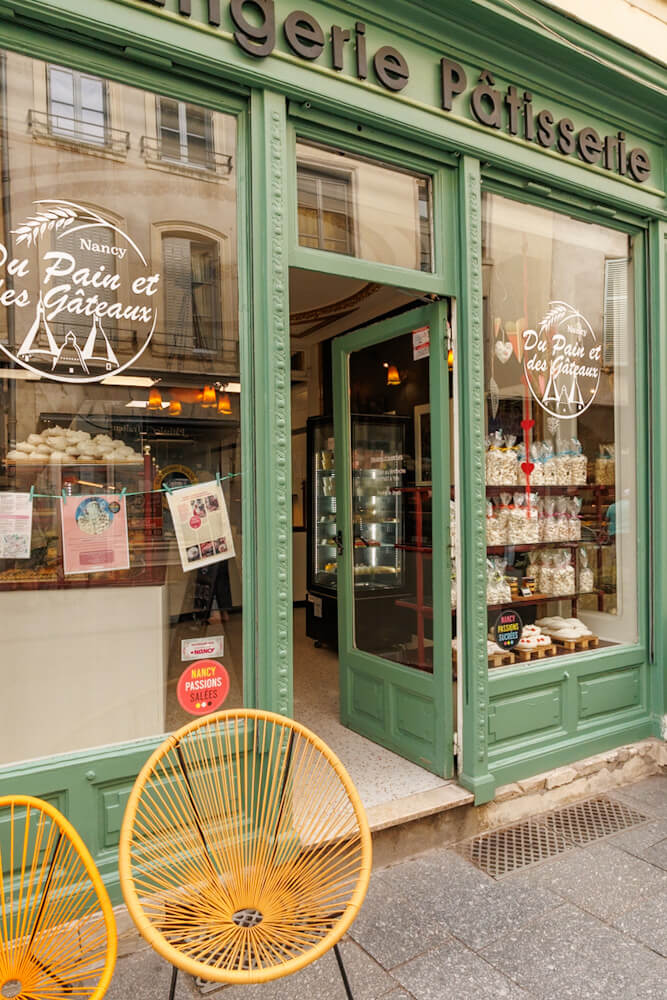
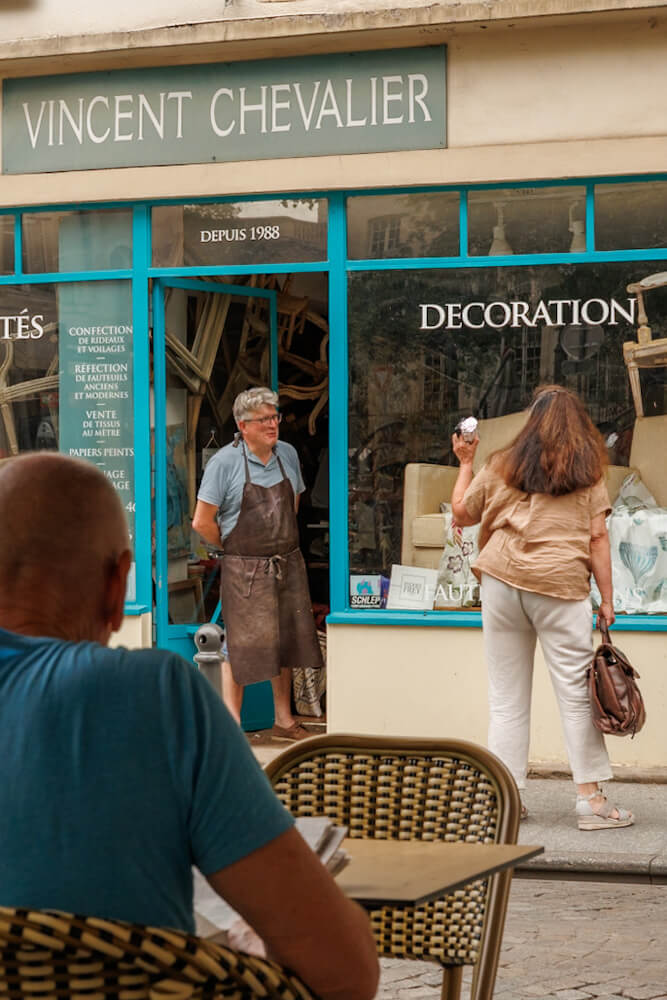
One thing that really stands out in Nancy is just how many restaurants and inviting terraces you come across throughout the city. They are often clustered together, so you suddenly find yourself walking into a street or square lined with places to eat and drink. And this is not limited to Place Stanislas or the Vieille Ville. You find these lively little pockets all over the city.
During our visit, there is a particularly lively atmosphere in the streets, probably helped by the fact that the FIFA World Cup is taking place and many people are watching the matches together on the terraces. We eat at several places during our stay in Nancy and a few restaurants particularly stand out. Sometimes it is because of the unusual interior or location and sometimes because of the food itself. These are the restaurants I think are worth mentioning if you are looking for somewhere special or simply a pleasant place to eat in Nancy.
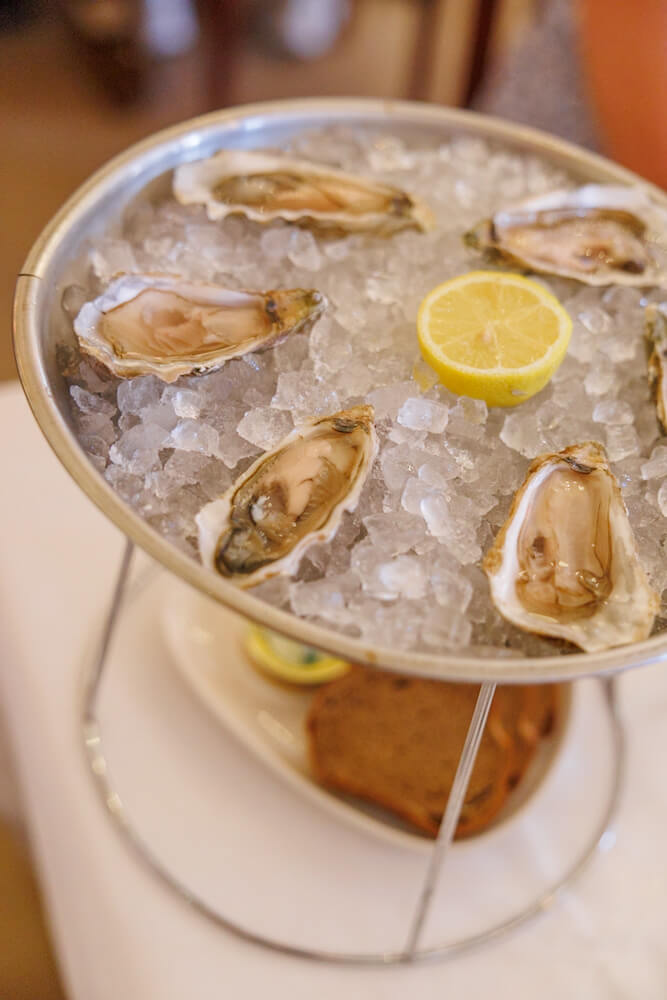
Brasserie Excelsior
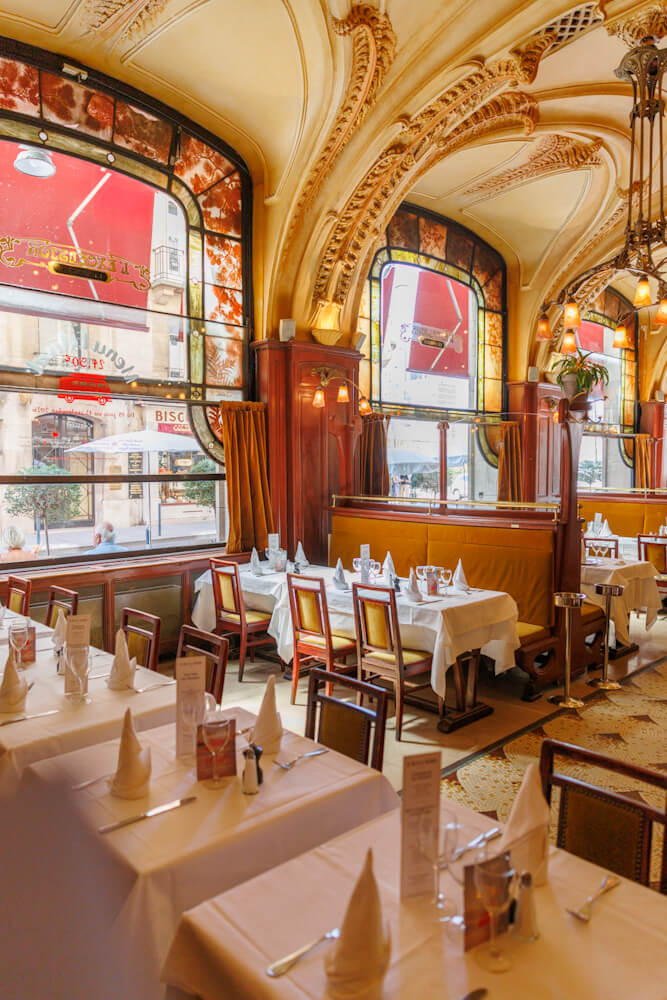
Alleen al voor het interieur zou ik naar Brasserie Excelsior gaan. De brasserie werd in 1911 geopend en is een van de mooiste plekken in Nancy waar je de stijl van de École de Nancy nog in volle glorie kunt zien. Aan het interieur werkten verschillende grote namen uit de Nancyse art nouveau mee: glas-in-lood van Jacques Gruber, meubels en kroonluchters van Louis Majorelle en lampen van Daum. Het gebouw staat sinds 1976 geregistreerd als historisch monument.
Bij binnenkomst krijg je meteen een beetje dat ‘Parijs-gevoel’. Het ziet er chic uit, maar tegelijkertijd voelt de sfeer verrassend los. Wat mij vooral opvalt is het personeel. Iedereen lijkt precies te weten wat hij moet doen en er wordt duidelijk volgens vaste regels gewerkt, maar zonder dat het stijf wordt. Het bijna continue heen en weer lopen van de obers blijkt trouwens al heel lang kenmerkend te zijn voor Excelsior. Hier ga je dan ook niet alleen naartoe om te eten, maar ook echt voor de beleving. Een aanrader!
Le Grand Café Foy
Le Grand Café Foy offers a very different experience, right on Place Stanislas. Its location naturally makes it a little more tourist-oriented, but having dinner with a view of Nancy’s most famous square is well worth doing at least once. The menu is also quite accessible, making this a good choice if you are not necessarily looking for an elaborate introduction to traditional French cuisine.

Restaurant EV
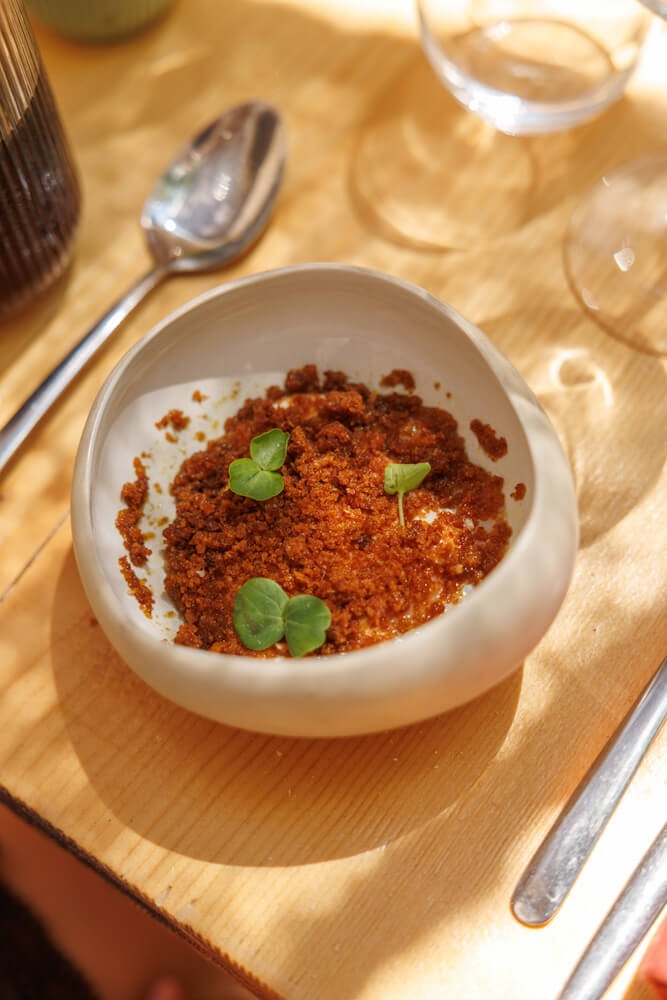
Restaurant EV is a smaller and much more culinary option, close to Nancy Thermal and the Musée de l’École de Nancy. The restaurant is listed in the Michelin Guide, which describes EV as a simple and welcoming place where fresh market produce forms the basis of flavourful, well-executed bistro dishes. So this is not an overly formal dining experience, but it is clearly somewhere that takes its food seriously.
The menu is surprisingly small when we have lunch here. There are just two starters, two main courses and two desserts to choose from. I actually like that and it suits the culinary character of EV. If you are a particularly selective eater, however, I would probably think twice before booking. With so few options, there needs to be something on the menu that appeals to you.
Les Pissenlits
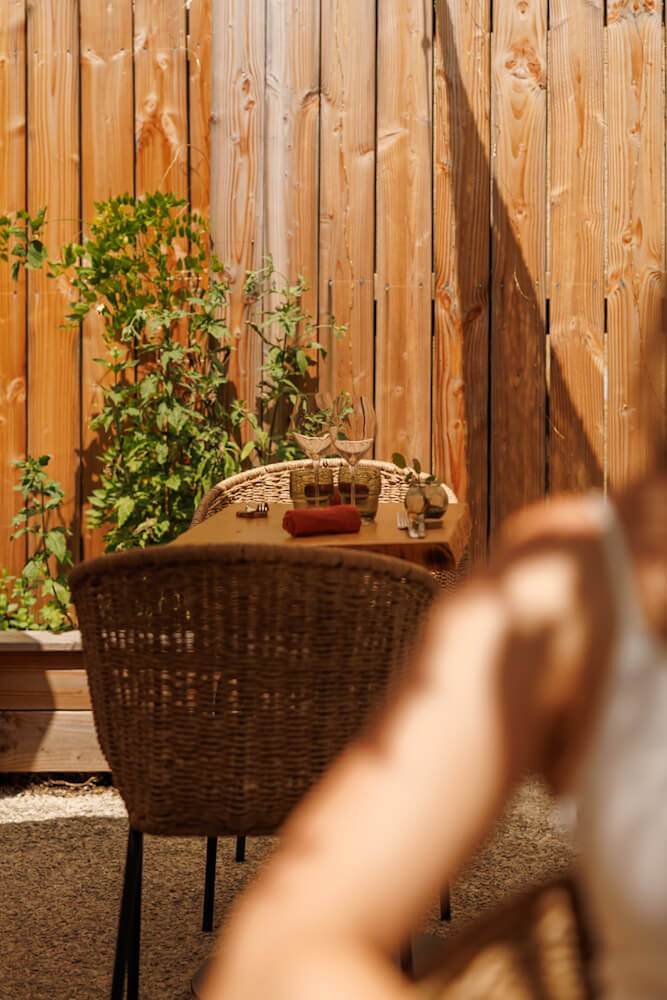
The same applies, in my opinion, to Les Pissenlits, where the menu mainly features traditional and regional French dishes. It is interesting to see how Art Nouveau makes another appearance here too. Even from a quick look inside, the distinctive interior immediately catches the eye, with its organic shapes and botanical motifs. When I read a little more about it later, I discover that the furniture was designed by Eugène Vallin. We eat outside because the weather is lovely, although I find the location of the restaurant itself a little less appealing and the terrace is not particularly inviting. In winter, however, I can imagine this being a wonderful place to eat indoors, if only for the interior.
La Table du Bon Roi Stanislas
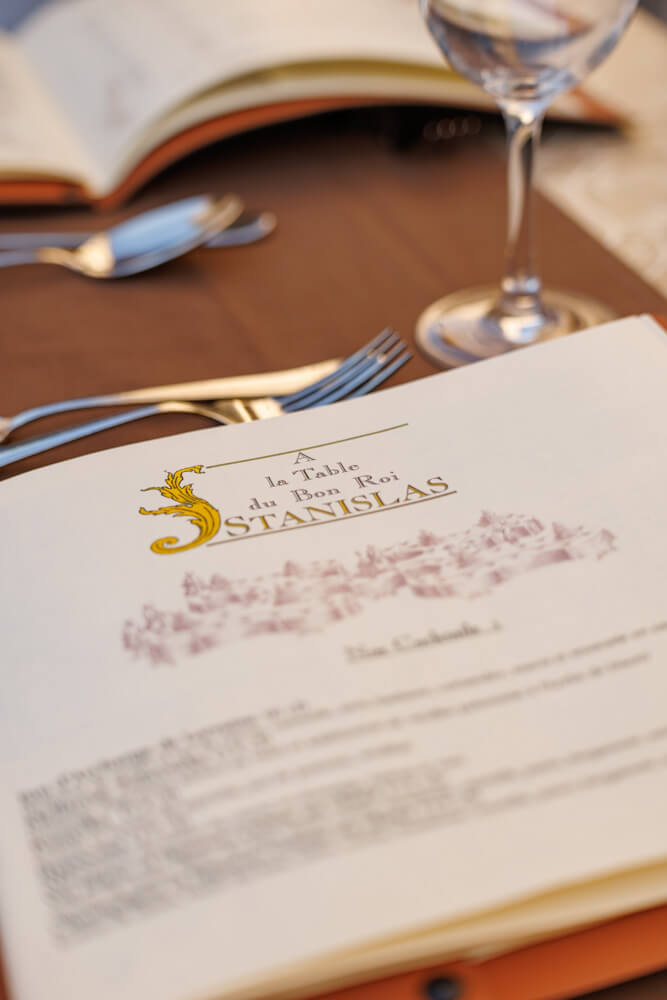
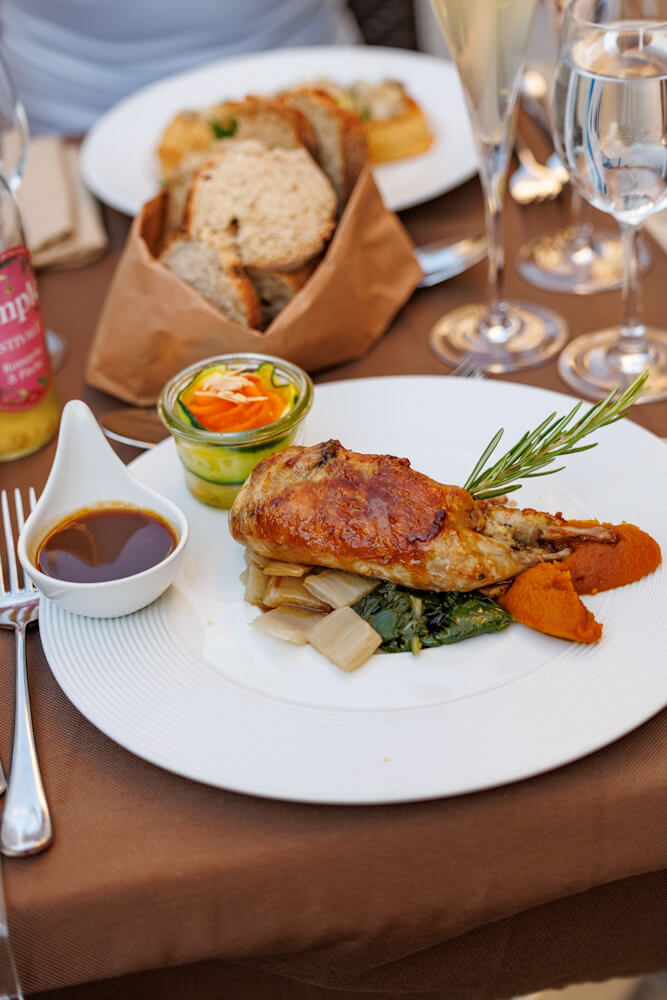
Perhaps our most interesting introduction to the local cuisine is at La Table du Bon Roi Stanislas. The restaurant has been around since 2002 and has an original concept. Its dishes are inspired by the food eaten during the time of Stanislas Leszczynski. As a result, the cuisine combines dishes and influences from Lorraine, Poland and 18th-century France. Here too, it helps to be open to traditional dishes that you are unlikely to eat very often at home. But for me, that is exactly what makes restaurants like this interesting. Instead of choosing something familiar wherever you go, this is an opportunity to really explore French cuisine. And after all the stories about King Stanislas you encounter while exploring Nancy, La Table du Bon Roi Stanislas feels like a very fitting place to end the day.
Where to stay in Nancy
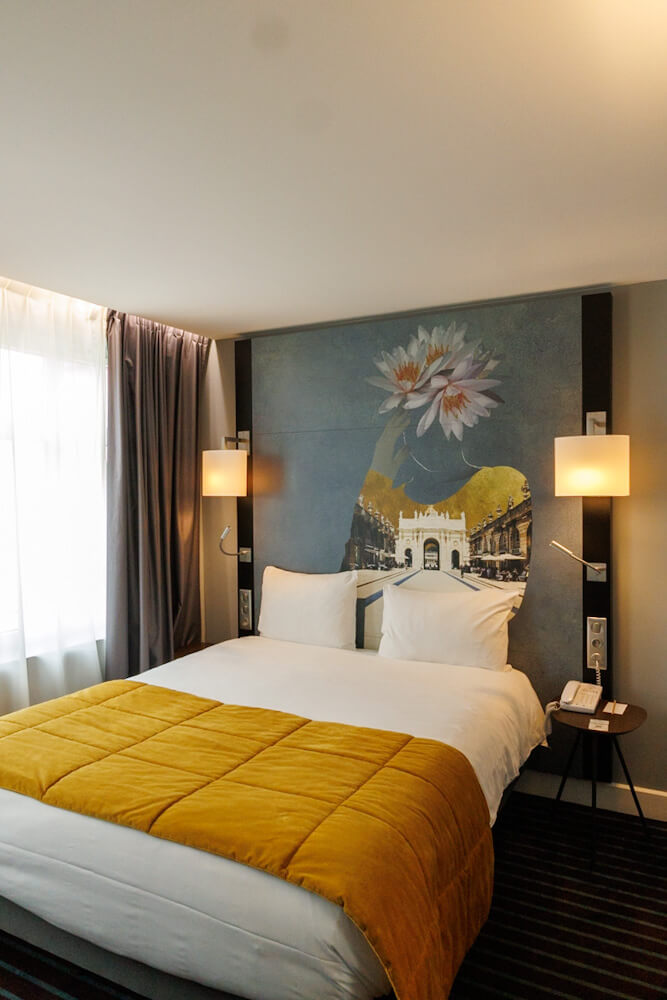
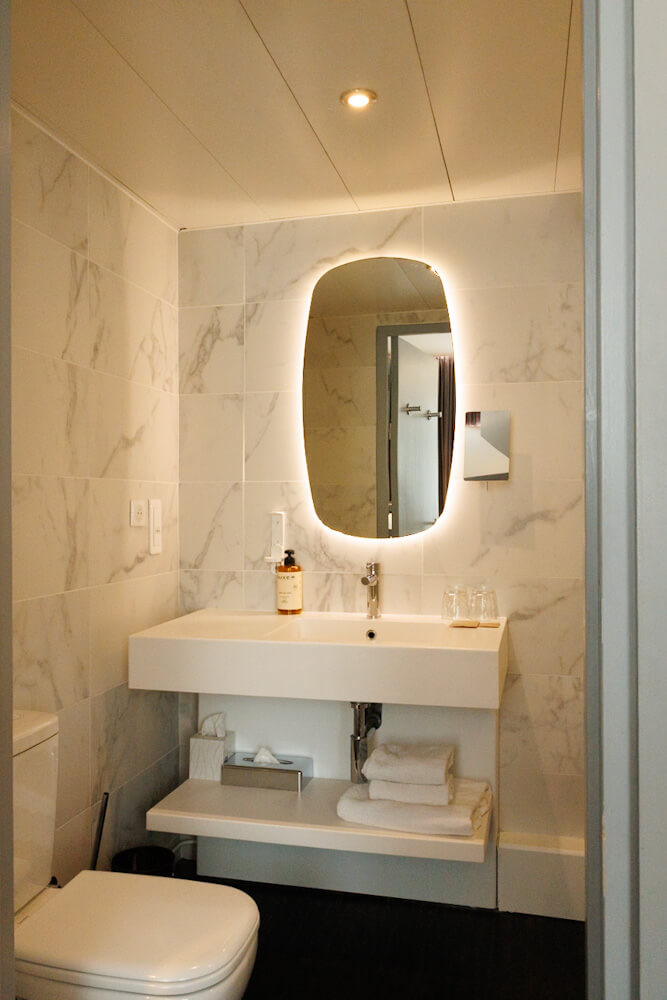
During our visit to Nancy, we spend three nights at Mercure Nancy Centre Place Stanislas, right in the city centre. As the name suggests, the hotel is close to Place Stanislas, which means that almost all the main sights in central Nancy are within walking distance. Our room is comfortable and well maintained, with good beds and a very extensive breakfast. Downstairs in particular, the atmosphere feels relaxed and almost homely. Rather than sitting behind a traditional reception desk, the staff work from a table and throughout the day you can help yourself to water and choose from several different syrups.
If you are arriving in Nancy by car, as we did, it is also useful that the hotel has its own car park. We park the car as soon as we arrive and hardly need it again during our stay. For me, this is a very pleasant place to stay in Nancy, especially because it combines a relaxed atmosphere with a central location just a few minutes’ walk from Place Stanislas.
Other recommended places to stay in Nancy
These three centrally located hotels in Nancy are highly rated and offer good value for money.

Hotel D'haussonville

Hotel De Guise

Hotel Littéraire Stendhal Et Spa
How many days do you need in Nancy?
I would allow at least two days to see the main sights in Nancy. The historic centre is compact and many of the places you will want to visit are within easy walking distance of each other. If you also want to visit Villa Majorelle, the Musée de l’École de Nancy and the Musée des Beaux-Arts, explore by bike and spend a couple of hours at Nancy Thermal, I would recommend three days. We spend three nights in the city and find this gives us plenty of time to see a lot without having to rush from one place to the next.
Nancy as a stopover on the way to southern France or Spain
Nancy is conveniently located for a stopover if you are driving south through France towards destinations in southern France or Spain. But I would not treat the city simply as somewhere to spend the night before continuing your journey the next morning. There is far too much to see for that. If your itinerary allows, plan at least one full day in Nancy.
It is surprising how many interesting cities are easily passed by on a road trip through France towards the south or Spain. Nancy is certainly one of them, but the same goes for Luxembourg City, Lyon and Perpignan. All of these cities work well as stopovers where you can do more than simply spend the night and actually experience something of the city along the way. Nancy is also easy to combine with a road trip through the Vosges or a visit to Alsace.
Where is Nancy in France?
Nancy is located in northeastern France, in the Grand Est region and the Meurthe-et-Moselle department. The city lies south of Metz and relatively close to the border with Luxembourg. Its location makes it a convenient stop on a longer road trip through eastern France or when travelling further south.
How to get to Nancy
Nancy is easy to reach by car and its location makes it particularly convenient if you are combining the city with other destinations in France. We travel to Nancy by car ourselves, but once we arrive, we do not need it again during our stay. The compact city centre is easy to explore on foot or by bike. You can also reach Nancy by train. Depending on where you are travelling from, connections are available via major transport hubs such as Paris, Luxembourg and Metz, making it possible to include Nancy in a wider trip through France or neighbouring countries.

