The Drôme in France is a surprisingly varied region for a road trip. In the north, you drive through green hills and well known wine regions along the Rhône, while further south the landscape gradually takes on a more Provençal character. In the Drôme Provençale, lavender fields, olive groves and vineyards shape the scenery and you will come across historic villages such as Grignan and La Garde-Adhémar. Together with Mirmande, they are listed among Les Plus Beaux Villages de France, an association of some of the most beautiful villages in France. You can easily spend the best part of a week on a road trip through the Drôme. If you have more time, the region combines well with Lyon or you can continue south towards Provence. There are plenty of ways to extend the route and make the trip as long as you like.
Read this article in DutchWhere is the Drôme?
The Drôme is in southeastern France and is part of the Auvergne-Rhône-Alpes region. The department takes its name from the Drôme River and lies roughly between Lyon and Provence. Its capital is Valence, on the Rhône. The western side of the Drôme largely follows the Rhône Valley, while towards the east the landscape becomes increasingly mountainous as you approach the French Alps.
What is the Drôme Provençale?
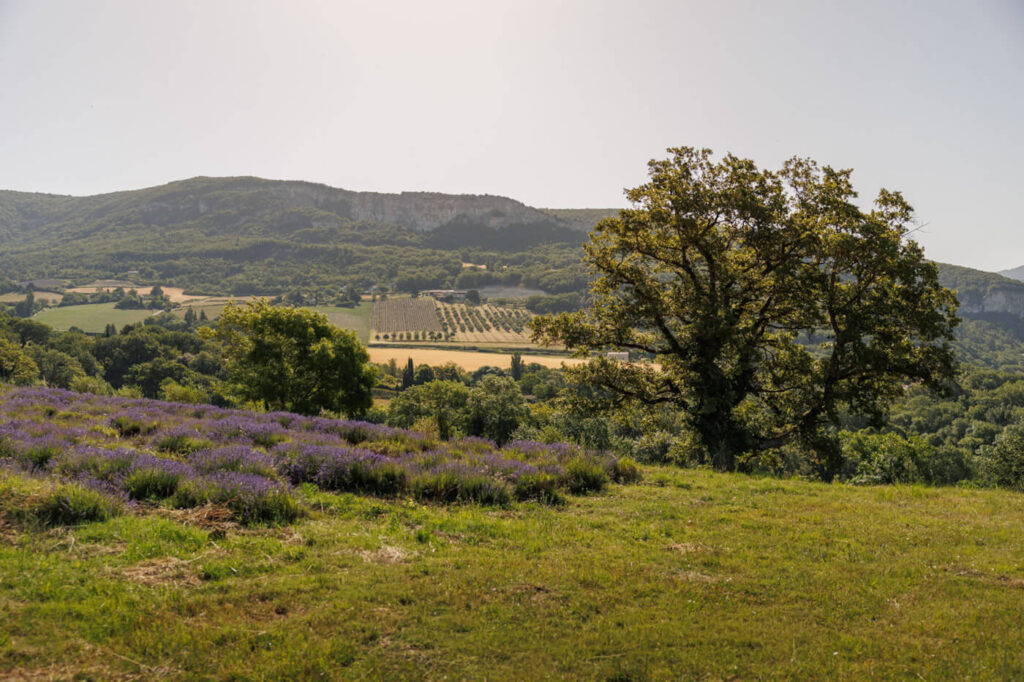
The Drôme Provençale is the southern part of the Drôme and borders Provence. Places such as Grignan and Nyons are located in this area. The name can be a little confusing, as the Drôme Provençale is not officially part of the administrative region of Provence-Alpes-Côte d’Azur, but of Auvergne-Rhône-Alpes. Yet in terms of landscape, climate and local produce, you can clearly feel that you are getting closer to Provence. Lavender plays an important role here, but the region is also known for its wine, olives and truffles. Around Nyons, for example, the famous black Tanche olives are grown, while the vineyards around Grignan belong to the Grignan-les-Adhémar wine region. It is precisely this transition that makes a road trip through the Drôme so interesting. In a single journey, you can experience several different landscapes and combine a variety of towns and villages.
Exploring the Drôme by car
For me, the best way to explore the Drôme is by car. The most interesting places are scattered across the region and along the way you will pass vineyards, lavender fields and small villages where you will often want to stop. You can, of course, drive to the Drôme in your own car, but flying to a nearby airport and renting a car is another good option. When renting a car, I prefer to choose comprehensive insurance with full coverage. It is a little more expensive, but for me it is worth the extra cost to travel without having to worry about unexpected charges if something happens to the car. The most convenient airport depends mainly on which part of the Drôme you want to visit and where else you plan to travel during your trip.
Combining the Drôme with Lyon
If you want to explore both the north and south of the Drôme, Lyon is a logical starting point. You can fly into Lyon, pick up a rental car and start your road trip from there. Lyon itself is also well worth exploring. Allow at least a day to discover the city before setting off, or save Lyon for the end of your trip. From Lyon, you can gradually make your way south via Hauterives, Tain-l’Hermitage and Mirmande towards the Drôme Provençale.
Combining the Drôme with Provence
If you mainly want to explore the Drôme Provençale and combine it with Provence, flying into Marseille may be more convenient. From Marseille, you can travel north via Aix-en-Provence and the Luberon towards the Drôme. At the end of this article, I share more ideas for places to visit in Provence.
Suggested route through the Drôme
The route in this article is best used as a guideline. You do not need to visit every place and it is easy to add or skip stops along the way. That is one of the things I enjoy most about a road trip. There is no need to follow a fixed itinerary every day. If you want to see a large part of the Drôme and are travelling from Lyon, the order shown on the map below makes sense. I would allow around six days for this route. If you also want to spend more time in Lyon, visit several wineries or set aside a full day for hiking, it is worth adding a few extra days. If you are combining the Drôme with Provence, you can continue south from La Garde-Adhémar or Grignan. I share some suggestions for extending the route at the end of this article.
Lyon
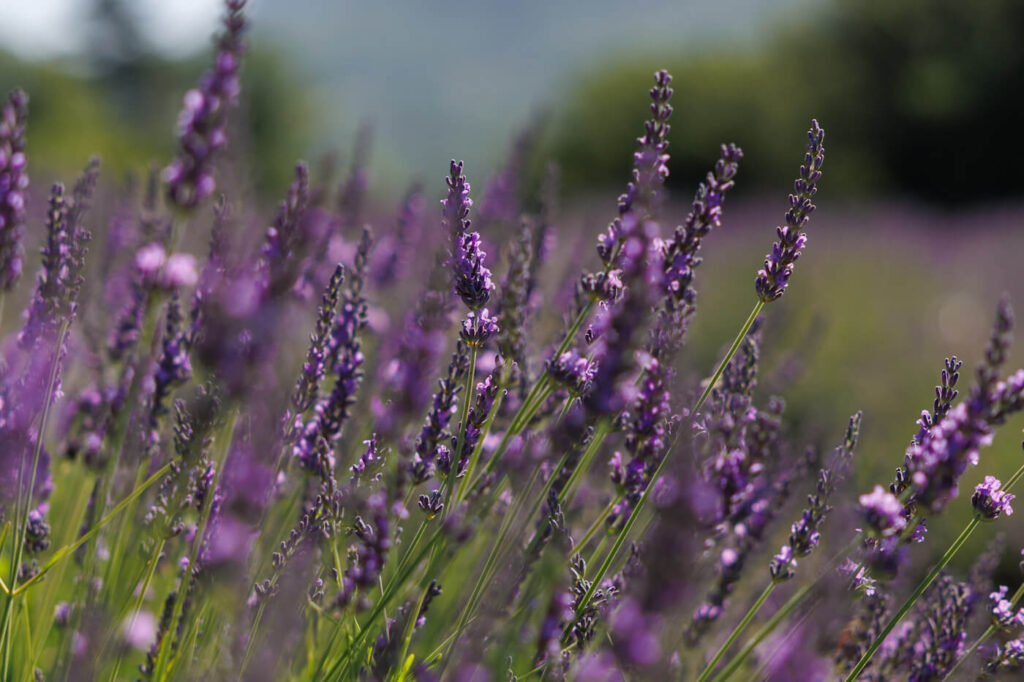
Lyon is not part of the Drôme, but it is a logical place to start this road trip. Especially if you are flying into Lyon, I would allow at least a day to explore the city. Head up Fourvière hill to visit the Basilique Notre-Dame de Fourvière and enjoy the views across Lyon, then make your way down to Vieux Lyon. Together with Fourvière, the historic centre is part of Lyon’s UNESCO World Heritage Site and is home to one of the largest surviving Renaissance districts in Europe. One of its most distinctive features is the network of traboules, centuries-old covered passageways that connect streets through courtyards and buildings. And of course, Lyon is a city where it is worth making time for a good meal. It has long been known as one of France’s great gastronomic cities.
Tip: If you only have six days for the entire trip, I would not spend too much time in Lyon. An afternoon, evening and morning will give you a good first impression while leaving plenty of time to explore the Drôme.

Palais Idéal du Facteur Cheval in Hauterives
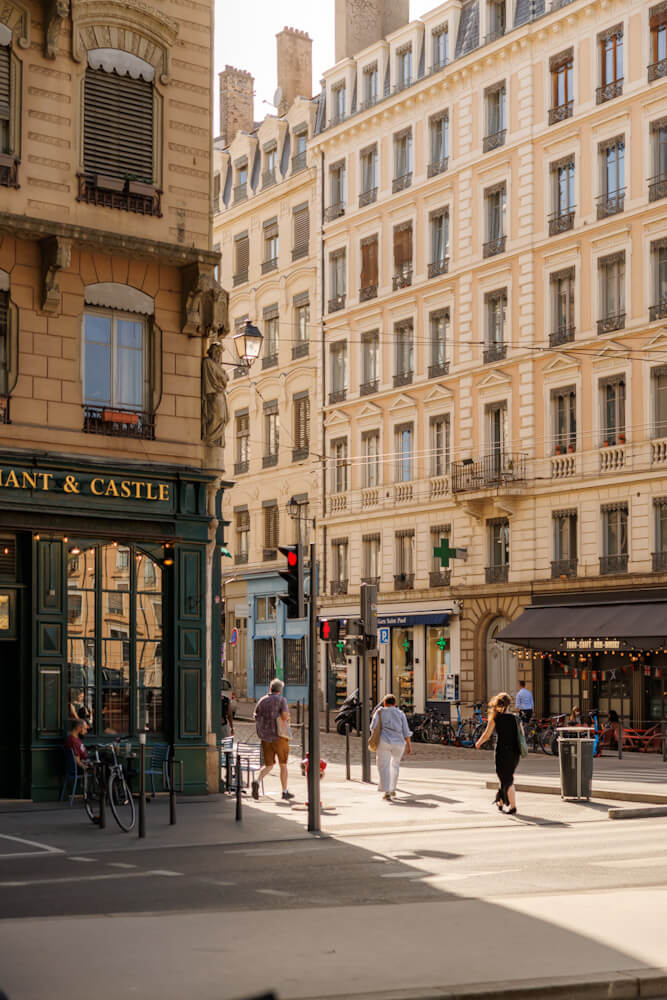
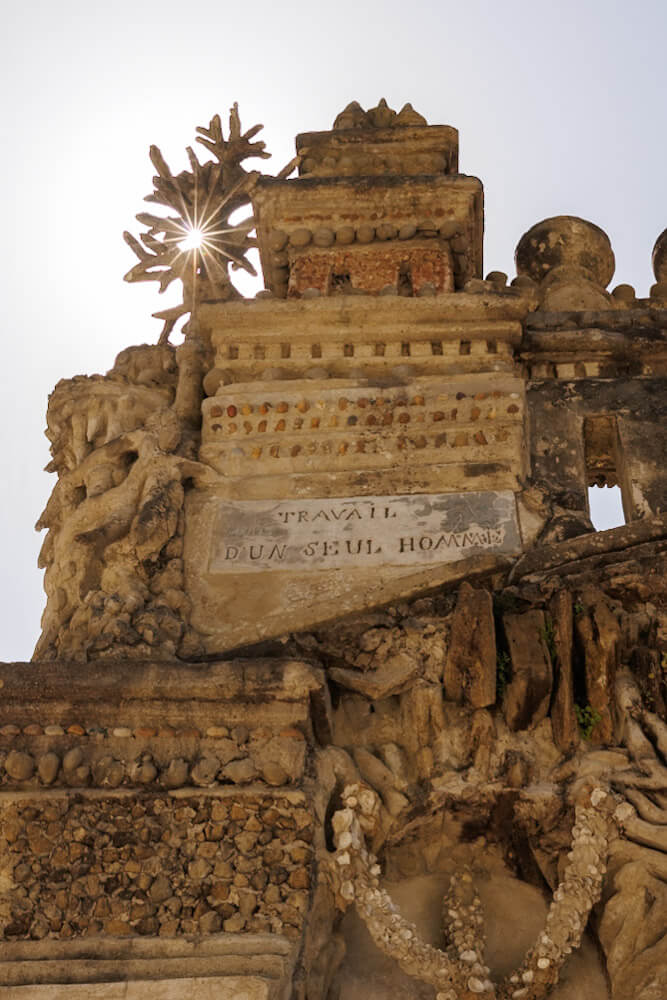
From Lyon, drive towards Hauterives. Here you will find one of the most unusual sights on this road trip, the Palais Idéal du Facteur Cheval. The palace is the life’s work of postman Ferdinand Cheval. In 1879, while making his daily rounds, he stumbled upon an unusually shaped stone. It became the starting point for a project that would eventually take him 33 years to complete. With no formal training in architecture or construction, he built an extraordinary fantasy palace by hand, filled with towers, animals, caves, stairways and references to cultures from around the world. Allow around one and a half to two hours to visit the palace and museum.
Tain-l’Hermitage and Crozes-Hermitage
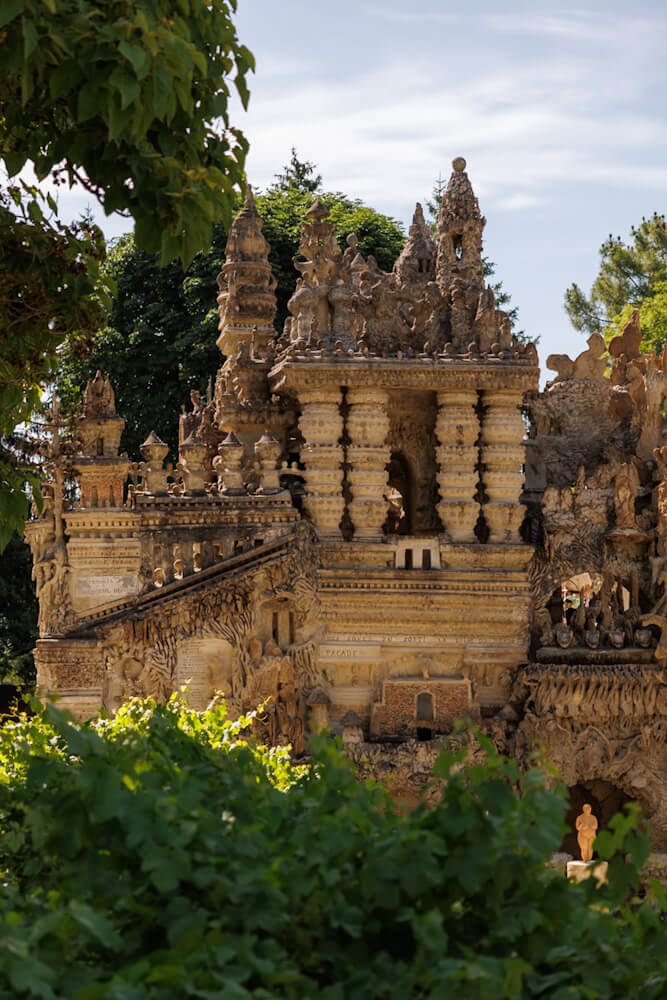
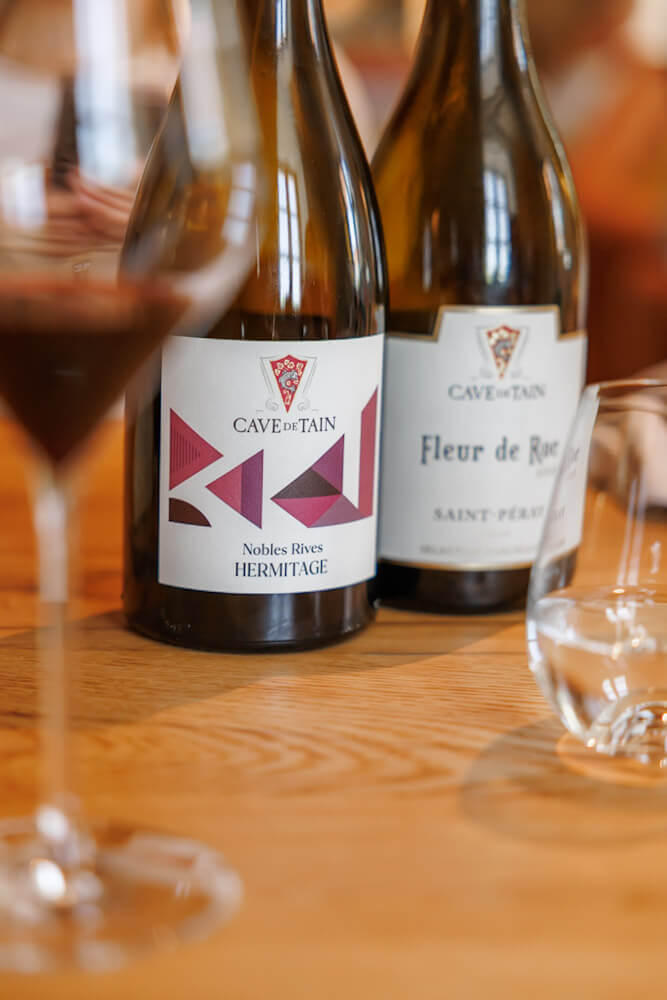
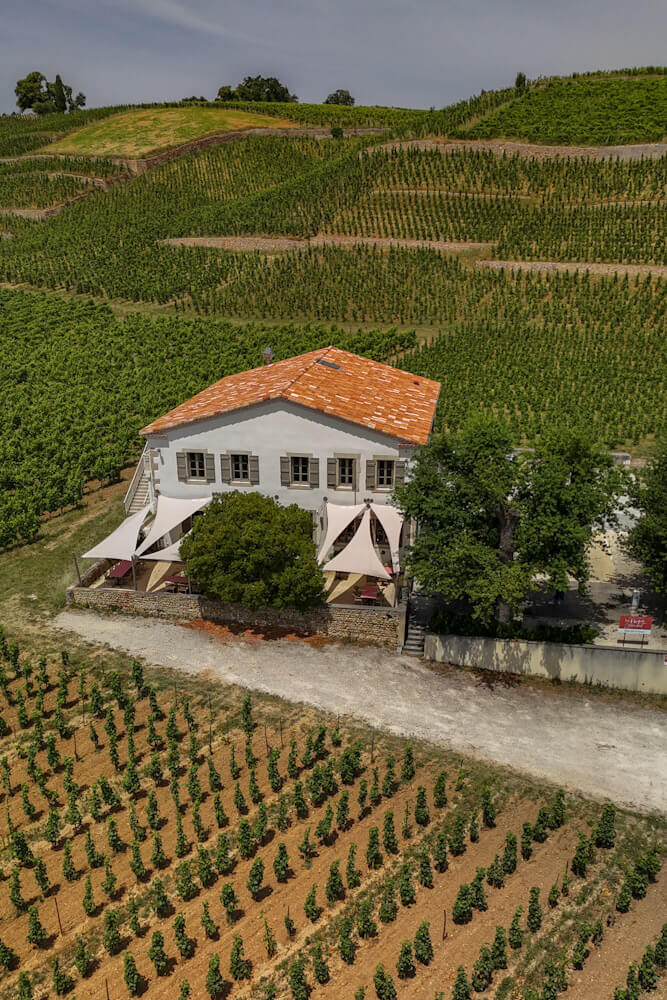
The road trip continues to Tain-l’Hermitage, in the heart of one of the best known wine regions along the Rhône, home to appellations such as Hermitage and Crozes-Hermitage. There are several wineries you can visit along the way, many of which offer tastings. One option is Le Fief de Gambert, where you can combine a wine tasting with lunch before continuing south. If you are particularly interested in wine, it is worth allowing some extra time for this part of the route. Even if you do not drink wine, Tain-l’Hermitage makes an enjoyable stop for its setting among the vineyards along the Rhône. It is also a very good place to stop for a meal.

Mirmande
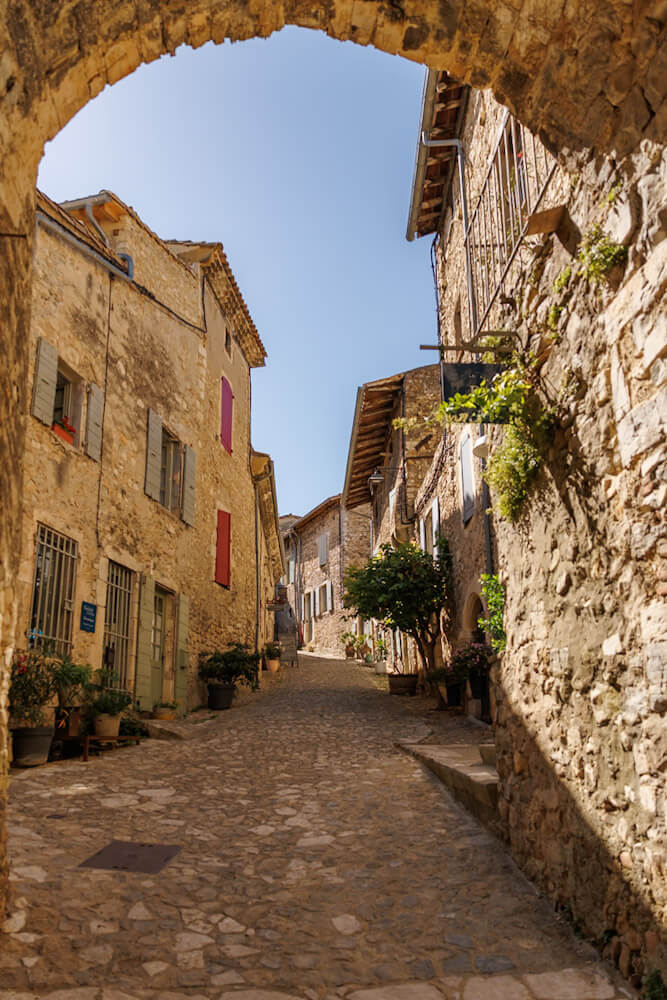
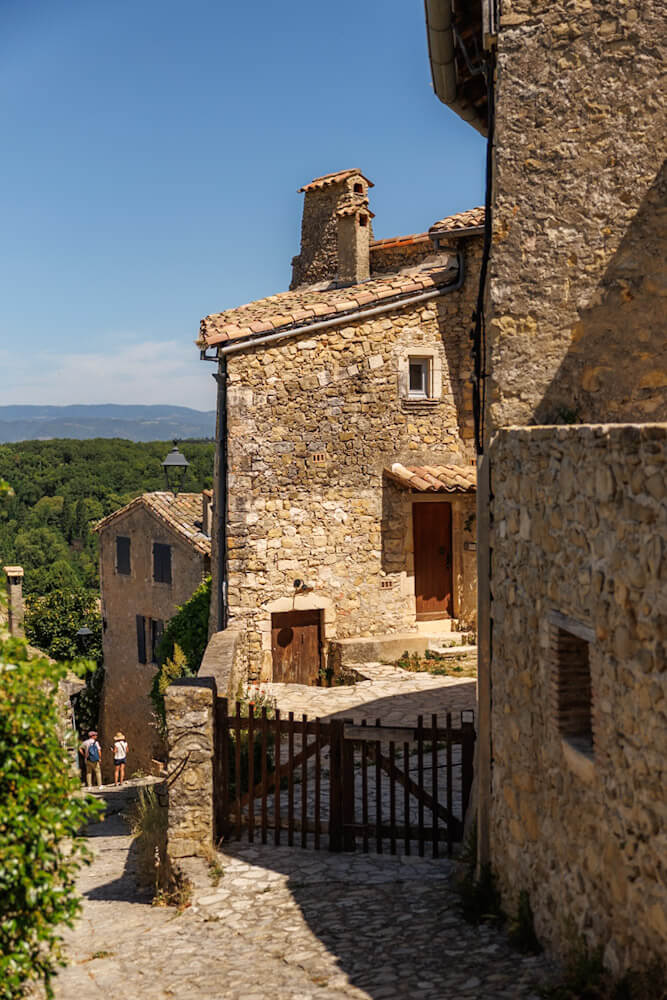
Mirmande is a lovely next stop and the first village on this route to be listed among Les Plus Beaux Villages de France. Built against a hillside, the village is a maze of narrow streets, stone steps and old houses made from local stone. Park at the bottom of the village and take your time walking uphill towards the Église Sainte-Foy. You do not need a full day for Mirmande. A few hours is enough to wander through the village and perhaps stop for lunch.
Tip: Have lunch at Restaurant Patine in the heart of the village, where you can sit in a sheltered courtyard. The menu features seasonal dishes prepared with ingredients from the surrounding area. It is worth booking ahead, as there are only a limited number of restaurants in Mirmande.
Lavender at L’Essentiel de Lavande
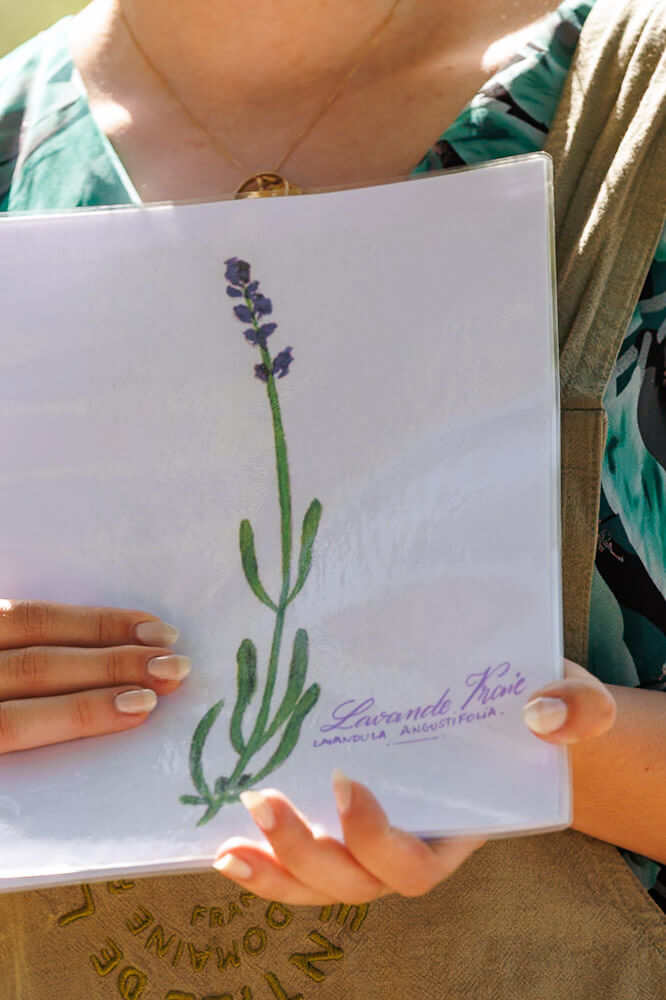
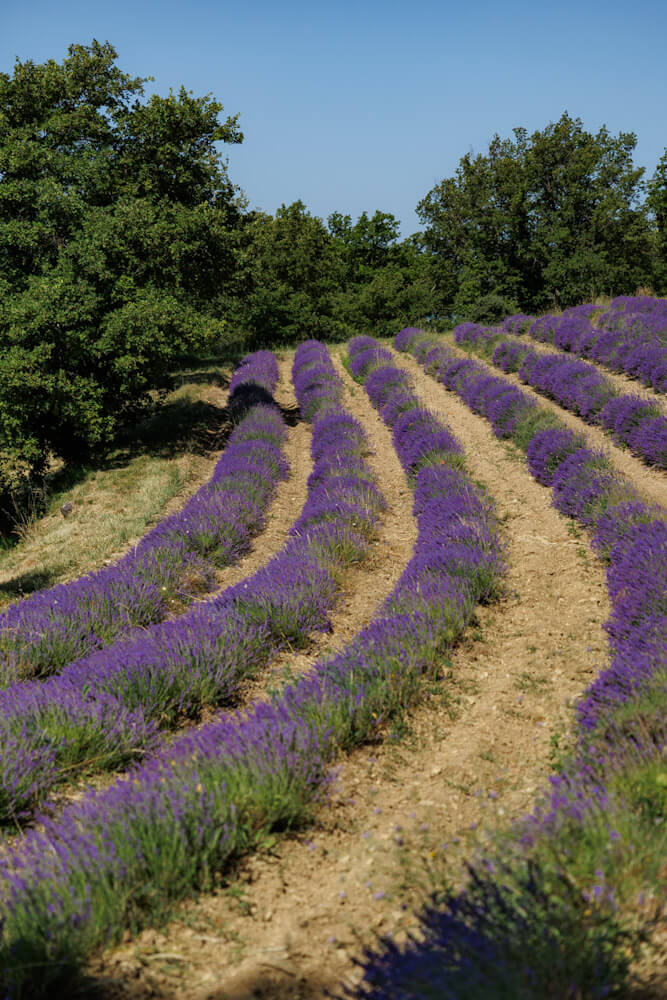
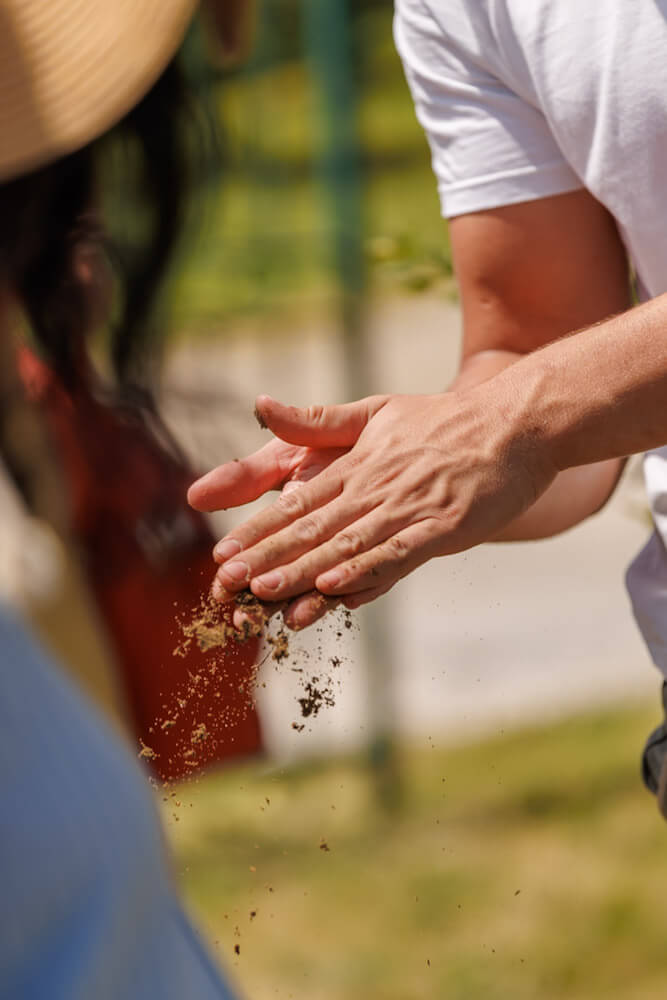
As you continue south, the Provençal influence becomes increasingly noticeable. A good place to learn more about one of the region’s best known products, lavender, is L’Essentiel de Lavande near La Bégude-de-Mazenc. Lavender is grown organically here and you can learn about the different varieties and how the plants are harvested and processed. Workshops are also organised, including sessions where you can make your own lavender based skincare products.
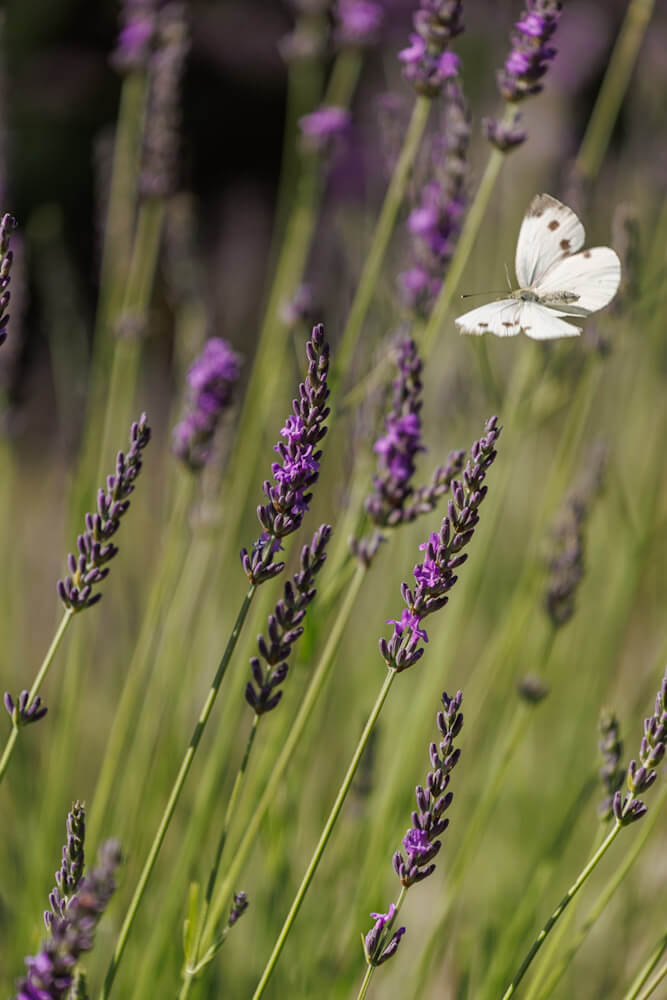
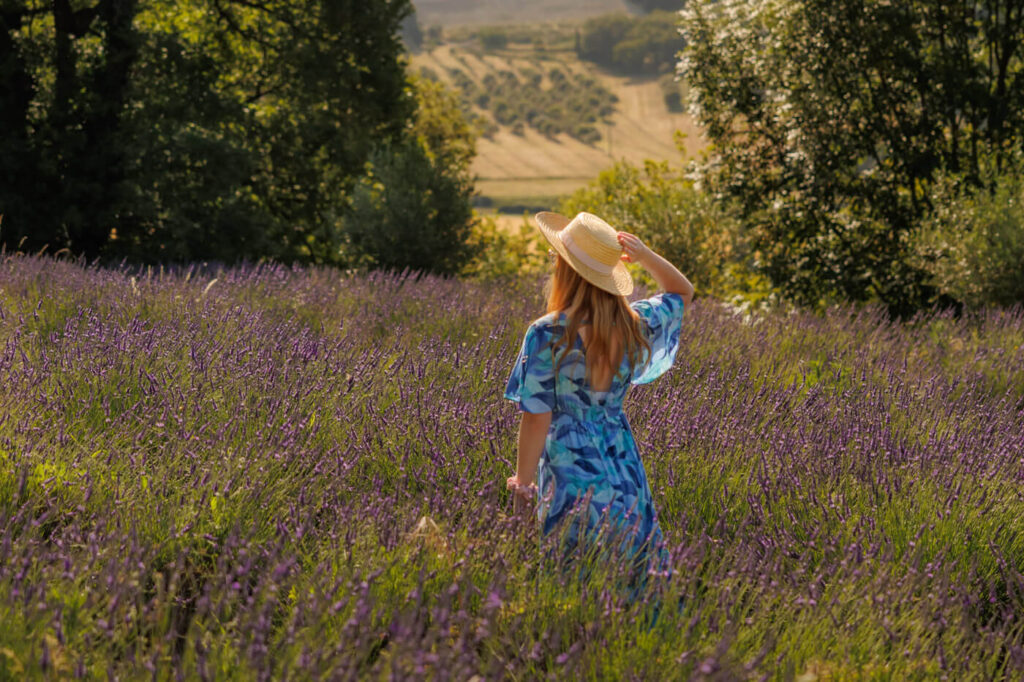
One thing you may notice is that the lavender fields of the Drôme Provençale look quite different from the large, perfectly aligned fields often associated with Provence. In Provence, you are more likely to see long, straight rows of lavender stretching across relatively flat land. In the Drôme Provençale, the fields tend to be smaller and are often found on gently rolling hillsides. The rows are less uniform and other plants grow between the lavender, giving the fields a more natural, less manicured appearance. They are also scattered among vineyards, grain fields, olive trees and truffle oaks.
If you want to see the lavender in bloom, you will of course need to visit at the right time of year. The exact flowering period varies from year to year and depends partly on the weather and altitude. I visit the Drôme in mid June.

Grignan
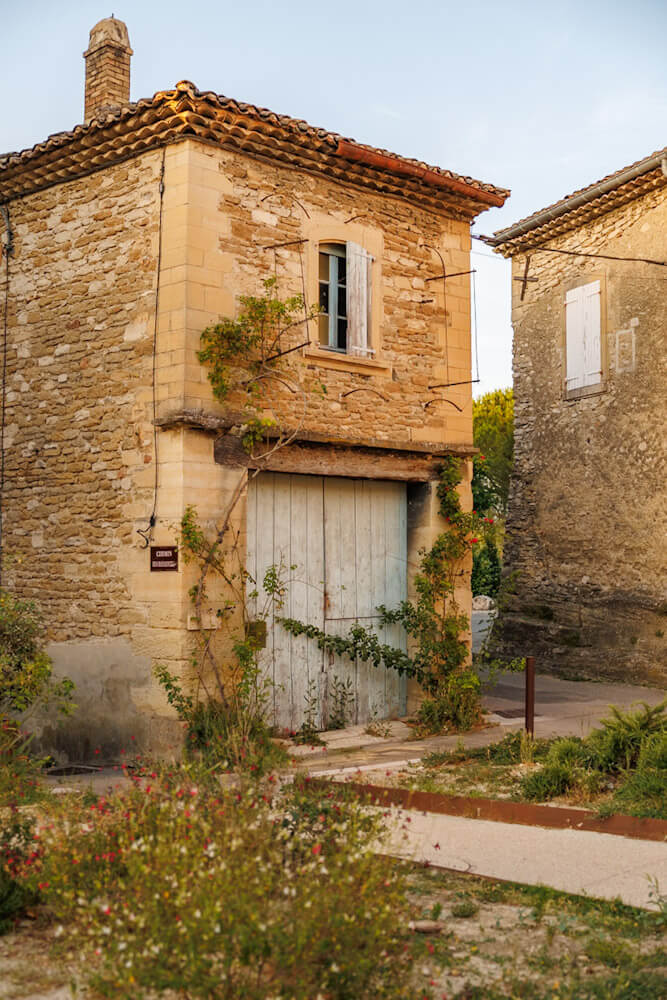
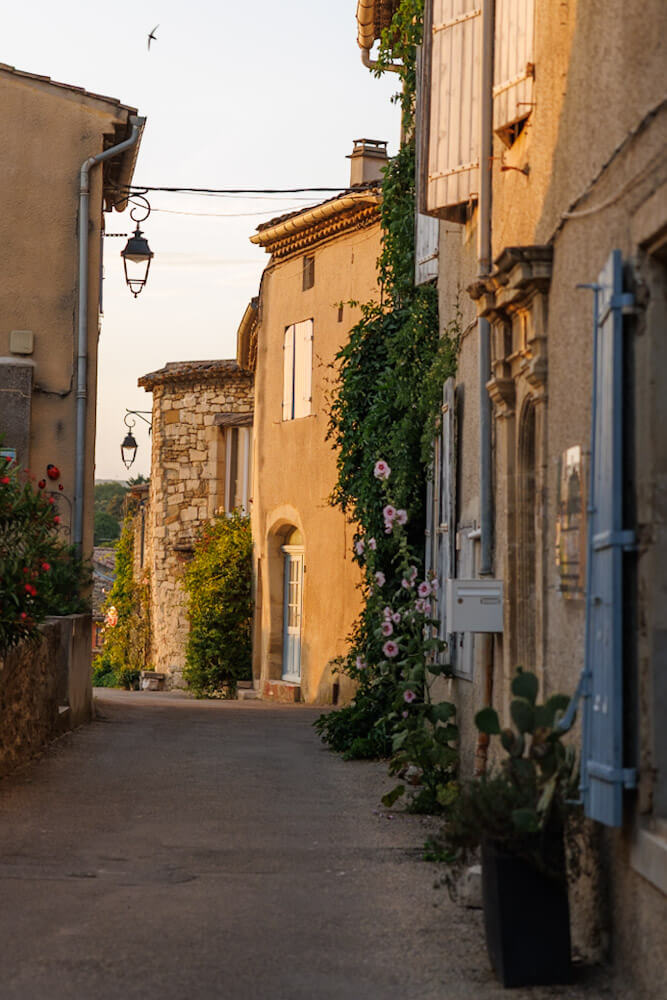
Grignan is one place I would definitely include on a road trip through the Drôme. The village is listed among Les Plus Beaux Villages de France and is surrounded by the vineyards, lavender fields and olive groves of the Drôme Provençale. The impressive Château de Grignan rises above the village and can be seen from some distance away. Wander through the old streets towards the château and make sure to visit the interior as well. From its terraces, you have views across the village and the surrounding countryside. Grignan is also a good place to stay for a few nights. From here, you can explore several parts of the Drôme Provençale without having to pack your bags and move on to another hotel every day.
Truffle hunting in the Drôme
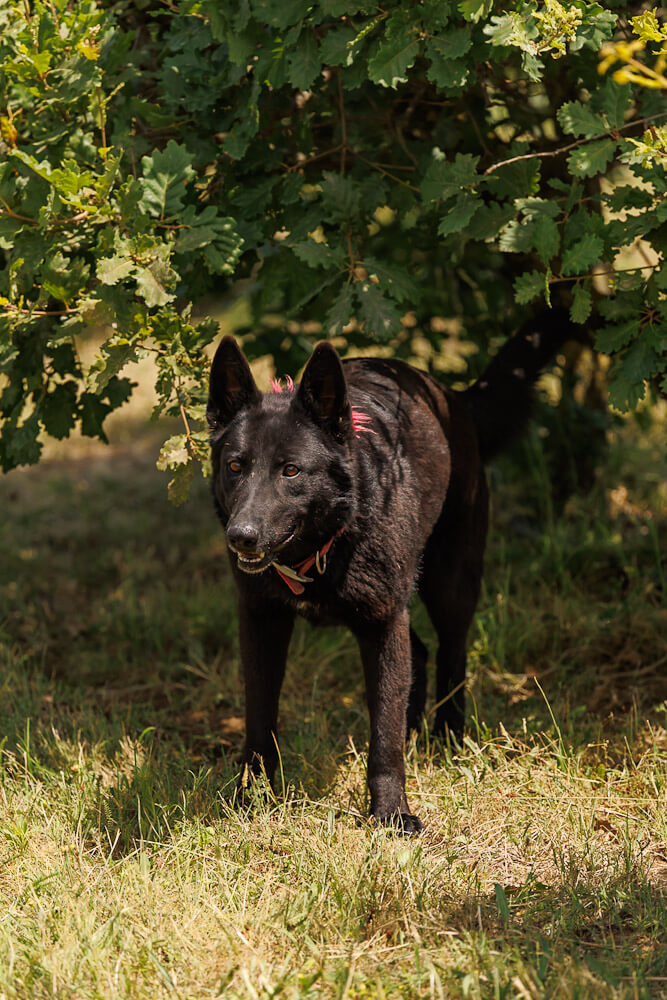
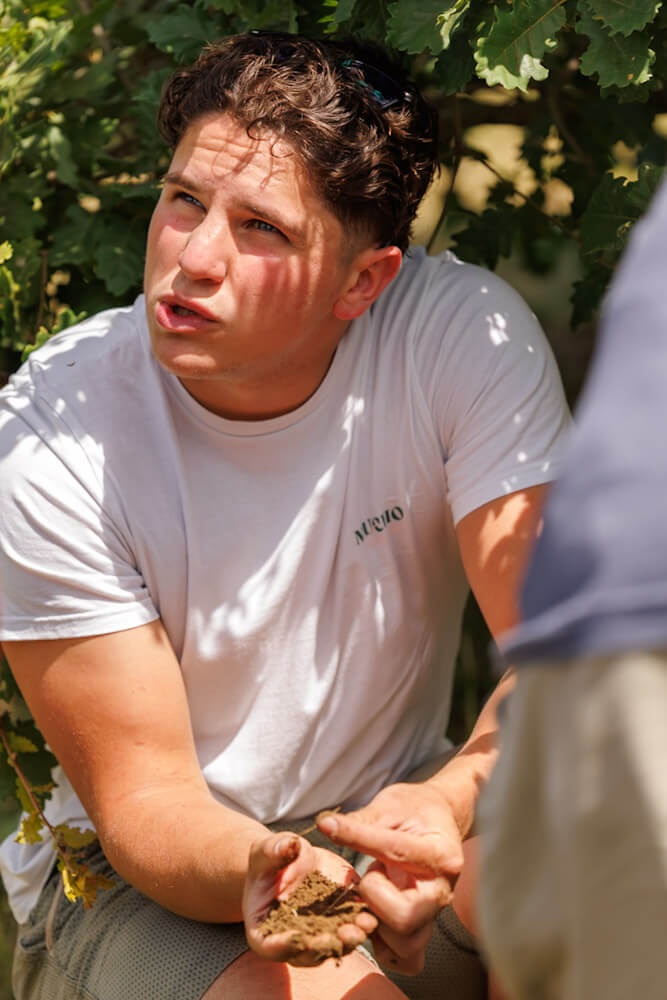
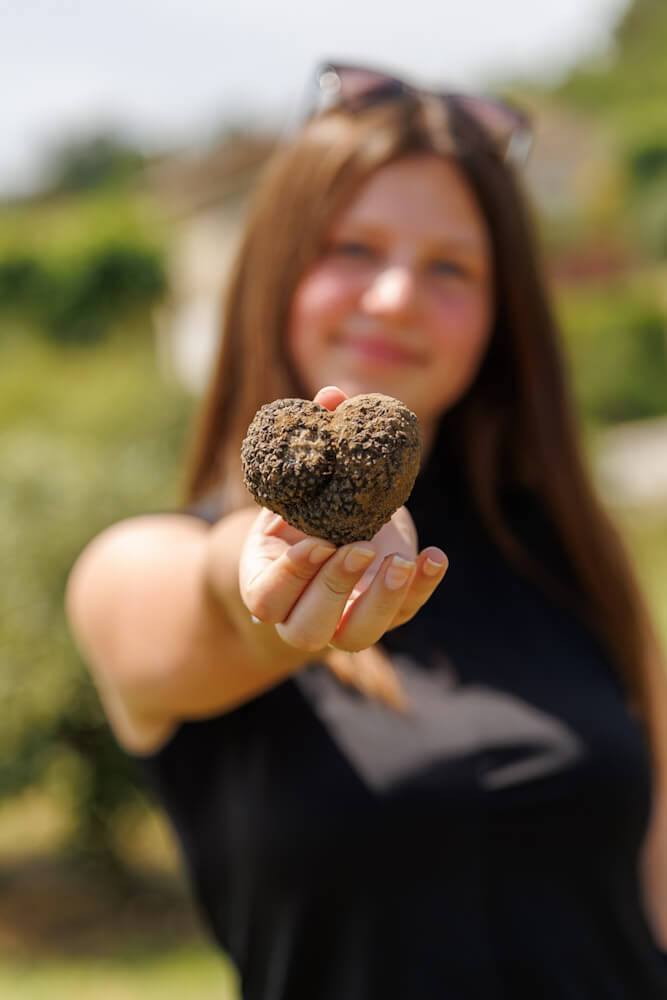
Around Grignan, you can discover another local product for which this part of France is known, the truffle. At Truffière La Baume Saint Antoine, you can learn how truffles are cultivated and watch trained dogs search for them underground. During a visit, you will hear more about truffle growing and, of course, have the opportunity to taste them as well. This is one of those activities that requires a little advance planning, as tours are only offered at certain times. Check the schedule beforehand and plan the rest of your route around your visit.
Nyons
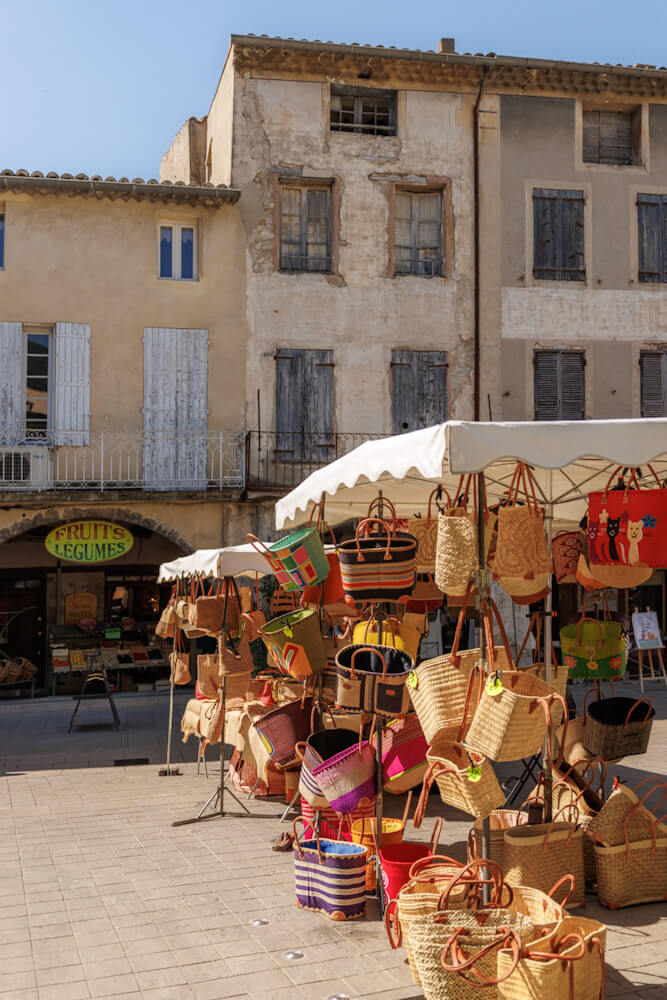
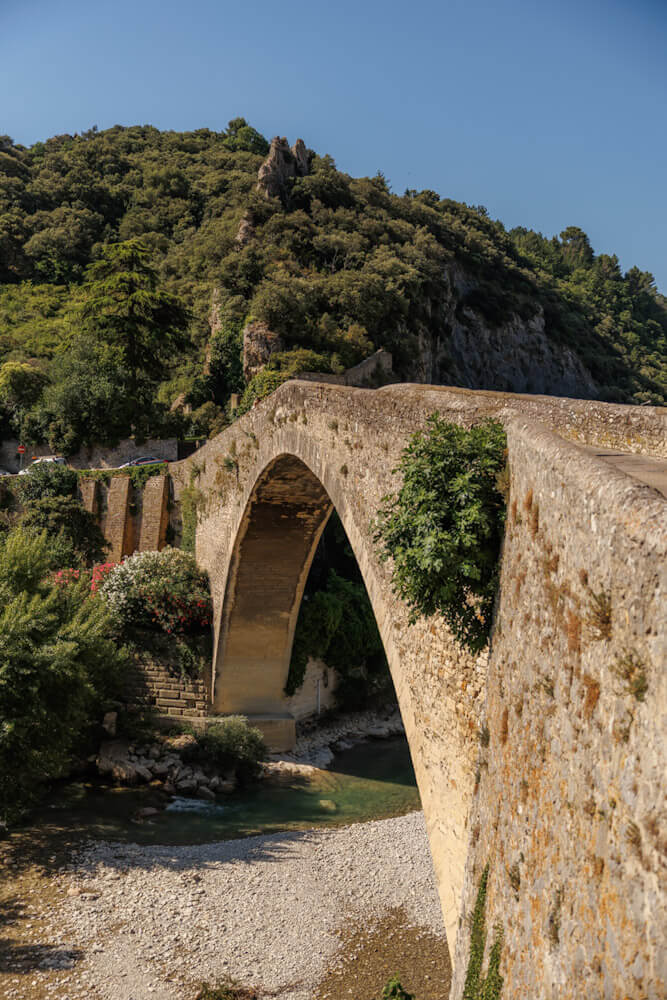
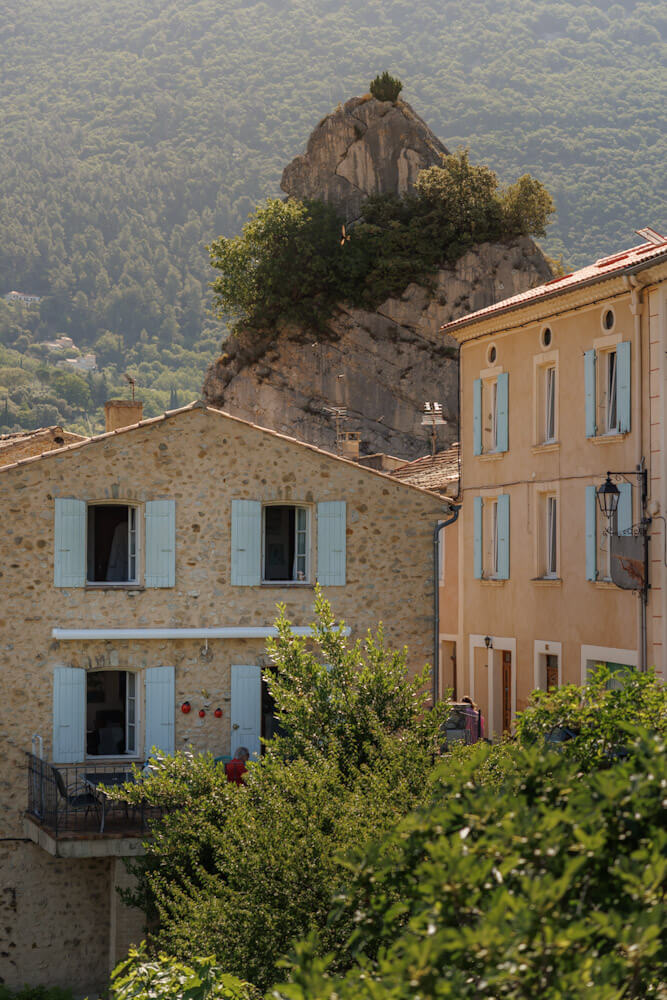
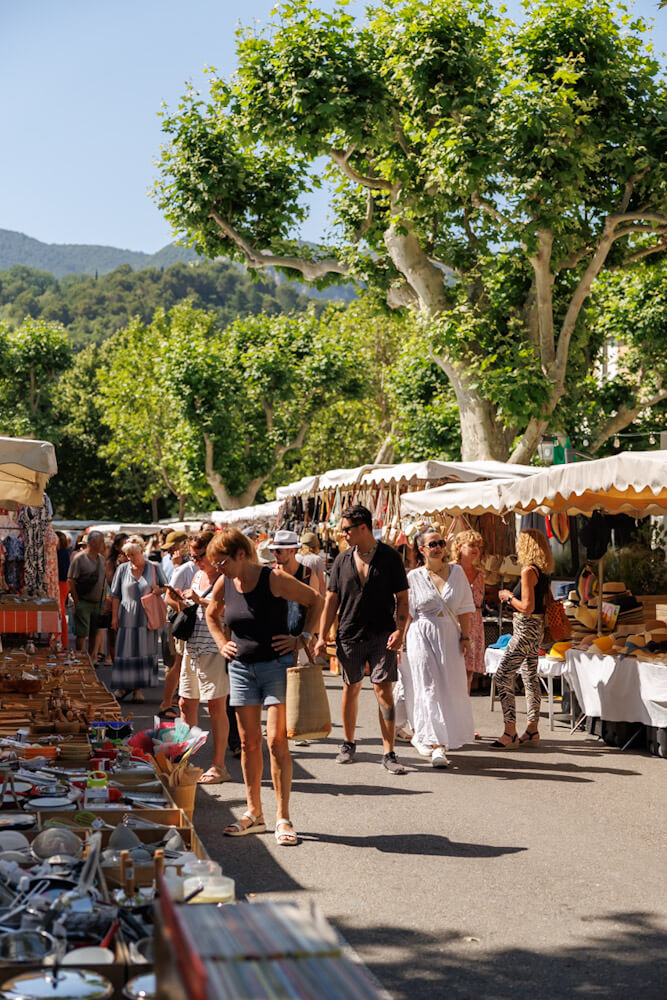
From Grignan, you can continue to Nyons, a town best known for its black olives and olive oil. If possible, visit Nyons on a Thursday, when the large weekly market takes place. The streets and squares in the centre fill with stalls selling vegetables, cheese, cured meats, herbs, lavender products and other local specialities. Afterwards, take some time to wander through the older streets of Nyons and see the historic bridge across the Eygues River.
La Scourtinerie
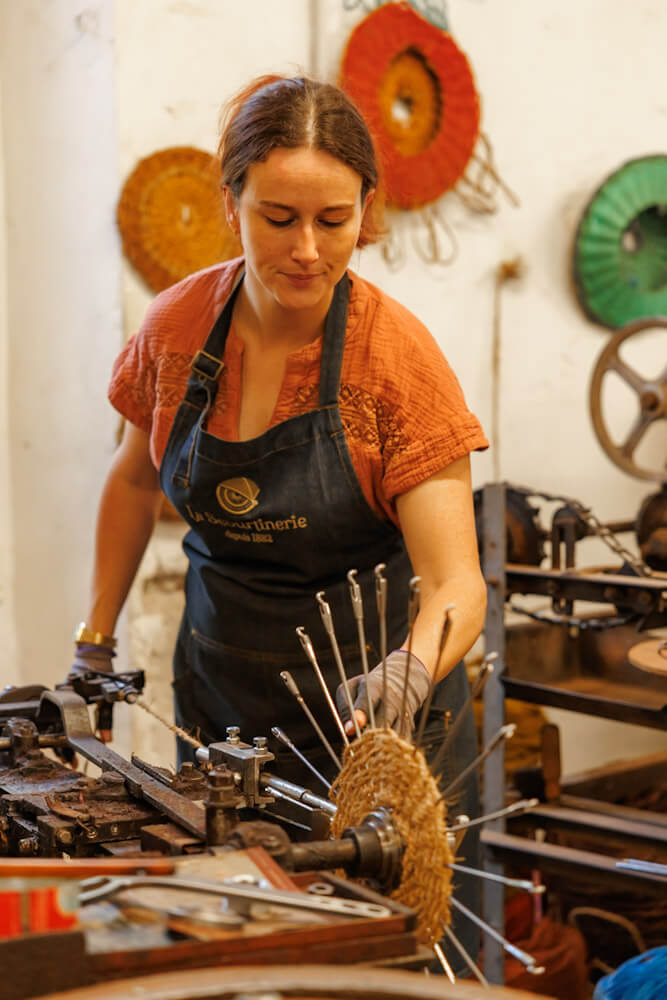
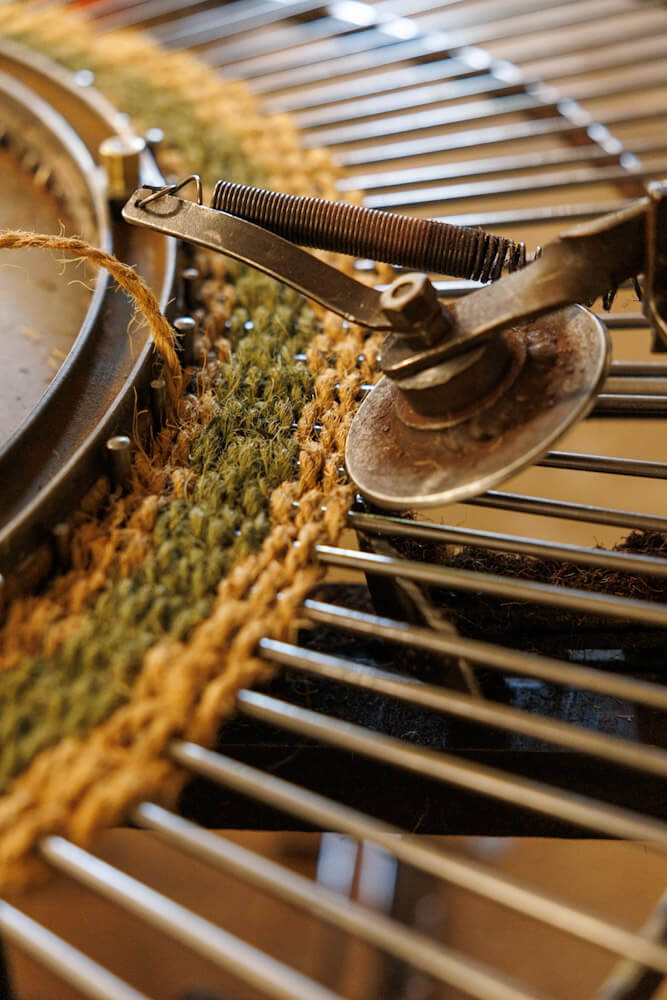
Close to the historic bridge in Nyons, you will find La Scourtinerie, a traditional workshop where coconut fibre mats have been woven since 1882. Originally, these scourtins were used in the olive pressing process, but today the same traditional technique is also used to make a range of decorative items. You can watch the production process in the workshop and visit the shop, where you will find colourful coconut fibre mats, coasters and other handmade products.
Olive oil at Maison des Huiles et Olives
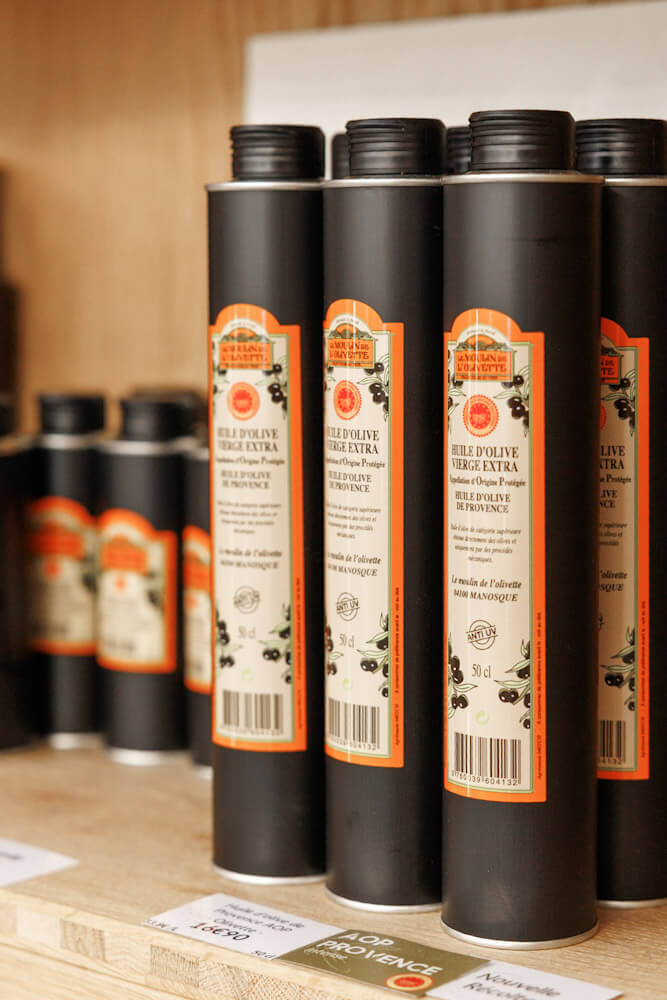
If you want to learn more about the olives grown around Nyons, visit Maison des Huiles et Olives. Here you can learn about olive cultivation and how olive oil is produced in the region. Cooking workshops are also organised, with a focus on local ingredients and products. A visit to Maison des Huiles et Olives is easy to combine with time in Nyons.

Saint-Paul-Trois-Châteaux
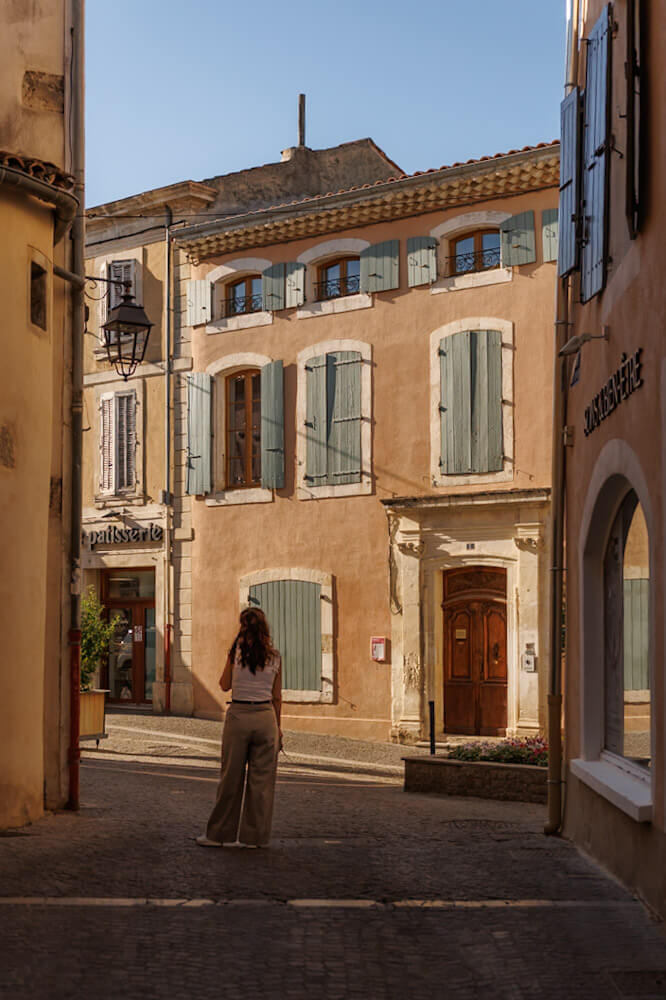
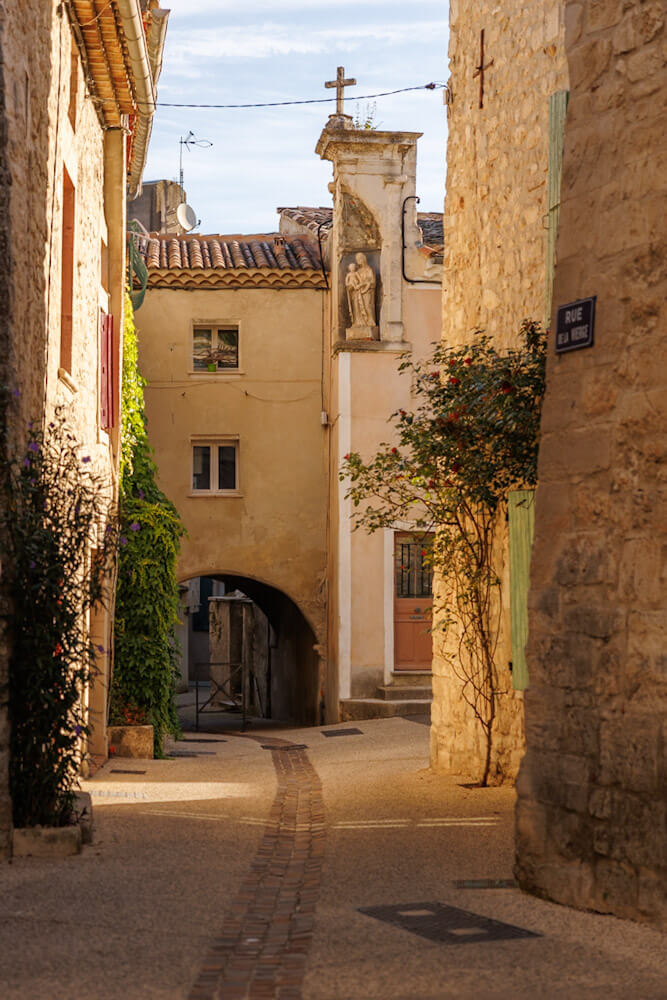
Make sure to include Saint-Paul-Trois-Châteaux on your road trip through the Drôme Provençale. The historic centre is fairly small, but it is a lovely place to wander for a few hours. You will find narrow streets, old stone façades and plenty of photogenic corners. The town is particularly lively in the late afternoon and evening, when the terraces in the centre begin to fill up. Allow a few hours to explore or consider staying overnight.
Tip: For dinner, Villa Augusta is a good choice. I eat outside on the terrace, surrounded by its Mediterranean garden. Remember to bring mosquito repellent, as the terrace is right next to a pond.
La Garde-Adhémar
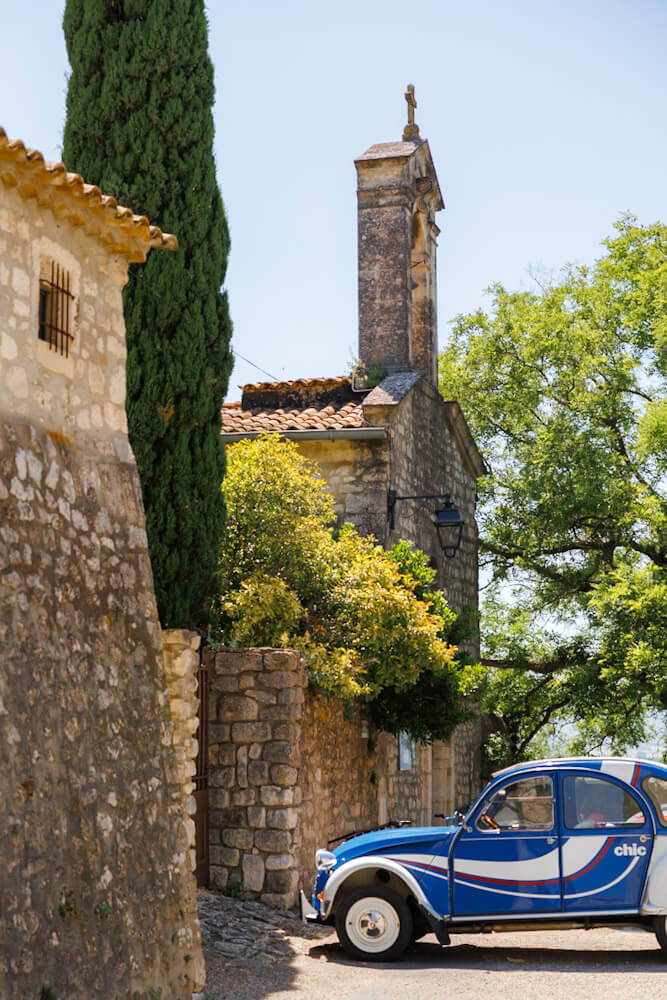
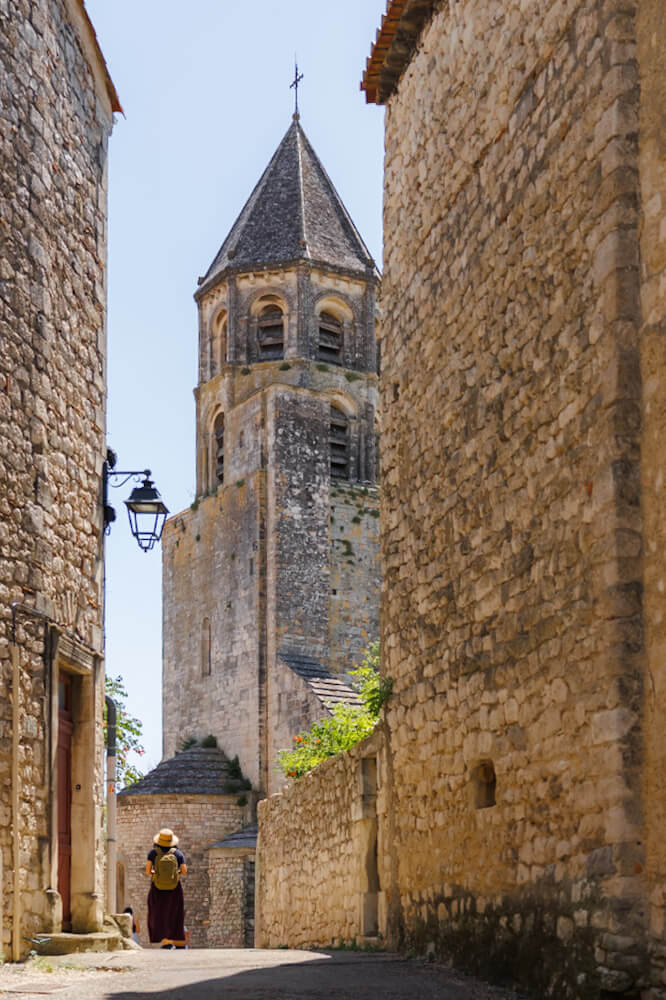
La Garde-Adhémar is another village worth including on this route. Like Mirmande and Grignan, it is listed among Les Plus Beaux Villages de France. The historic village sits on a hill overlooking the Rhône Valley. Wander through its narrow streets, visit the Romanesque Église Saint-Michel and take some time to explore the Jardin des Herbes, a garden filled with medicinal and aromatic plants. The village is fairly small, so around an hour and a half is enough to explore it at a relaxed pace.
Wine tasting at Domaine de Grangeneuve
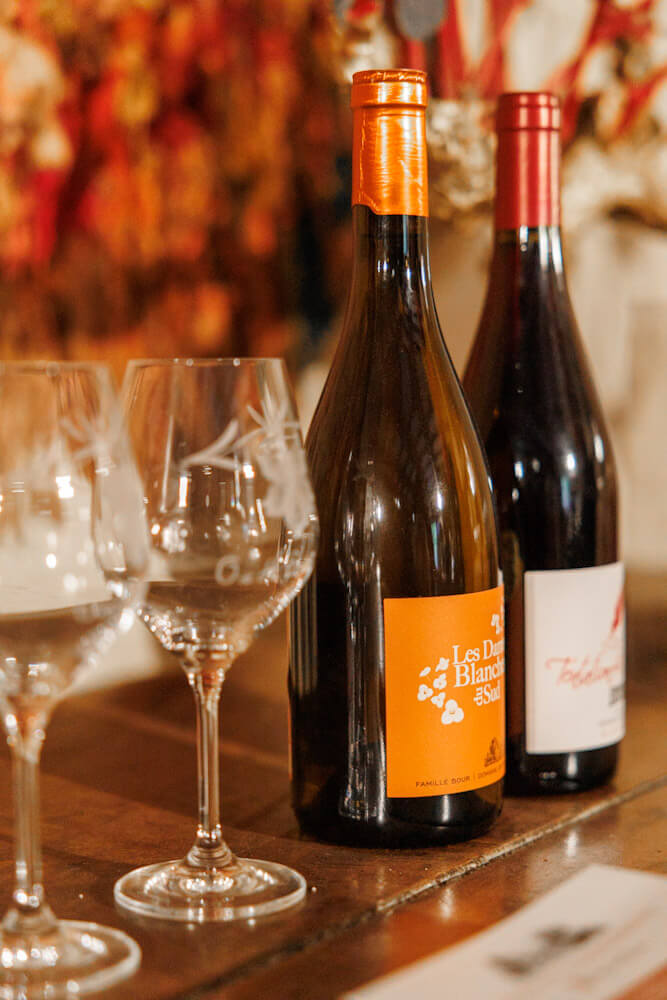
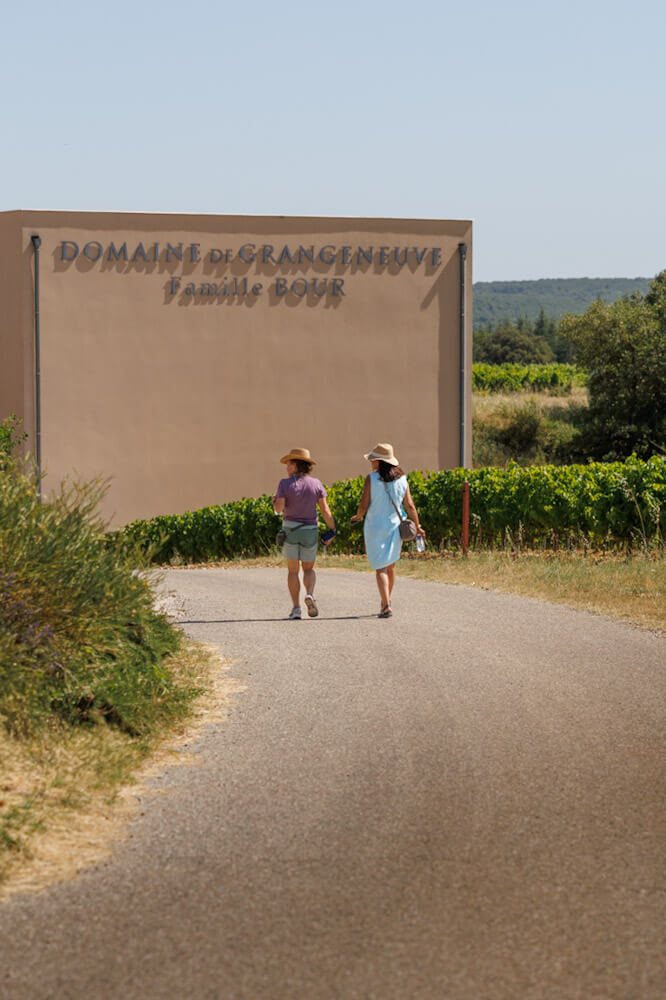
From La Garde-Adhémar, continue to Domaine de Grangeneuve in Roussas, in the heart of the Grignan-les-Adhémar wine region. At this family run winery, you can taste a selection of red, white and rosé wines and learn more about wine production in this part of the Drôme. Depending on the season and availability, more extensive tours and tastings are also offered.
Where to stay in the Drôme
On a road trip through the Drôme, you can of course stay somewhere different every night, but there is no need to. Grignan and the surrounding area in particular make a good base for exploring several places in the Drôme Provençale.
Le Clair de la Plume
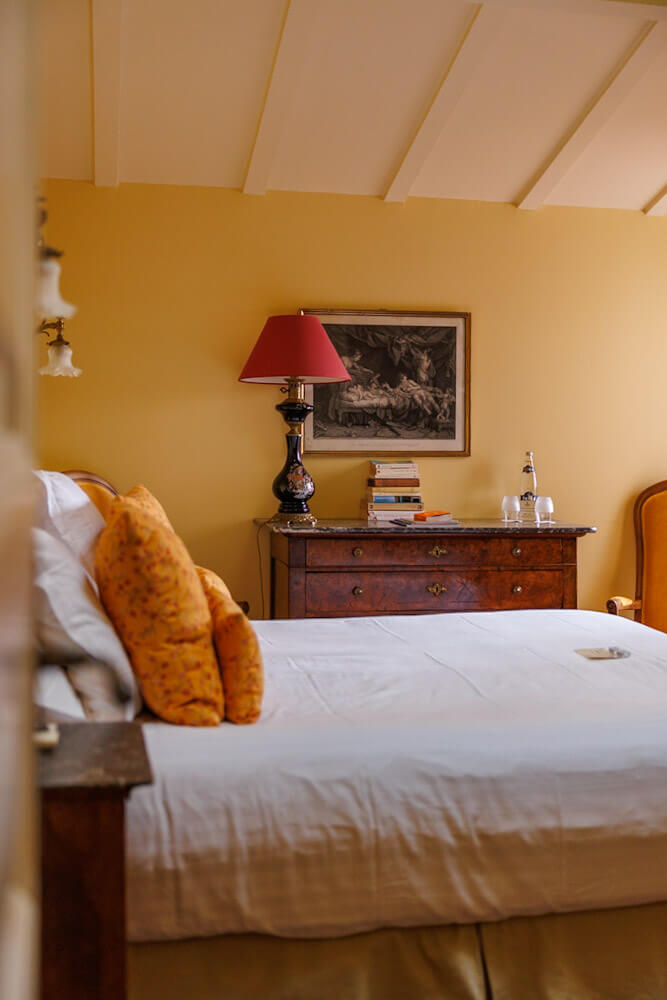
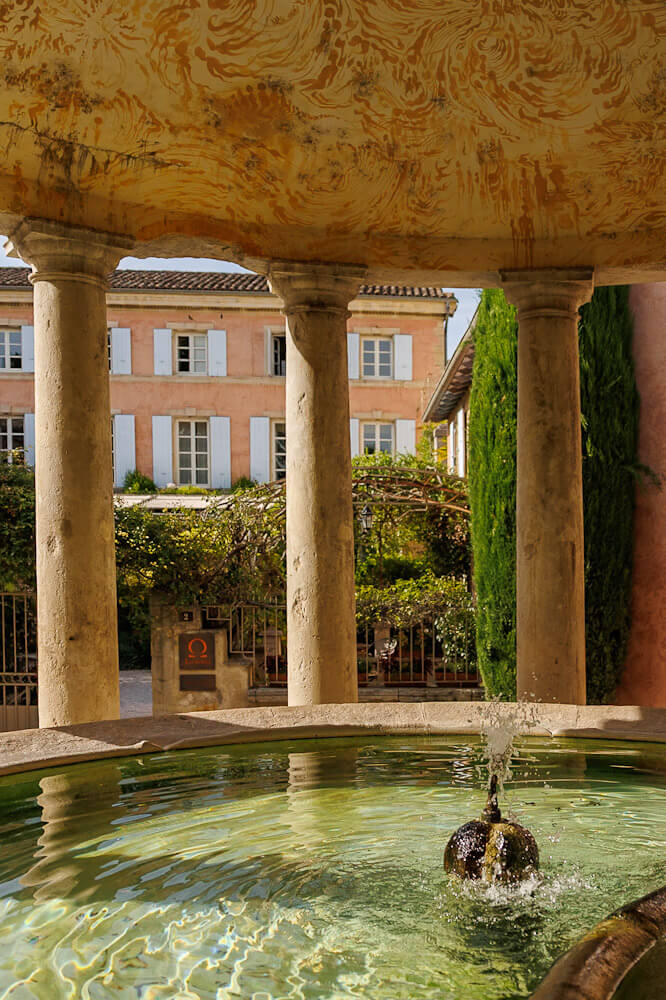
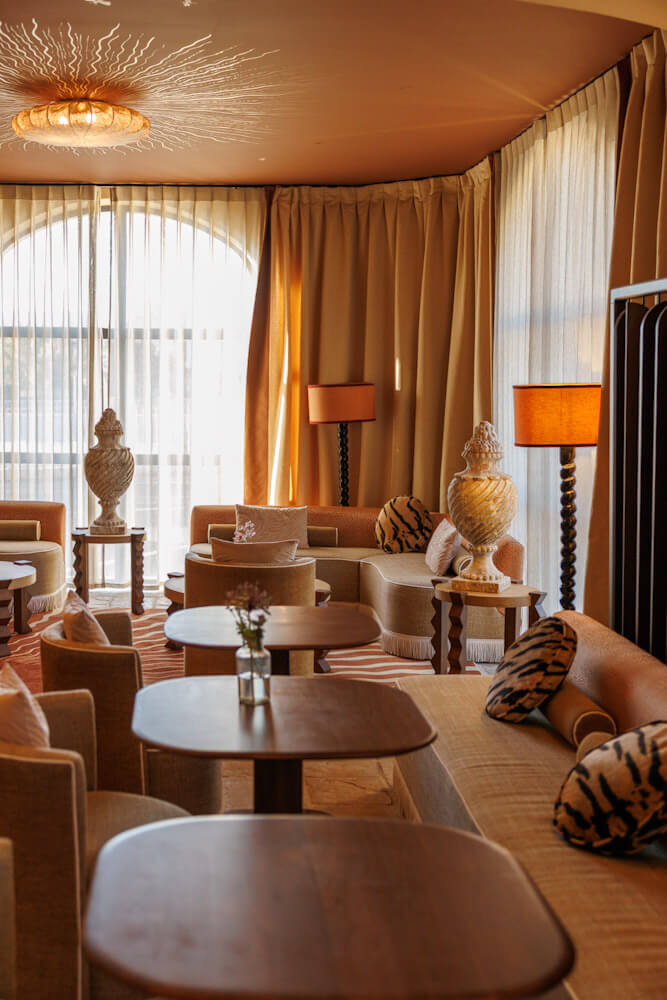
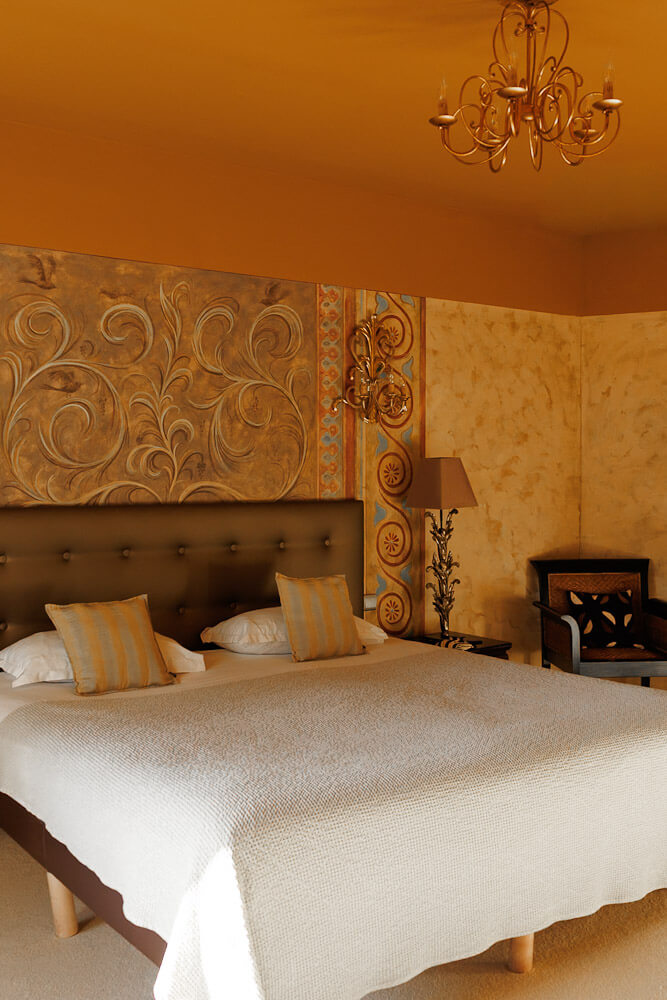
One of the loveliest places to stay is Le Clair de la Plume in Grignan. Its rooms are spread across several historic buildings in the village and the location is ideal, with the old centre just a short walk away. I stay in one of the rooms at the historic Maison Privée and have breakfast in the beautiful Mediterranean garden. This is also where you will find Le Clair de la Plume’s Michelin starred restaurant.
Château Les Oliviers de Salettes
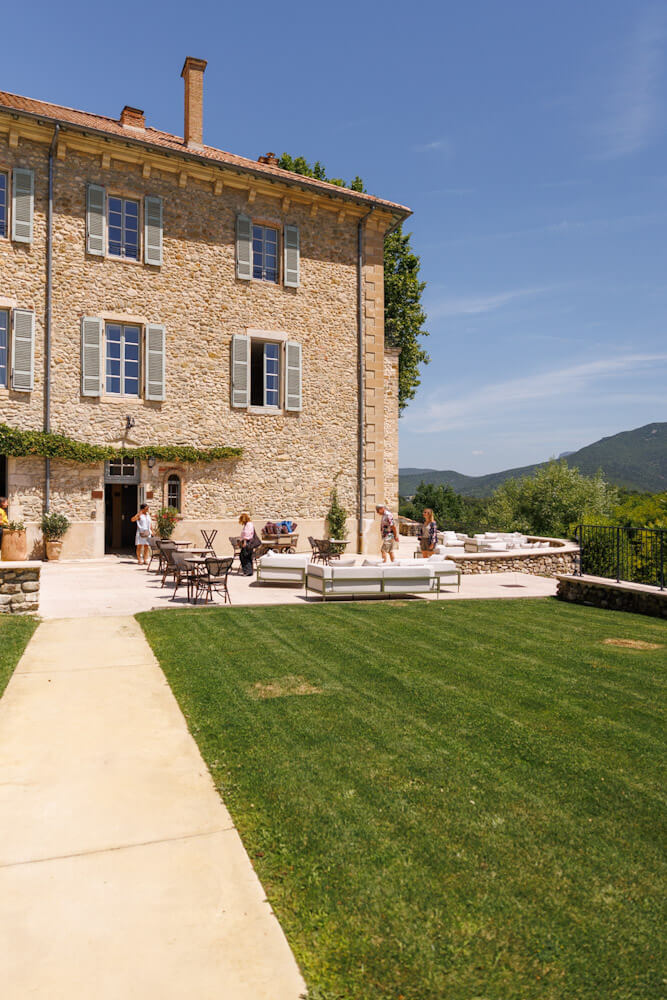
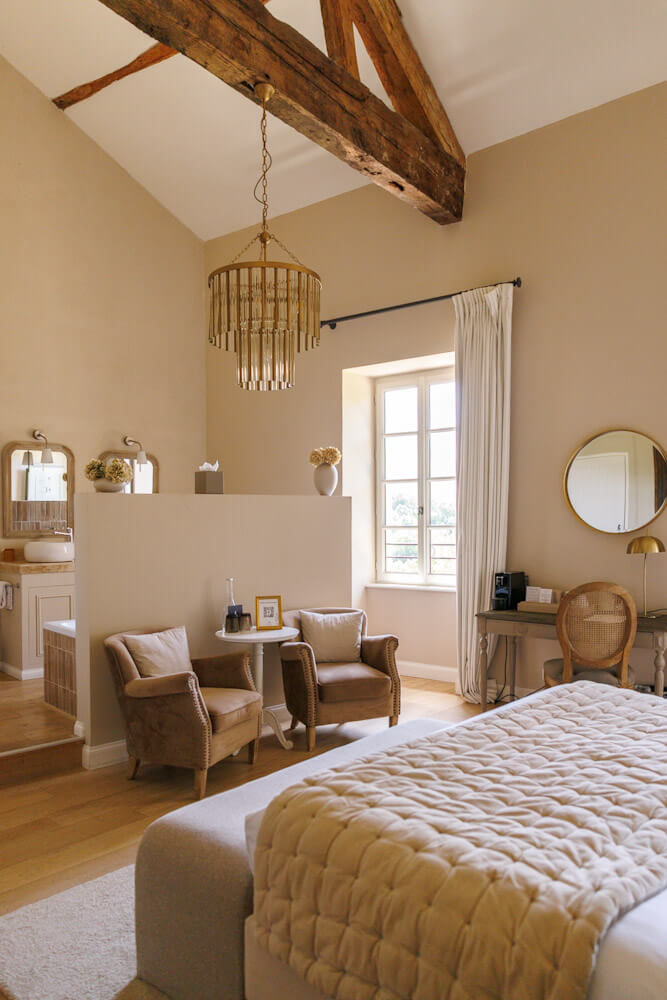
Another special place to stay is Château Les Oliviers de Salettes, a château hotel surrounded by vineyards and lavender fields near Charols. I do not stay here myself, but I have the chance to see several of the rooms and have lunch at the restaurant. It is a lovely option if you want to add a more luxurious stay to your road trip, with beautiful rooms, a swimming pool and plenty of space to relax around the château.
Domaine L’Essentiel de Lavande
Domaine L’Essentiel de Lavande is another special place to stay. The property has a beautiful holiday home with its own swimming pool, surrounded by the countryside of the Drôme Provençale. It is particularly well suited to families or groups travelling together, or if you simply want to slow down and stay in one place for a few days.
Le Victoria Boutique Hôtel and Villa Augusta
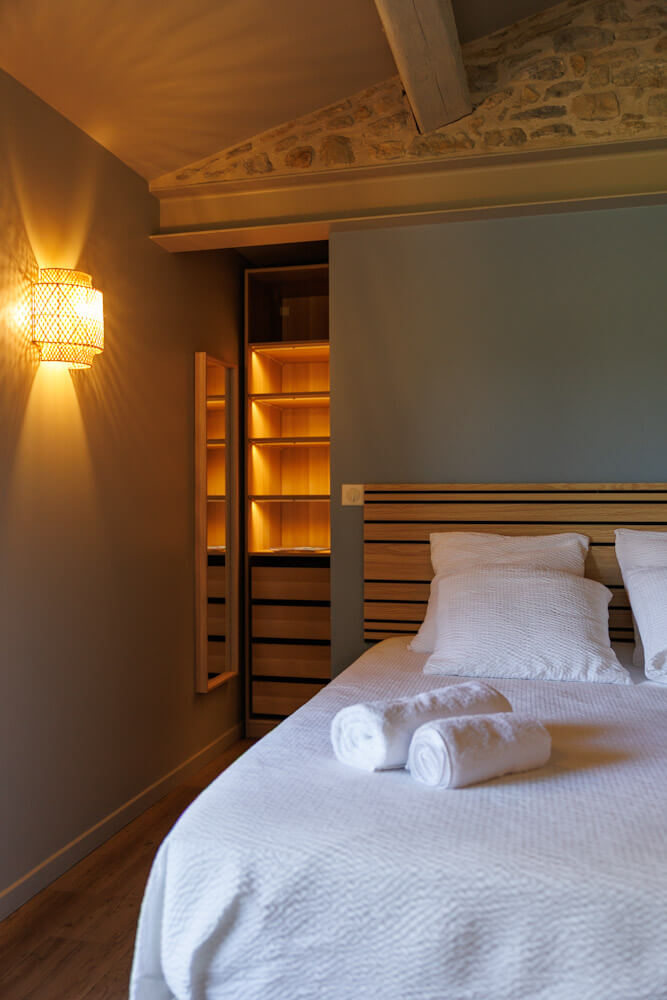
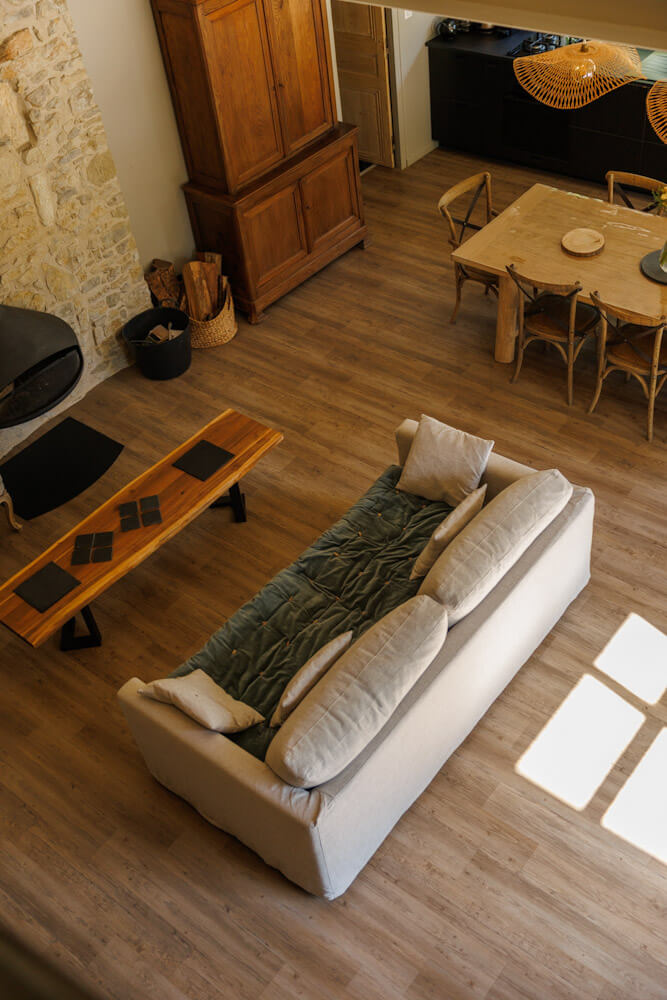
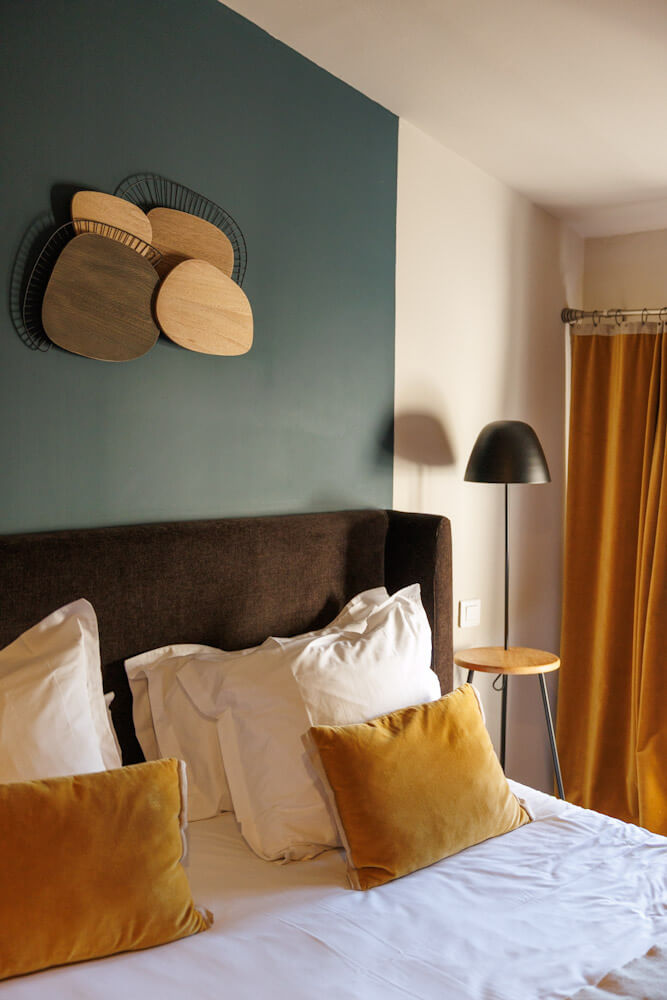
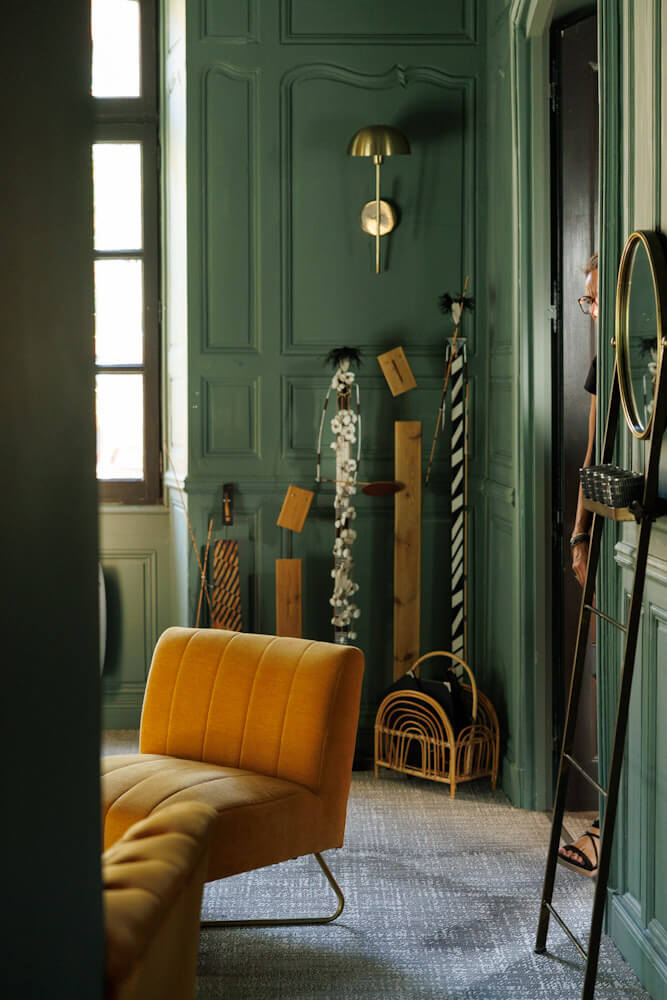
In Saint-Paul-Trois-Châteaux, there are several good places to stay. I stay at Le Victoria Boutique Hôtel, right in the historic centre. My room is fairly small, but it has air conditioning and a good shower. For the price, it is a comfortable hotel and the central location is very convenient. If you are looking for something a little more luxurious, Villa Augusta is worth considering. We have an excellent dinner at the restaurant and I also get to see several of the rooms. They vary quite a bit in style and size, so it is worth comparing the different room types when booking. The hotel also has a lovely Mediterranean garden and a swimming pool.
Other affordable places to stay in the Drôme
Looking for somewhere a little more affordable to stay? Throughout the Drôme, you will find plenty of small hotels and other accommodation offering good value for money. The three well reviewed places below are convenient options for an overnight stay along your road trip.

Le Trésor Des Templiers

Garenne

La Cachette
Continue from the Drôme to Provence
Want to extend this road trip? From the Drôme Provençale, I would continue south towards the Vaucluse and the Luberon, roughly following the route shown on the map below. Along the way, there are plenty of places worth stopping at, making it easy to add another few days to your trip.
Orange and Châteauneuf-du-Pape
Orange is a logical stop when travelling south from the Drôme. Its main attraction is the impressive Roman Théâtre Antique, one of the best preserved Roman theatres in Europe. Not far from Orange is Châteauneuf-du-Pape, a well known destination for wine lovers. Wander through the village, visit the ruins of the château and, of course, stop at one of the local wineries.
Gordes, Roussillon, Ménerbes and Lacoste
Continue into the Luberon and you will find several well known Provençal villages relatively close to one another. Gordes is one of the most famous villages in Provence. Roussillon, with its distinctive ochre colours and Le Sentier des Ocres trail, is also well worth visiting. Ménerbes, Oppède-le-Vieux and Lacoste can easily be added to your route as well. Like Gordes and Roussillon, Ménerbes is listed among Les Plus Beaux Villages de France.
Lourmarin and the Luberon
On the southern side of the Luberon lies Lourmarin, another village listed among Les Plus Beaux Villages de France. Cavaillon, on the western side of the Luberon, can be a convenient base for exploring the area. If you have several days here, I would not try to visit every village one after another. Choose a few that appeal to you and combine them with a walk or a scenic drive through the Luberon countryside.
Aix-en-Provence
If you are flying home from Marseille, you can also add Aix-en-Provence towards the end of your road trip. This creates a natural route from the Drôme Provençale through the Vaucluse and Luberon to Aix-en-Provence, finishing in Marseille.
Which Drôme road trip should you choose?
The best route mainly depends on what you want to see during your trip. If you want to experience the Drôme as a whole, including Hauterives, the wine regions in the north and the Drôme Provençale, flying into Lyon is a good option. You can then combine your road trip with some time in Lyon itself.
If you mainly want to explore the south of the Drôme and are drawn to Provençal villages, lavender, wine and historic towns, I would choose Marseille instead. From Marseille, you can easily create a route connecting Aix-en-Provence, the Luberon, the Vaucluse and the Drôme Provençale.
And if you have two weeks, there is no need to choose between the two. Fly into Lyon, rent a car and travel south through the Drôme and Provence before flying home from Marseille. Or simply do the route in reverse. This gives you plenty of freedom to make your road trip through this part of France as short or as extensive as you like!

